THE ADVENTURE COLLECTIVE® · Independent discovery and booking for outdoor travel

Swap Nairobi’s bustle for open plains and enormous-tusked elephants framed by Mt. Kilimanjaro. This full-day guided tour mixes close wildlife viewing with a cultural visit to a Maasai community—plan for a long, rewarding day and variable road conditions.
Swap Nairobi’s bustle for open plains and enormous-tusked elephants framed by Mt. Kilimanjaro. This full-day guided tour mixes close wildlife viewing with a cultural visit to a Maasai community—plan for a long, rewarding day and variable road conditions.
Dawn in Amboseli opens with low light slicing across a flat salt-encrusted plain; herds of elephants move like slow punctuation against the towering silhouette of Mt. Kilimanjaro. On a full-day guided tour from Nairobi you trade city asphalt for open savannah, windowed by the mountain’s glaciated peak and ringed by wetlands that attract hundreds of birds.
Verified experiences and guided adventures in the surrounding area.
Operated by Muringa Kenya Tours & Safaris Ltd · Amboseli, Kajiado County
Dawn in Amboseli opens with low light slicing across a flat salt-encrusted plain; herds of elephants move like slow punctuation against the towering silhouette of Mt. Kilimanjaro. On a full-day guided tour from Nairobi you trade city asphalt for open savannah, windowed by the mountain’s glaciated peak and ringed by wetlands that attract hundreds of birds.
Amboseli takes its Maasai name from a phrase meaning “salty dust,” a clue to the park’s ancient lakebed and alkaline flats. Geologically, the park sits on sediments fed by rivers from Kilimanjaro’s slopes; sulphur springs and seasonal swamps create five distinct habitats—dry pans, marshes, acacia woodlands, open plains and scrub—that concentrate wildlife. The modern park was established in the 1970s and has since become central to community-based conservation with nearby Maasai settlements.
Expect close elephant sightings, giraffes browsing acacia crowns, and sharp-eyed birding around the swamps; predators are present but less predictable. Cultural interaction is typically a short visit or walk with Maasai guides who explain pastoral life, beadwork and grazing rights.
Practical notes: the tour is a long day (roughly 10 hours including drive time), so pack sun protection, water and a long-lens camera. Roads inside the park are unpaved and can be dusty or muddy after rains; listen to guides about off-track rules and wildlife distances. Early starts yield the best light for photographing Kilimanjaro and are cooler for game activity. If you want to maximize sightings, travel in the dry season and bring binoculars—Amboseli rewards patience and curiosity with intimate wildlife moments and a rare mountain backdrop.
The round-trip drive typically takes about 4–5 hours each way depending on traffic and route, making the tour approximately a 10-hour day.
Yes—on clear days the park offers excellent views of Kilimanjaro’s summit across the border in Tanzania; cloud cover is common so sightings aren’t guaranteed.
Many full-day tours include transportation, pickup/drop-off, bottled water and park access—confirm inclusions with your operator before booking.
The tour is rated easy but involves long vehicle time and short walks on uneven ground; families and those with limited mobility should check vehicle access and walking requirements with the provider.
Muringa Kenya Tours & Safaris Ltd operates guided outdoor trips and adventures with an emphasis on safety, stewardship, and memorable experiences.
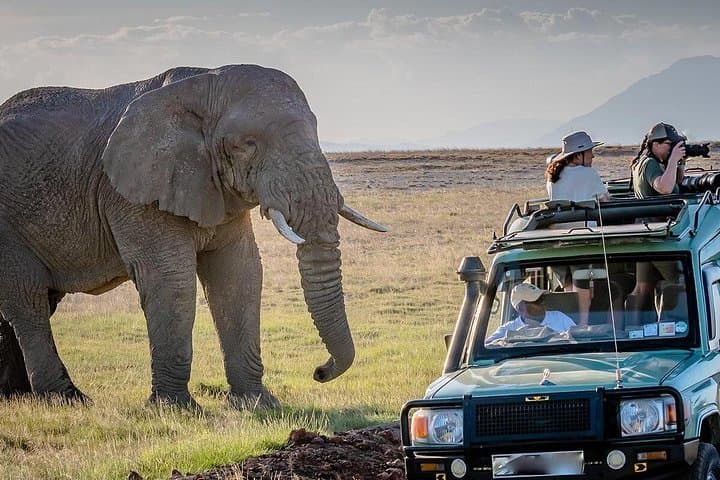


Dawn in Amboseli opens with low light slicing across a flat salt-encrusted plain; herds of elephants move like slow punctuation against the towering silhouette of Mt. Kilimanjaro. On a full-day guided tour from Nairobi you trade city asphalt for open savannah, windowed by the mountain’s glaciated peak and ringed by wetlands that attract hundreds of birds.
Dawn in Amboseli opens with low light slicing across a flat salt-encrusted plain; herds of elephants move like slow punctuation against the towering silhouette of Mt. Kilimanjaro. On a full-day guided tour from Nairobi you trade city asphalt for open savannah, windowed by the mountain’s glaciated peak and ringed by wetlands that attract hundreds of birds.
Amboseli takes its Maasai name from a phrase meaning “salty dust,” a clue to the park’s ancient lakebed and alkaline flats. Geologically, the park sits on sediments fed by rivers from Kilimanjaro’s slopes; sulphur springs and seasonal swamps create five distinct habitats—dry pans, marshes, acacia woodlands, open plains and scrub—that concentrate wildlife. The modern park was established in the 1970s and has since become central to community-based conservation with nearby Maasai settlements.
Expect close elephant sightings, giraffes browsing acacia crowns, and sharp-eyed birding around the swamps; predators are present but less predictable. Cultural interaction is typically a short visit or walk with Maasai guides who explain pastoral life, beadwork and grazing rights.
Practical notes: the tour is a long day (roughly 10 hours including drive time), so pack sun protection, water and a long-lens camera. Roads inside the park are unpaved and can be dusty or muddy after rains; listen to guides about off-track rules and wildlife distances. Early starts yield the best light for photographing Kilimanjaro and are cooler for game activity. If you want to maximize sightings, travel in the dry season and bring binoculars—Amboseli rewards patience and curiosity with intimate wildlife moments and a rare mountain backdrop.