THE ADVENTURE COLLECTIVE® · Independent discovery and booking for outdoor travel

Spend an immersive day exploring three of central Thailand’s most iconic markets—Damnoen Saduak, Mae Klong Railway Market and Amphawa—on a private VIP tour that mixes paddle-boat passages, a vintage coconut-sugar stop and a twilight river ride. Expect long walking stretches, crowded aisles, and unforgettable local flavors.
Spend an immersive day exploring three of central Thailand’s most iconic markets—Damnoen Saduak, Mae Klong Railway Market and Amphawa—on a private VIP tour that mixes paddle-boat passages, a vintage coconut-sugar stop and a twilight river ride. Expect long walking stretches, crowded aisles, and unforgettable local flavors.
You step off the minivan to a tangle of wooden stalls, paddle-boat wakes and the smell of grilled fish—this is Thailand outside the skyscrapers, where commerce still moves on water and iron rails carve through markets.
Verified experiences and guided adventures in the surrounding area.
You step off the minivan to a tangle of wooden stalls, paddle-boat wakes and the smell of grilled fish—this is Thailand outside the skyscrapers, where commerce still moves on water and iron rails carve through markets.
The day begins at a vintage-style coconut-sugar workshop, a living craft that points to the region’s agrarian past. From there the narrow canals of Damnoen Saduak open into a riot of color: vendors ladle curries from long-tail boats while fruit sellers ply chopstick-sized skewers to passing sampans. Mae Klong’s market sits directly on active tracks; watch stallholders fold awnings with practiced choreography as the train glides through. Amphawa arrives late: lanterns and waterside homes reflect in the river as long-tail boats ferry you among floating kitchens and firefly-lined banks.
Geologically the area is low, flat river plain shaped by the Mae Klong delta; soil and waterways have guided settlement and market culture for centuries. Culturally the three markets are small-business theater—family-run stalls, seasonal produce and snack vendors preserving regional recipes, and a community that times its day to tides, trains and tourists.
Practical guidance: it’s an 11–12 hour day with frequent short walks, boat transfers and stairs on and off trains; carry small change, sun protection and a lightweight rain layer in monsoon months. Expect narrow aisles, close crowds and sensory overload—move deliberately, sample deliberately, and leave room for evening boat time in Amphawa when the lights transform the river.
The private VIP tour runs about 11–12 hours; typical departures leave Bangkok mid-morning to fit markets and the evening Amphawa boat ride into the same day.
Yes—short paddle-boat and long-tail transfers are part of the itinerary; operators use life vests and experienced drivers, but expect low freeboard and splash risk.
This tour involves boarding small boats, stepping on uneven surfaces and walking through crowded aisles; it’s not ideal for people with significant mobility limitations unless they have assistance.
Food purchases are generally pay-as-you-go from market vendors; notify the operator ahead of time if you need specific dietary accommodations for included refreshments like afternoon tea.
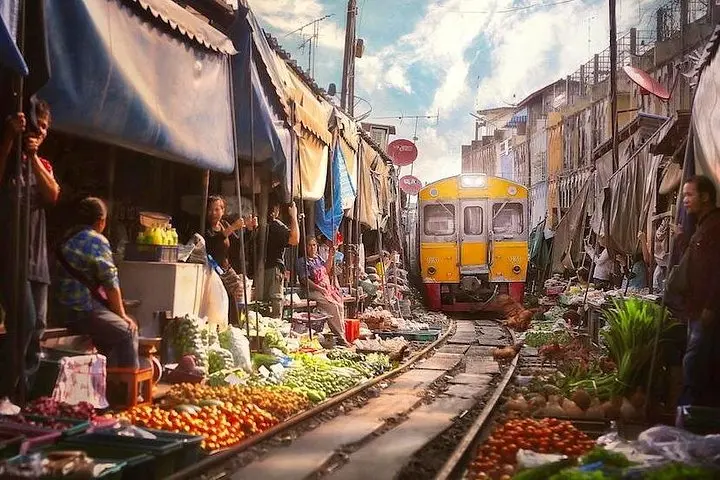
You step off the minivan to a tangle of wooden stalls, paddle-boat wakes and the smell of grilled fish—this is Thailand outside the skyscrapers, where commerce still moves on water and iron rails carve through markets.
You step off the minivan to a tangle of wooden stalls, paddle-boat wakes and the smell of grilled fish—this is Thailand outside the skyscrapers, where commerce still moves on water and iron rails carve through markets.
The day begins at a vintage-style coconut-sugar workshop, a living craft that points to the region’s agrarian past. From there the narrow canals of Damnoen Saduak open into a riot of color: vendors ladle curries from long-tail boats while fruit sellers ply chopstick-sized skewers to passing sampans. Mae Klong’s market sits directly on active tracks; watch stallholders fold awnings with practiced choreography as the train glides through. Amphawa arrives late: lanterns and waterside homes reflect in the river as long-tail boats ferry you among floating kitchens and firefly-lined banks.
Geologically the area is low, flat river plain shaped by the Mae Klong delta; soil and waterways have guided settlement and market culture for centuries. Culturally the three markets are small-business theater—family-run stalls, seasonal produce and snack vendors preserving regional recipes, and a community that times its day to tides, trains and tourists.
Practical guidance: it’s an 11–12 hour day with frequent short walks, boat transfers and stairs on and off trains; carry small change, sun protection and a lightweight rain layer in monsoon months. Expect narrow aisles, close crowds and sensory overload—move deliberately, sample deliberately, and leave room for evening boat time in Amphawa when the lights transform the river.