THE ADVENTURE COLLECTIVE® · Independent discovery and booking for outdoor travel

Discover Amsterdam’s center by solving riddles that lead you between canals, churches and hidden courtyards. This self-guided scavenger hunt blends sightseeing with a smartphone-driven puzzle walk—ideal for curious travelers who prefer to set their own pace.
Discover Amsterdam’s center by solving riddles that lead you between canals, churches and hidden courtyards. This self-guided scavenger hunt blends sightseeing with a smartphone-driven puzzle walk—ideal for curious travelers who prefer to set their own pace.
You step off the tram into a patchwork of brick facades and glinting canals, phone buzz-ready in your hand. The scavenger hunt starts at the old churchyard where the cobbled alleys narrow and the city’s history appears in carved stone and painted signs. Clues point you down canal-side streets, past merchants’ houses and the occasional bicycle leaning like a quiet companion.
Verified experiences and guided adventures in the surrounding area.
Operated by Explorial · Amsterdam, North Holland
You step off the tram into a patchwork of brick facades and glinting canals, phone buzz-ready in your hand. The scavenger hunt starts at the old churchyard where the cobbled alleys narrow and the city’s history appears in carved stone and painted signs. Clues point you down canal-side streets, past merchants’ houses and the occasional bicycle leaning like a quiet companion.
Amsterdam’s center grew fast in the 17th century, its concentric canal ring cut into reclaimed peat and polder—ground that still settles beneath feet and foundations. Architecture here reads like trade routes: the East India House and merchants’ warehouses reflect a mercantile culture that shaped streets, markets and civic life.
Culturally the route mixes high and low: a cathedral, a tiny museum, a café window displaying local life. Geology is subtle—soft soils, canals holding water that challenges the city’s engineers—while culture is loud in neon signs, street musicians and market stalls.
Practically, this is a low-impact, self-paced walking game designed for smartphone use. Expect 1–2 hours of walking on mostly flat, paved surfaces with stairs at some historic sites. The app gives maps, photo challenges and trivia; take pauses for coffee or canal views. Keep battery and data in mind, watch for bikes and trams, and respect private property when solving clues.
For planners: start early to avoid crowds, bring a lightweight rain layer, and allow extra time to explore discoveries that the clues only hint at—hidden courtyards, a quiet guildhall, a canal-side bench where the city seems to hum slower.
Most groups finish in 1–2 hours, but the self-guided format lets you extend the experience to explore sights at leisure.
No—this is self-guided. After purchase you receive an access code to use in the app and navigate the route independently.
Much of the center is flat but there are cobblestones, narrow alleys and occasional steps; accessibility may be limited at some points.
The experience is offered in English through the app; check the app for additional language options.
Explorial operates guided outdoor trips and adventures with an emphasis on safety, stewardship, and memorable experiences.



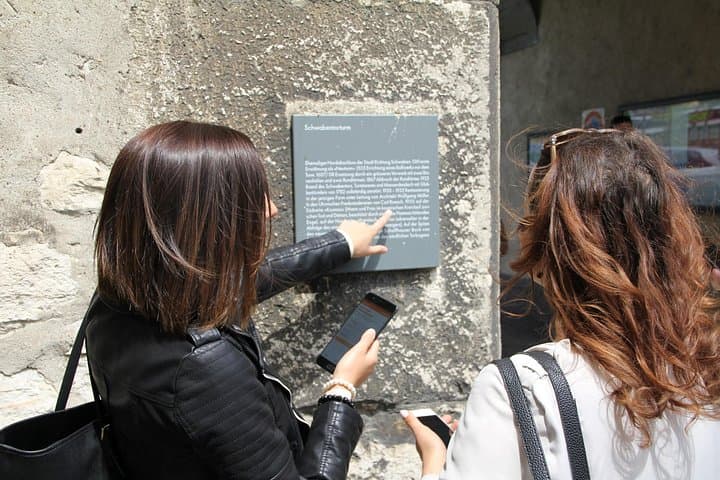
You step off the tram into a patchwork of brick facades and glinting canals, phone buzz-ready in your hand. The scavenger hunt starts at the old churchyard where the cobbled alleys narrow and the city’s history appears in carved stone and painted signs. Clues point you down canal-side streets, past merchants’ houses and the occasional bicycle leaning like a quiet companion.
You step off the tram into a patchwork of brick facades and glinting canals, phone buzz-ready in your hand. The scavenger hunt starts at the old churchyard where the cobbled alleys narrow and the city’s history appears in carved stone and painted signs. Clues point you down canal-side streets, past merchants’ houses and the occasional bicycle leaning like a quiet companion.
Amsterdam’s center grew fast in the 17th century, its concentric canal ring cut into reclaimed peat and polder—ground that still settles beneath feet and foundations. Architecture here reads like trade routes: the East India House and merchants’ warehouses reflect a mercantile culture that shaped streets, markets and civic life.
Culturally the route mixes high and low: a cathedral, a tiny museum, a café window displaying local life. Geology is subtle—soft soils, canals holding water that challenges the city’s engineers—while culture is loud in neon signs, street musicians and market stalls.
Practically, this is a low-impact, self-paced walking game designed for smartphone use. Expect 1–2 hours of walking on mostly flat, paved surfaces with stairs at some historic sites. The app gives maps, photo challenges and trivia; take pauses for coffee or canal views. Keep battery and data in mind, watch for bikes and trams, and respect private property when solving clues.
For planners: start early to avoid crowds, bring a lightweight rain layer, and allow extra time to explore discoveries that the clues only hint at—hidden courtyards, a quiet guildhall, a canal-side bench where the city seems to hum slower.