THE ADVENTURE COLLECTIVE® · Independent discovery and booking for outdoor travel

See Amsterdam at street level: a one-hour pedicab tour that threads the 17th-century canal belt, floating flower market, and historic squares. Perfect for quick orientation and photography stops without the bike traffic.
See Amsterdam at street level: a one-hour pedicab tour that threads the 17th-century canal belt, floating flower market, and historic squares. Perfect for quick orientation and photography stops without the bike traffic.
You step into the pedicab and the city changes its tempo: canals lean in like curious neighbors, bridges lift their iron eyebrows and cobbled alleys invite you to slow down. For sixty minutes the driver pedals you through narrow streets where baroque gables tilt toward the water and bicycles hum like a constant, polite current.
Verified experiences and guided adventures in the surrounding area.
Operated by A Pedicab in Amsterdam · Amsterdam, North Holland
You step into the pedicab and the city changes its tempo: canals lean in like curious neighbors, bridges lift their iron eyebrows and cobbled alleys invite you to slow down. For sixty minutes the driver pedals you through narrow streets where baroque gables tilt toward the water and bicycles hum like a constant, polite current.
This short loop threads through Amsterdam’s Golden Age architecture and the 17th-century canal ring — an urban plan born of trade and land reclamation. You’ll pass Rembrandtplein, the Bloemenmarkt’s floating stalls, and the Skinny Bridge across the Amstel; each bridge and quay tells a trade-story written in brick and iron. The route also brushes De Wallen and Zeedijk, neighborhoods that reflect waves of change from sailors’ quarters to modern multicultural streets.
The ride is sensory: the canals dare you with reflections, the damp stone smells faintly of river peat and coffee. Expect quick photo stops at classic viewpoints and a ten-minute pause where the Amstel opens like a small harbor.
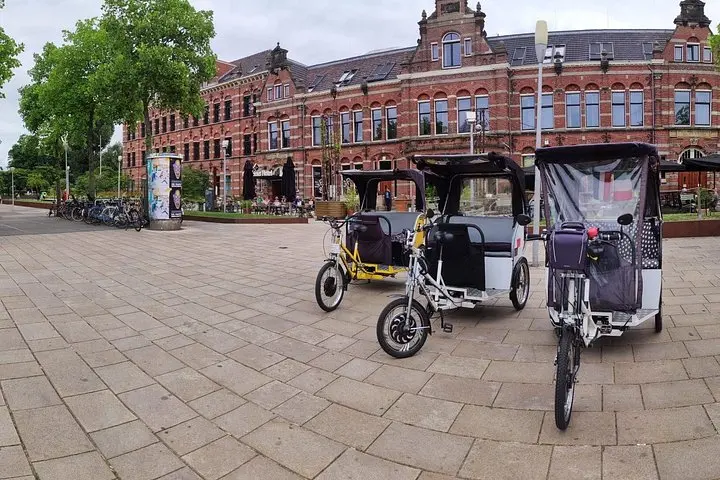
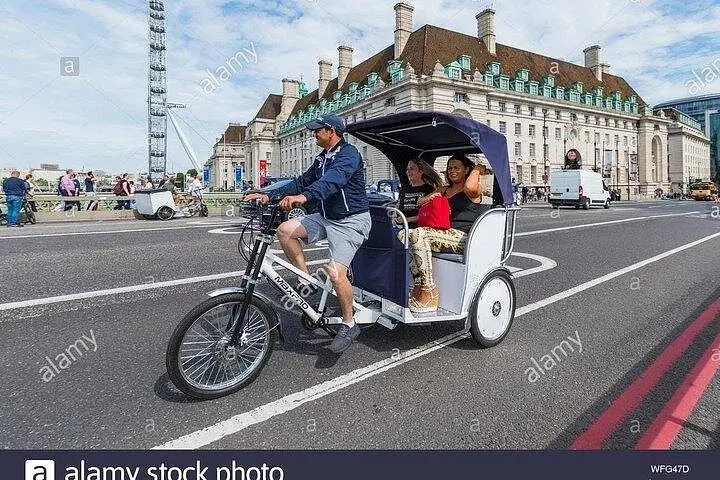
Practical edge: it’s a low-impact, low-effort way to cover dense urban ground — ideal if you prefer eye-level local scenes to bus-window panoramas. Book mornings or late afternoon to avoid peak bike traffic, bring a compact rain layer (Amsterdam weather flips fast), and carry small change for tips. The pedicab fits two adults comfortably; tell your operator about strollers or mobility needs before booking. In one hour you’ll leave with a clear sense of the city’s scale, history, and the rhythm that keeps Amsterdam pedal-forward.
Typical pickup/drop-off is in central Amsterdam; confirm your exact meeting point with the operator when booking.
Yes—pedicabs accept infants (must sit on an adult’s lap) and children; capacity is generally two adults or two adults plus one or two small children—check operator limits before booking.
Tours may run in light rain; the cancellation policy allows refunds if the operator cancels for bad weather. Bring a rain layer for short showers.
Drivers often provide local commentary and point out photo spots, but this is an orientation ride rather than a full in-depth guided tour.
A Pedicab in Amsterdam operates guided outdoor trips and adventures with an emphasis on safety, stewardship, and memorable experiences.


You step into the pedicab and the city changes its tempo: canals lean in like curious neighbors, bridges lift their iron eyebrows and cobbled alleys invite you to slow down. For sixty minutes the driver pedals you through narrow streets where baroque gables tilt toward the water and bicycles hum like a constant, polite current.
You step into the pedicab and the city changes its tempo: canals lean in like curious neighbors, bridges lift their iron eyebrows and cobbled alleys invite you to slow down. For sixty minutes the driver pedals you through narrow streets where baroque gables tilt toward the water and bicycles hum like a constant, polite current.
This short loop threads through Amsterdam’s Golden Age architecture and the 17th-century canal ring — an urban plan born of trade and land reclamation. You’ll pass Rembrandtplein, the Bloemenmarkt’s floating stalls, and the Skinny Bridge across the Amstel; each bridge and quay tells a trade-story written in brick and iron. The route also brushes De Wallen and Zeedijk, neighborhoods that reflect waves of change from sailors’ quarters to modern multicultural streets.
The ride is sensory: the canals dare you with reflections, the damp stone smells faintly of river peat and coffee. Expect quick photo stops at classic viewpoints and a ten-minute pause where the Amstel opens like a small harbor.
Practical edge: it’s a low-impact, low-effort way to cover dense urban ground — ideal if you prefer eye-level local scenes to bus-window panoramas. Book mornings or late afternoon to avoid peak bike traffic, bring a compact rain layer (Amsterdam weather flips fast), and carry small change for tips. The pedicab fits two adults comfortably; tell your operator about strollers or mobility needs before booking. In one hour you’ll leave with a clear sense of the city’s scale, history, and the rhythm that keeps Amsterdam pedal-forward.