THE ADVENTURE COLLECTIVE® · Independent discovery and booking for outdoor travel

Skip lines and step into Thailand’s architectural atlas—walk life-size palaces at Ancient City and explore sacred art beneath the Erawan Museum’s three-headed elephant. This full-day ticket pairs cultural immersion with practical touring options for a stress-free outing from Bangkok.
Skip lines and step into Thailand’s architectural atlas—walk life-size palaces at Ancient City and explore sacred art beneath the Erawan Museum’s three-headed elephant. This full-day ticket pairs cultural immersion with practical touring options for a stress-free outing from Bangkok.
You arrive under a wide tropical sky and the park opens like a map of Thailand before you—temple roofs gleam, tiled courtyards stretch, and a tram hums along shaded lanes. The Ancient City’s scaled monuments sit in geographical order across broad lawns, while nearby the Erawan Museum’s three-headed elephant rises like a guardian over a garden of banyans and reflecting pools.
Verified experiences and guided adventures in the surrounding area.
Operated by YOUTAI · Samut Prakan, Samut Prakan Province
You arrive under a wide tropical sky and the park opens like a map of Thailand before you—temple roofs gleam, tiled courtyards stretch, and a tram hums along shaded lanes. The Ancient City’s scaled monuments sit in geographical order across broad lawns, while nearby the Erawan Museum’s three-headed elephant rises like a guardian over a garden of banyans and reflecting pools.
Built by collector Lek Viriyapant, both sites blend preservation with theatricality: Muang Boran reproduces palaces, villages and stupas to show architectural evolution, while the Erawan Museum houses sacred artifacts across three symbolic levels beneath the elephant’s belly. Geologically flat coastal plain gives way to man-made lakes and raised platforms—land shaped for display rather than drama—so views come from terraces and pavilions rather than peaks.
Culturally, expect ritual objects, classical art and active craft demonstrations; the grounds often host costume rentals and traditional performances that illustrate local customs. History feels literal here—the replicas were made with museum consultants to echo originals, not invent them.
Practical guidance: plan 5–8 hours to use tram or a rental bike and see both sites without rushing. Wear sturdy walking shoes, sun protection and light layers; carry water and small cash for food or souvenirs. Start early to avoid midday heat and heavy afternoon rains during monsoon season. Photography is permitted but drones are not—treat the replicas as museum pieces. If mobility is a concern, both attractions have accessible routes and tram options. With skip-the-line entry, you trade transport planning for free, focused time among Thailand’s architectural stories.
Yes—this ticket provides prioritized entry at both attractions, reducing wait times but not guaranteeing immediate access during peak events.
Both the Ancient City and Erawan Museum offer accessible paths and tram options; some replica interiors have steps—check specific areas ahead of time.
Yes—certain packages and on-site vendors offer Thai costume rental for photos; availability and fees vary, so book early if it’s a priority.
Some packages include a Thai buffet at the pavilion restaurant, otherwise there are paid dining options on-site and small vendors around the park.
YOUTAI operates guided outdoor trips and adventures with an emphasis on safety, stewardship, and memorable experiences.
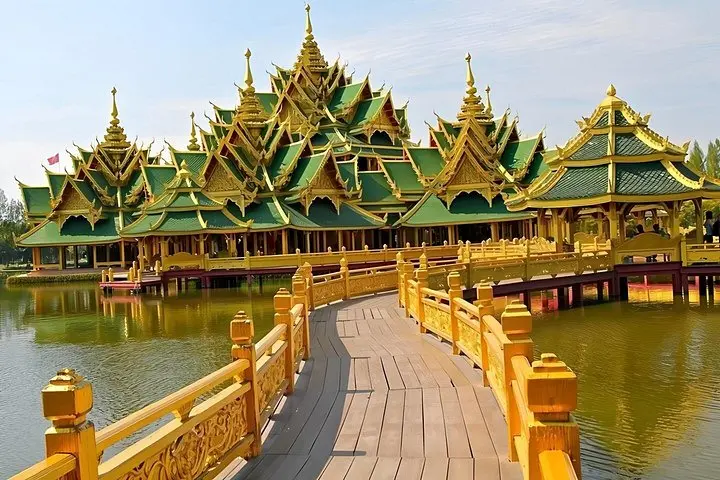
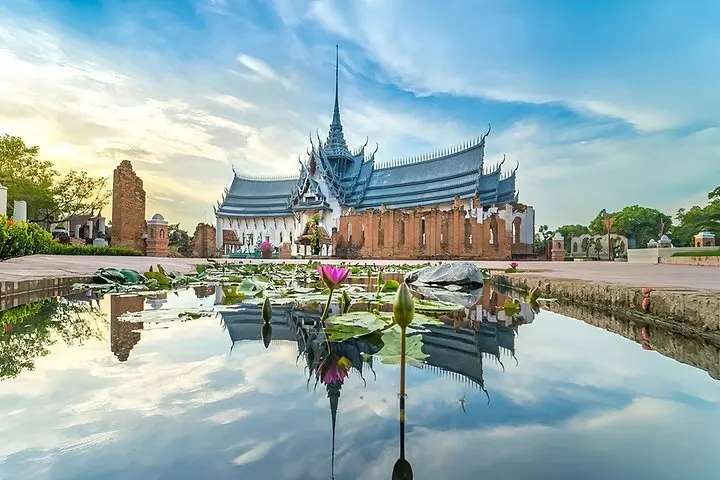
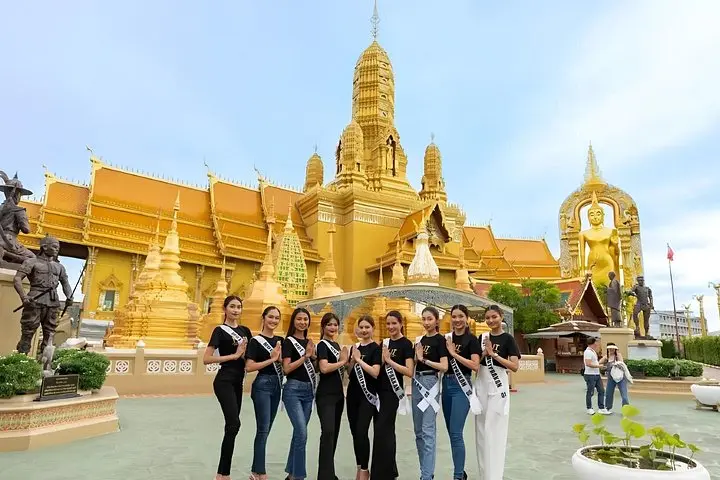
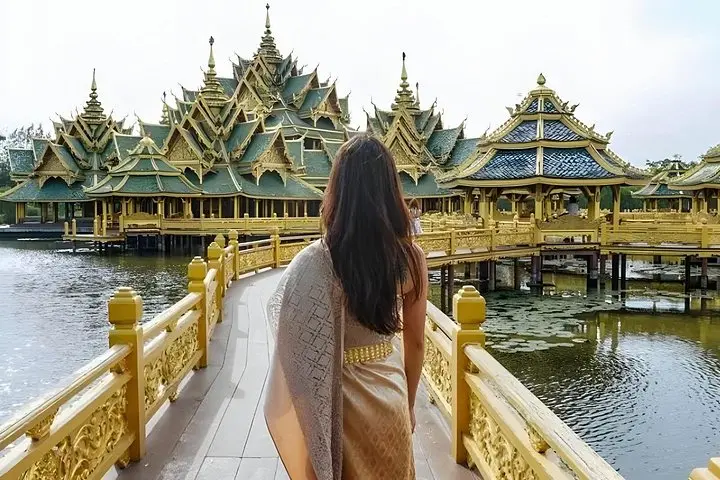
You arrive under a wide tropical sky and the park opens like a map of Thailand before you—temple roofs gleam, tiled courtyards stretch, and a tram hums along shaded lanes. The Ancient City’s scaled monuments sit in geographical order across broad lawns, while nearby the Erawan Museum’s three-headed elephant rises like a guardian over a garden of banyans and reflecting pools.
You arrive under a wide tropical sky and the park opens like a map of Thailand before you—temple roofs gleam, tiled courtyards stretch, and a tram hums along shaded lanes. The Ancient City’s scaled monuments sit in geographical order across broad lawns, while nearby the Erawan Museum’s three-headed elephant rises like a guardian over a garden of banyans and reflecting pools.
Built by collector Lek Viriyapant, both sites blend preservation with theatricality: Muang Boran reproduces palaces, villages and stupas to show architectural evolution, while the Erawan Museum houses sacred artifacts across three symbolic levels beneath the elephant’s belly. Geologically flat coastal plain gives way to man-made lakes and raised platforms—land shaped for display rather than drama—so views come from terraces and pavilions rather than peaks.
Culturally, expect ritual objects, classical art and active craft demonstrations; the grounds often host costume rentals and traditional performances that illustrate local customs. History feels literal here—the replicas were made with museum consultants to echo originals, not invent them.
Practical guidance: plan 5–8 hours to use tram or a rental bike and see both sites without rushing. Wear sturdy walking shoes, sun protection and light layers; carry water and small cash for food or souvenirs. Start early to avoid midday heat and heavy afternoon rains during monsoon season. Photography is permitted but drones are not—treat the replicas as museum pieces. If mobility is a concern, both attractions have accessible routes and tram options. With skip-the-line entry, you trade transport planning for free, focused time among Thailand’s architectural stories.