THE ADVENTURE COLLECTIVE® · Independent discovery and booking for outdoor travel

Stand among Calanais’s monoliths on a private walking tour that pairs archaeology with wide Hebridean skies. Expect short walks across peat and grass, guided interpretation, and visits to Callanish II and III for a more intimate look at Neolithic arrangements.
Stand among Calanais’s monoliths on a private walking tour that pairs archaeology with wide Hebridean skies. Expect short walks across peat and grass, guided interpretation, and visits to Callanish II and III for a more intimate look at Neolithic arrangements.
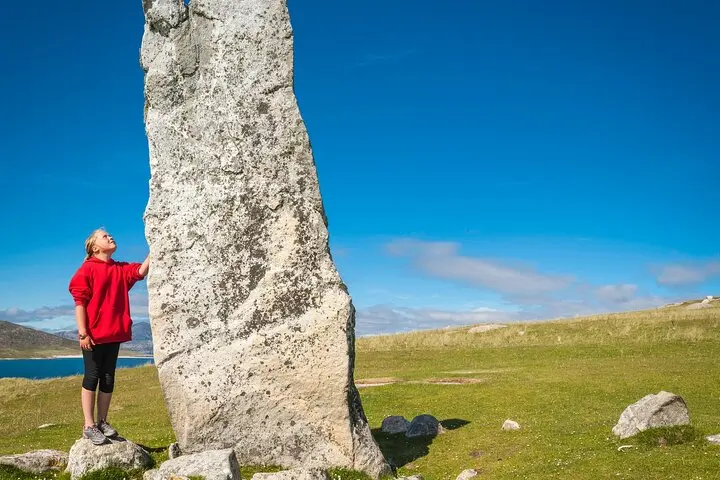
A raw Hebridean wind meets the stones before you even step inside the circle: grass hisses, seabirds wheel, and the Calanais Standing Stones stand like figures risen from the peat. On this private two-hour walking tour you move through axial avenues of rock, past solitary monoliths, and into smaller sibling circles—Callanish II and III—each with its own quiet order. The land here feels active; the Atlantic pushes light across the fields while the stones seem to hold a long, human patience.
Verified experiences and guided adventures in the surrounding area.
Operated by Opatrip.com Scotland · Stornoway, Scotland
A raw Hebridean wind meets the stones before you even step inside the circle: grass hisses, seabirds wheel, and the Calanais Standing Stones stand like figures risen from the peat. On this private two-hour walking tour you move through axial avenues of rock, past solitary monoliths, and into smaller sibling circles—Callanish II and III—each with its own quiet order. The land here feels active; the Atlantic pushes light across the fields while the stones seem to hold a long, human patience.
These arrangements date to the Neolithic and early Bronze Age (roughly 2900–1500 BCE), set on Lewis’s Lewisian gneiss and peat soils. The nearby township of Breasclete and the loch-side environments tell a layered human story: Norse influence, crofting communities, and modern efforts to preserve fragile peatlands. Locals still read the weather like a map; stories about the stones’ origin persist in oral tradition and museum displays at Calanais Visitor Centre.
Practical guidance: the route is flat but exposed—bring windproof layers and solid footwear for wet turf. Expect short, firm walking intervals between monuments; the guide times stops to let you absorb alignments and views. Mornings offer sharper light for photography and fewer visitors; late afternoon brings warmer tones but stronger winds. Respect signage, avoid climbing the stones, and allow extra time for the visitor centre if you want context before or after the walk. This tour suits anyone comfortable on easy terrain who wants an intimate encounter with one of Britain’s most evocative prehistoric sites.
The private tour is about two hours with short walks between the main circle and nearby sites; total distance is modest—roughly 1–2 miles over grass and peat.
Yes—terrain is generally easy without steep sections, but participants should be comfortable walking on uneven ground.
No—climbing or touching the stones is discouraged to protect the archaeology and preserve site condition.
Guides will adjust pace and shelter choices; bring waterproofs and check cancellation/refund terms for severe conditions.
Opatrip.com Scotland operates guided outdoor trips and adventures with an emphasis on safety, stewardship, and memorable experiences.
A raw Hebridean wind meets the stones before you even step inside the circle: grass hisses, seabirds wheel, and the Calanais Standing Stones stand like figures risen from the peat. On this private two-hour walking tour you move through axial avenues of rock, past solitary monoliths, and into smaller sibling circles—Callanish II and III—each with its own quiet order. The land here feels active; the Atlantic pushes light across the fields while the stones seem to hold a long, human patience.
A raw Hebridean wind meets the stones before you even step inside the circle: grass hisses, seabirds wheel, and the Calanais Standing Stones stand like figures risen from the peat. On this private two-hour walking tour you move through axial avenues of rock, past solitary monoliths, and into smaller sibling circles—Callanish II and III—each with its own quiet order. The land here feels active; the Atlantic pushes light across the fields while the stones seem to hold a long, human patience.
These arrangements date to the Neolithic and early Bronze Age (roughly 2900–1500 BCE), set on Lewis’s Lewisian gneiss and peat soils. The nearby township of Breasclete and the loch-side environments tell a layered human story: Norse influence, crofting communities, and modern efforts to preserve fragile peatlands. Locals still read the weather like a map; stories about the stones’ origin persist in oral tradition and museum displays at Calanais Visitor Centre.
Practical guidance: the route is flat but exposed—bring windproof layers and solid footwear for wet turf. Expect short, firm walking intervals between monuments; the guide times stops to let you absorb alignments and views. Mornings offer sharper light for photography and fewer visitors; late afternoon brings warmer tones but stronger winds. Respect signage, avoid climbing the stones, and allow extra time for the visitor centre if you want context before or after the walk. This tour suits anyone comfortable on easy terrain who wants an intimate encounter with one of Britain’s most evocative prehistoric sites.