THE ADVENTURE COLLECTIVE® · Independent discovery and booking for outdoor travel

Watch the Mediterranean night awake at Rudiae: a two-hour sunset tour that pairs guided exploration of Roman-era ruins with stargazing from an amphitheater arena. Learn local myths, constellations and site history while walking among olive groves.
Watch the Mediterranean night awake at Rudiae: a two-hour sunset tour that pairs guided exploration of Roman-era ruins with stargazing from an amphitheater arena. Learn local myths, constellations and site history while walking among olive groves.
The sun slips behind low hills and the olive trees of Puglia draw long, cooling shadows as the group gathers at the stone entry of Rudiae’s archaeological park. Under dimming light, columns and scattered masonry take on new shapes; the amphitheater’s contours become a theater for the sky as constellations emerge and the first stars prick the dark.
Verified experiences and guided adventures in the surrounding area.
Operated by Zeitlos Tours · Lecce, Apulia
The sun slips behind low hills and the olive trees of Puglia draw long, cooling shadows as the group gathers at the stone entry of Rudiae’s archaeological park. Under dimming light, columns and scattered masonry take on new shapes; the amphitheater’s contours become a theater for the sky as constellations emerge and the first stars prick the dark.
Rudiae was a Messapian settlement later woven into the Roman landscape—Roman roads, a sacred temple footprint, and underground tombs speak to centuries of occupation. Geologically, the limestone bedrock here has been worked and weathered into low ridges and terraces where olives have rooted for generations. Culturally, Lecce’s baroque heart lies a short drive away, but evenings here are quieter: stories of local myths, ancient cosmology and the poet Ennius often surface during the tour.
Practically, the experience blends a short archaeological walk with guided stargazing from the amphitheater arena. Expect uneven stone surfaces, low-light conditions, and open sky. Guides cover the park’s main monuments for about an hour, then lead participants into the arena to read the stars and link myth with astronomy.
Plan for clear skies and cooler temperatures after sunset; bring a small torch, sturdy shoes and a light jacket. The site rewards slow observation—look for owl calls and the silhouette of centuries-old olive trunks against the Milky Way. With basic mobility and curiosity, visitors will leave with a sense of place: an ancient settlement quietly watching the same sky as modern Lecce.
Yes; the tour is rated easy and suitable for all fitness levels, but participants should be steady on uneven ground and supervise young children closely in low light.
Yes—photography is allowed, though low-light conditions require long exposures or a tripod for best results; be mindful of other visitors and the guide’s instructions.
Yes—the operator typically cancels in poor weather; full refunds are available if cancelled at least 24 hours prior according to the booking policy.
Access is limited: many archaeological features and paths are uneven and not fully accessible; contact the operator ahead to discuss specific mobility needs.
Zeitlos Tours operates guided outdoor trips and adventures with an emphasis on safety, stewardship, and memorable experiences.
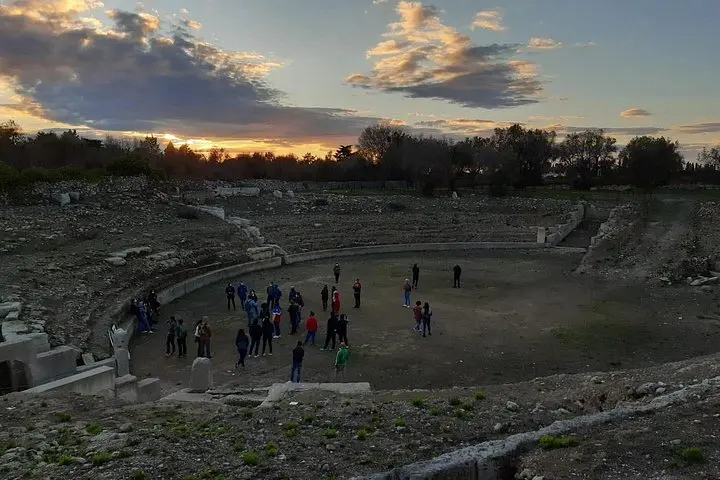
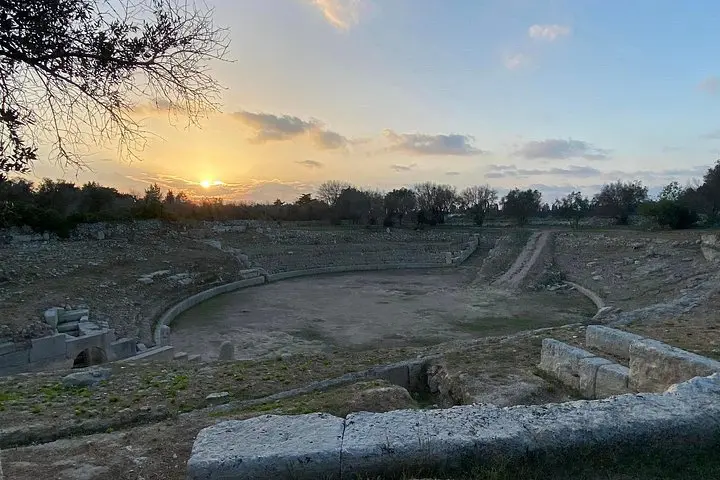
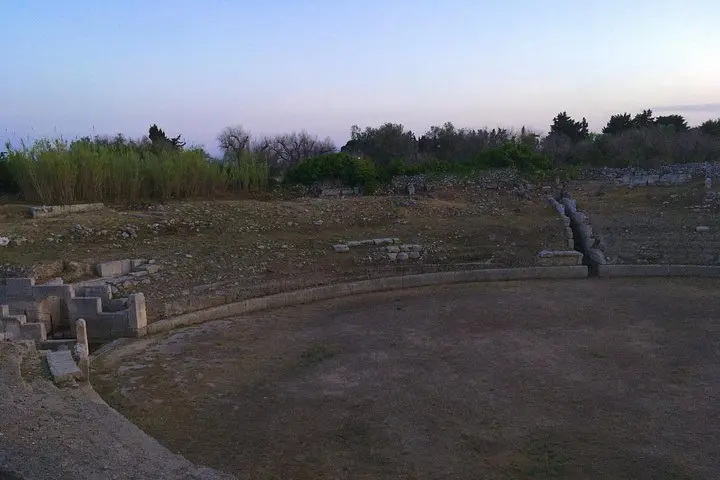
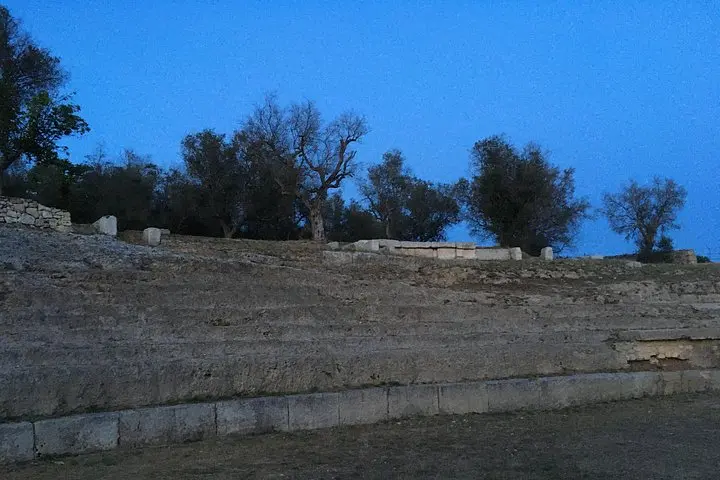
The sun slips behind low hills and the olive trees of Puglia draw long, cooling shadows as the group gathers at the stone entry of Rudiae’s archaeological park. Under dimming light, columns and scattered masonry take on new shapes; the amphitheater’s contours become a theater for the sky as constellations emerge and the first stars prick the dark.
The sun slips behind low hills and the olive trees of Puglia draw long, cooling shadows as the group gathers at the stone entry of Rudiae’s archaeological park. Under dimming light, columns and scattered masonry take on new shapes; the amphitheater’s contours become a theater for the sky as constellations emerge and the first stars prick the dark.
Rudiae was a Messapian settlement later woven into the Roman landscape—Roman roads, a sacred temple footprint, and underground tombs speak to centuries of occupation. Geologically, the limestone bedrock here has been worked and weathered into low ridges and terraces where olives have rooted for generations. Culturally, Lecce’s baroque heart lies a short drive away, but evenings here are quieter: stories of local myths, ancient cosmology and the poet Ennius often surface during the tour.
Practically, the experience blends a short archaeological walk with guided stargazing from the amphitheater arena. Expect uneven stone surfaces, low-light conditions, and open sky. Guides cover the park’s main monuments for about an hour, then lead participants into the arena to read the stars and link myth with astronomy.
Plan for clear skies and cooler temperatures after sunset; bring a small torch, sturdy shoes and a light jacket. The site rewards slow observation—look for owl calls and the silhouette of centuries-old olive trunks against the Milky Way. With basic mobility and curiosity, visitors will leave with a sense of place: an ancient settlement quietly watching the same sky as modern Lecce.