THE ADVENTURE COLLECTIVE® · Independent discovery and booking for outdoor travel

Spend two nights living with a Quechua family in the Sacred Valley: heated tents, organic food cooked on mud stoves, weaving demos and visits to nearby ruins. Ideal for travelers seeking cultural immersion with light trekking and authentic local hospitality.
Spend two nights living with a Quechua family in the Sacred Valley: heated tents, organic food cooked on mud stoves, weaving demos and visits to nearby ruins. Ideal for travelers seeking cultural immersion with light trekking and authentic local hospitality.
A thin cold wind moves across the plateau as the first light slices through a canvas tent. You unzip, step onto packed earth and see terraced fields rolling toward a distant ridge, alpacas grazing and smoke curling from a family’s mud stove. This is not a hotel—it's a household, where glamping means a heated tent, handmade textiles and an intimate view of daily Andean life.
Verified experiences and guided adventures in the surrounding area.
Operated by Andean Glamping · Pisac, Cusco
A thin cold wind moves across the plateau as the first light slices through a canvas tent. You unzip, step onto packed earth and see terraced fields rolling toward a distant ridge, alpacas grazing and smoke curling from a family’s mud stove. This is not a hotel—it's a household, where glamping means a heated tent, handmade textiles and an intimate view of daily Andean life.
The Sacred Valley was shaped by Andean uplift and river erosion; Inca engineers carved terraces here to manage steep slopes and microclimates. Pisac itself combines pre-Columbian ruins, colonial-era markets and living Quechua traditions. Families still raise guinea pigs for food, cultivate quinoa and potatoes, and weave textiles using techniques passed down generations—expect a demonstration and stories about local crops and tools.
On arrival you’ll meet your hosts, tour an organic garden, visit nearby Puka Kancha or prehistoric paintings and learn about traditional mud-stove cooking. Nights are for stargazing from a warm tent; mornings bring a simple Andean breakfast and an optional short hike to a viewpoint over the Pisac sites.
Practical guide: this community stay sits at roughly 3,000 m (about 9,800 ft), so acclimatize in Cusco first and drink extra water. Bring sturdy shoes for uneven trails, a small daypack for hikes, and layers for cold nights. Check-in is typically 15:00 with checkout at 10:00; dinner and breakfast are included and dietary needs can be accommodated if noted in advance. Contact the operator by WhatsApp after booking to confirm pickup and logistics. Travel light, be respectful of family routines, and leave no trace—this is cultural exchange as much as it is camping-under-the-stars.
No special fitness is required—activities include short walks and farm visits; the hosts note it’s suitable for all fitness levels.
Dinner and breakfast made with local organic products cooked on traditional mud stoves are included; indicate dietary needs when booking.
Pickup and transfer to the glamping are provided as part of the booking; confirm the pickup point in Pisac or Cusco when you contact the operator by WhatsApp.
Yes—if you have large baggage, the operator can provide contacts in Pisac for safe storage prior to arrival.
Andean Glamping operates guided outdoor trips and adventures with an emphasis on safety, stewardship, and memorable experiences.
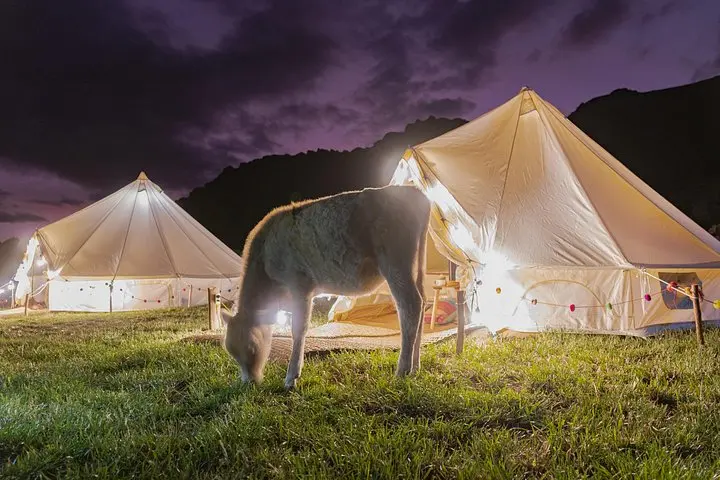
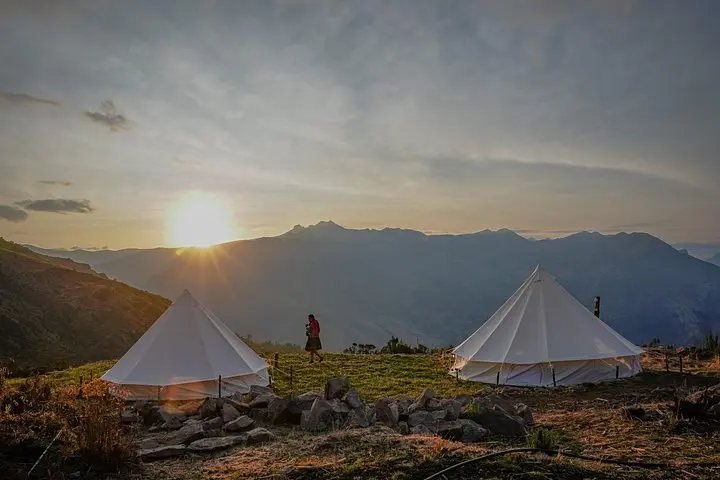
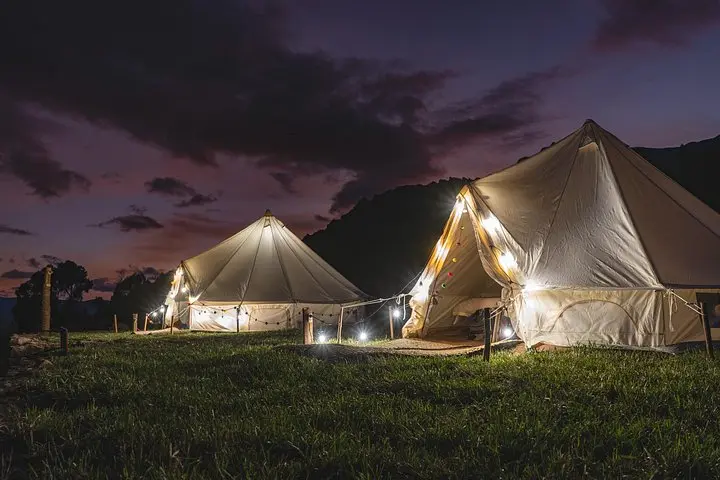
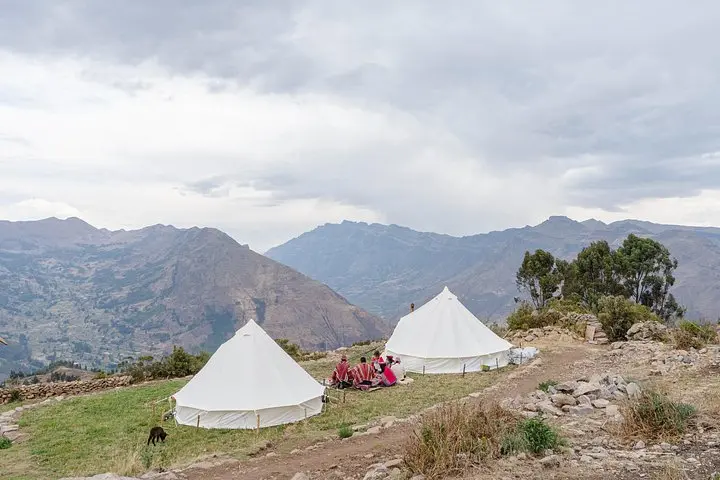
A thin cold wind moves across the plateau as the first light slices through a canvas tent. You unzip, step onto packed earth and see terraced fields rolling toward a distant ridge, alpacas grazing and smoke curling from a family’s mud stove. This is not a hotel—it's a household, where glamping means a heated tent, handmade textiles and an intimate view of daily Andean life.
A thin cold wind moves across the plateau as the first light slices through a canvas tent. You unzip, step onto packed earth and see terraced fields rolling toward a distant ridge, alpacas grazing and smoke curling from a family’s mud stove. This is not a hotel—it's a household, where glamping means a heated tent, handmade textiles and an intimate view of daily Andean life.
The Sacred Valley was shaped by Andean uplift and river erosion; Inca engineers carved terraces here to manage steep slopes and microclimates. Pisac itself combines pre-Columbian ruins, colonial-era markets and living Quechua traditions. Families still raise guinea pigs for food, cultivate quinoa and potatoes, and weave textiles using techniques passed down generations—expect a demonstration and stories about local crops and tools.
On arrival you’ll meet your hosts, tour an organic garden, visit nearby Puka Kancha or prehistoric paintings and learn about traditional mud-stove cooking. Nights are for stargazing from a warm tent; mornings bring a simple Andean breakfast and an optional short hike to a viewpoint over the Pisac sites.
Practical guide: this community stay sits at roughly 3,000 m (about 9,800 ft), so acclimatize in Cusco first and drink extra water. Bring sturdy shoes for uneven trails, a small daypack for hikes, and layers for cold nights. Check-in is typically 15:00 with checkout at 10:00; dinner and breakfast are included and dietary needs can be accommodated if noted in advance. Contact the operator by WhatsApp after booking to confirm pickup and logistics. Travel light, be respectful of family routines, and leave no trace—this is cultural exchange as much as it is camping-under-the-stars.