THE ADVENTURE COLLECTIVE® · Independent discovery and booking for outdoor travel

Ride Ruta 7 deep into the Andes from Mendoza, with stops at Potrerillos, Uspallata, Puente del Inca, and the Aconcagua viewpoints. It’s a high-altitude, photo-forward day with short walks, big scenery, and a crash course in Andean geology and history.
Ride Ruta 7 deep into the Andes from Mendoza, with stops at Potrerillos, Uspallata, Puente del Inca, and the Aconcagua viewpoints. It’s a high-altitude, photo-forward day with short walks, big scenery, and a crash course in Andean geology and history.
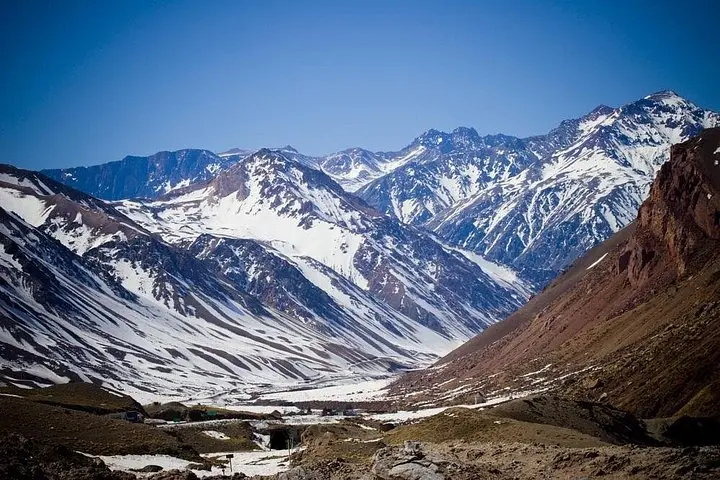
Dawn breaks in Mendoza and the Andes wake with it—shadows sliding off serrated ridgelines as the bus points west on Ruta 7. Vineyards give way to scrub and sage, then the road climbs in long, steady arcs toward the Potrerillos Dam, where the wind rakes turquoise water and the mountains hint at their true scale. The air cools; the horizon widens. You’re not hiking today so much as moving through a living corridor of geology and history, stepping out often to feel the altitude tug at your lungs and the dry light sharpen every color.
Verified experiences and guided adventures in the surrounding area.
Operated by Kahuak · Puente del Inca, Mendoza
Dawn breaks in Mendoza and the Andes wake with it—shadows sliding off serrated ridgelines as the bus points west on Ruta 7. Vineyards give way to scrub and sage, then the road climbs in long, steady arcs toward the Potrerillos Dam, where the wind rakes turquoise water and the mountains hint at their true scale. The air cools; the horizon widens. You’re not hiking today so much as moving through a living corridor of geology and history, stepping out often to feel the altitude tug at your lungs and the dry light sharpen every color.
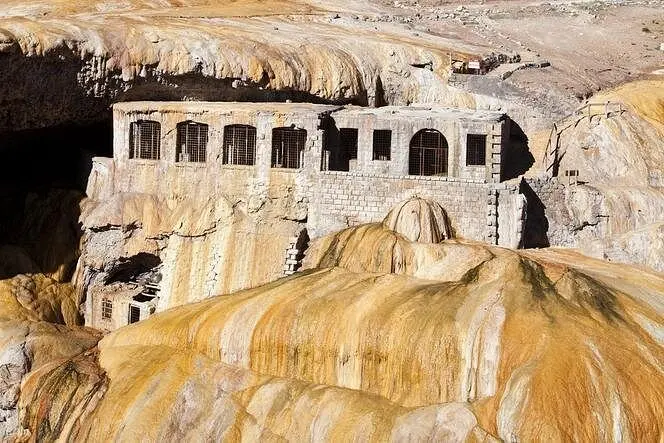
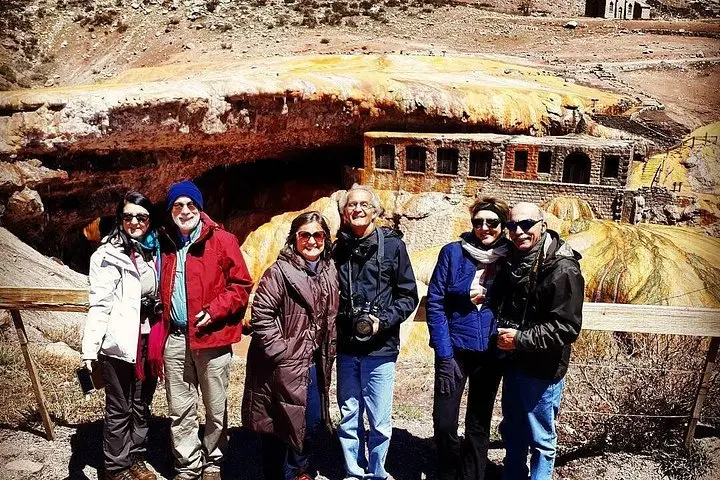
Uspallata is the first pause, a high valley once used by the Huarpe people and later the southern edge of the Inca road network. Poplars line the streets, and adobe still holds the chill from the night. From here the route threads past the ghostly Penitentes ski area toward Puente del Inca, the golden-rock bridge that spans the Las Cuevas River like a natural archway. Hot springs stained the formation in ochres and lemon; the river chatters below, daring you to lean closer for a better look.
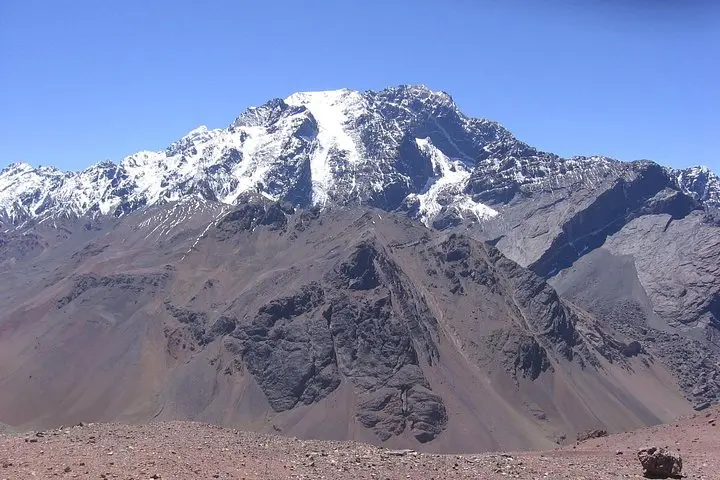
A few kilometers farther, the Horcones Valley opens and Aconcagua dominates the skyline—6,962 meters of weather and willpower. On clear days, the mountain pushes forward from its icy ramparts, claiming its nickname: the Colossus of the Americas. Short, flat walks at park viewpoints offer a taste of the terrain without committing to a trek, and condors sometimes circle as if inspecting the visitors.
Lunch usually lands in Las Cuevas, a high-altitude village at roughly 3,200 meters where stone walls hold back winters and border winds. It’s a place that reminds you the Andes aren’t just scenery; they are lived-in mountains, crossed for centuries by traders, soldiers, and dreamers riding the trans-Andean railway (its tunnels still pock the hillsides).
Practical matters shape the day. This is a full, high-elevation outing with multiple stops and short walks on gravel or dirt. Hydration matters; so does sun protection—UV here bites quickly. Bring pesos in cash for lunch, a light puffy and shell for shifting weather, and patience for mountain conditions. In summer, the road to the Christ the Redeemer pass may open; in winter, storms can shut things down fast. Either way, the Andes call the pace.
By late afternoon the bus drops back through Potrerillos and into the warmer lowlands. The light softens on the reservoir, and the mountains—having tested your lungs and filled your camera—let you go, already planning your return.
Plan for 10–12 hours including hotel pickup, multiple scenic stops, lunch, and the return drive.
No. The tour goes as far as Las Cuevas on the Argentine side and does not cross the border. Bring an ID, but a passport isn’t required unless you plan to cross independently.
Expect several short walks (5–20 minutes each) on gravel or dirt paths to viewpoints such as Puente del Inca and Aconcagua’s Horcones area.
You’ll reach about 3,200 m at Las Cuevas. Mild symptoms are possible; hydrate, eat lightly, and move at an easy pace. The coach provides frequent rests.
There’s a lunch stop, but the meal is typically at your own expense. Carry Argentine pesos in cash.
Mountain conditions can change quickly. In case of closure or unsafe conditions, the itinerary may adjust or the operator may reschedule/issue refunds per policy.
Kahuak operates guided outdoor trips and adventures with an emphasis on safety, stewardship, and memorable experiences.
Dawn breaks in Mendoza and the Andes wake with it—shadows sliding off serrated ridgelines as the bus points west on Ruta 7. Vineyards give way to scrub and sage, then the road climbs in long, steady arcs toward the Potrerillos Dam, where the wind rakes turquoise water and the mountains hint at their true scale. The air cools; the horizon widens. You’re not hiking today so much as moving through a living corridor of geology and history, stepping out often to feel the altitude tug at your lungs and the dry light sharpen every color.
Dawn breaks in Mendoza and the Andes wake with it—shadows sliding off serrated ridgelines as the bus points west on Ruta 7. Vineyards give way to scrub and sage, then the road climbs in long, steady arcs toward the Potrerillos Dam, where the wind rakes turquoise water and the mountains hint at their true scale. The air cools; the horizon widens. You’re not hiking today so much as moving through a living corridor of geology and history, stepping out often to feel the altitude tug at your lungs and the dry light sharpen every color.
Uspallata is the first pause, a high valley once used by the Huarpe people and later the southern edge of the Inca road network. Poplars line the streets, and adobe still holds the chill from the night. From here the route threads past the ghostly Penitentes ski area toward Puente del Inca, the golden-rock bridge that spans the Las Cuevas River like a natural archway. Hot springs stained the formation in ochres and lemon; the river chatters below, daring you to lean closer for a better look.
A few kilometers farther, the Horcones Valley opens and Aconcagua dominates the skyline—6,962 meters of weather and willpower. On clear days, the mountain pushes forward from its icy ramparts, claiming its nickname: the Colossus of the Americas. Short, flat walks at park viewpoints offer a taste of the terrain without committing to a trek, and condors sometimes circle as if inspecting the visitors.
Lunch usually lands in Las Cuevas, a high-altitude village at roughly 3,200 meters where stone walls hold back winters and border winds. It’s a place that reminds you the Andes aren’t just scenery; they are lived-in mountains, crossed for centuries by traders, soldiers, and dreamers riding the trans-Andean railway (its tunnels still pock the hillsides).
Practical matters shape the day. This is a full, high-elevation outing with multiple stops and short walks on gravel or dirt. Hydration matters; so does sun protection—UV here bites quickly. Bring pesos in cash for lunch, a light puffy and shell for shifting weather, and patience for mountain conditions. In summer, the road to the Christ the Redeemer pass may open; in winter, storms can shut things down fast. Either way, the Andes call the pace.
By late afternoon the bus drops back through Potrerillos and into the warmer lowlands. The light softens on the reservoir, and the mountains—having tested your lungs and filled your camera—let you go, already planning your return.