THE ADVENTURE COLLECTIVE® · Independent discovery and booking for outdoor travel

Cycle the quieter reaches of Angkor on a 25 km private loop that links Preah Khan, Ta Som, Neak Pean and Pre Rup. Expect off-road village tracks, dam crossings and monumental ruins swallowed by roots, with tuk‑tuk support and plenty of shade breaks.
Cycle the quieter reaches of Angkor on a 25 km private loop that links Preah Khan, Ta Som, Neak Pean and Pre Rup. Expect off-road village tracks, dam crossings and monumental ruins swallowed by roots, with tuk‑tuk support and plenty of shade breaks.
The morning light in Siem Reap slices across paddy fields as cyclists clip pedals and roll toward the ticket office — a single street crossing that feels like the edge of a different century.
Verified experiences and guided adventures in the surrounding area.
Operated by Siem Reap Biking Tour · Siem Reap, Siem Reap Province
The morning light in Siem Reap slices across paddy fields as cyclists clip pedals and roll toward the ticket office — a single street crossing that feels like the edge of a different century.
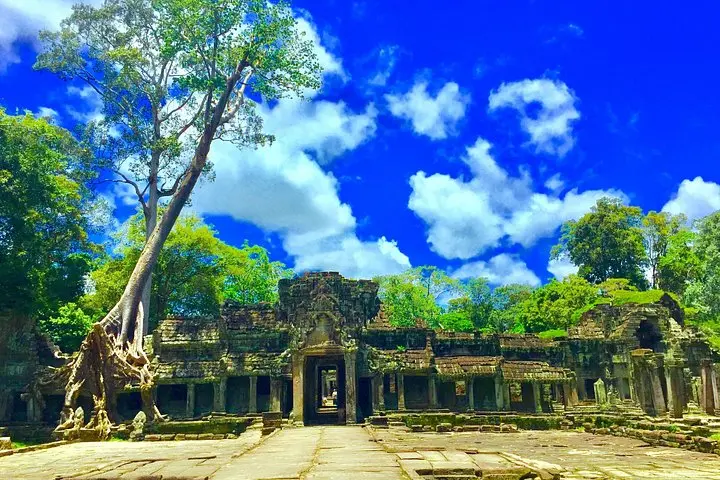
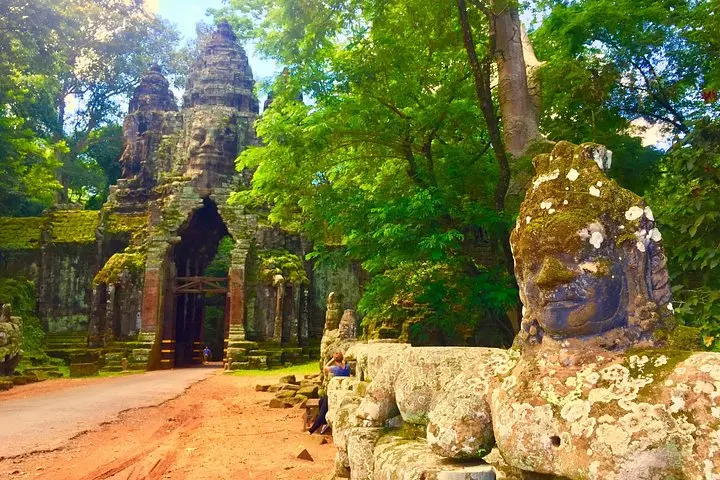
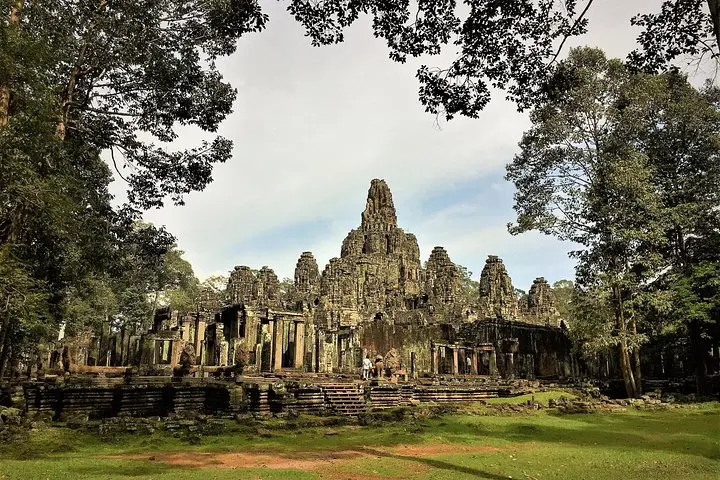
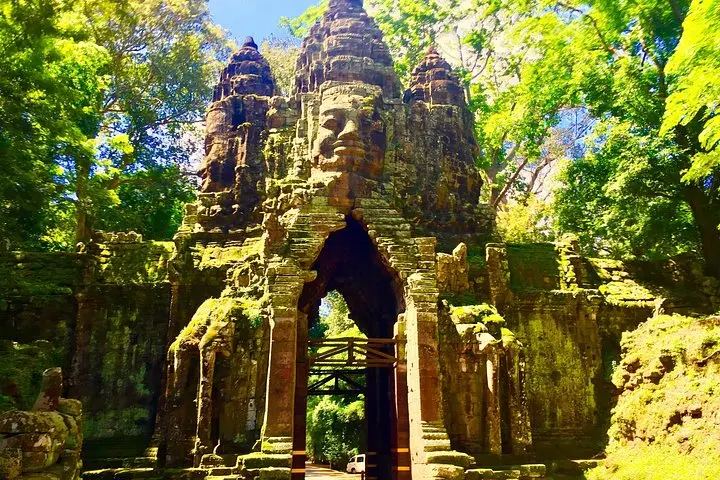
This 25 km private bike route threads quiet village lanes and dam roads into the main sweep of the Angkor Grand Tour. Riders cycle from hotel doorsteps to reddish-brick gopuras, through forested causeways and across low, earthen dams that frame carved lintels and elephant statues. Preah Khan’s layered galleries and Ta Som’s eastern gopura, strangled by a fig’s roots, give the day a cinematic rhythm; Neak Pean’s circular platform offers a brief, reflective stop amid lotus and shallow pools, and Pre Rup’s temple carries the local belief of funerary rites and ritual turning of the body.
The geology here is flat alluvium with laterite and sandstone ruins; the terrain you’ll ride is a mix of smooth paved stretches, compact dirt, and occasional ruts through village tracks. Culture arrives in tile-roofed villages, monks’ saffron robes and the scent of street food at midday.
Practicalities: this is a full-day outing (about 10 hours with stops), so start early to avoid mid-day heat, carry an Angkor pass and passport copy, wear sun-protective clothing and respectful temple attire, and expect a tuk‑tuk support vehicle to hold water and small repairs. The pacing is unhurried — plenty of photo stops but enough motion to keep the day moving — making the ride as much about local texture as the monuments themselves.
Yes — you can buy passes at the ticket office before entering the park, but having one ready speeds the morning. Bring exact cash or check availability for online purchase.
Yes — the tour is described as suitable for all fitness levels, but riders should be comfortable on a bicycle for several hours over occasional uneven village tracks.
Standard bicycles, an English-speaking licensed guide, and a tuk‑tuk following vehicle with cold water and snacks are included in the tour details.
Shoulders and knees should be covered; avoid ripped clothing and wear shoes that can be removed easily when climbing temple steps.
Siem Reap Biking Tour operates guided outdoor trips and adventures with an emphasis on safety, stewardship, and memorable experiences.
The morning light in Siem Reap slices across paddy fields as cyclists clip pedals and roll toward the ticket office — a single street crossing that feels like the edge of a different century.
The morning light in Siem Reap slices across paddy fields as cyclists clip pedals and roll toward the ticket office — a single street crossing that feels like the edge of a different century.
This 25 km private bike route threads quiet village lanes and dam roads into the main sweep of the Angkor Grand Tour. Riders cycle from hotel doorsteps to reddish-brick gopuras, through forested causeways and across low, earthen dams that frame carved lintels and elephant statues. Preah Khan’s layered galleries and Ta Som’s eastern gopura, strangled by a fig’s roots, give the day a cinematic rhythm; Neak Pean’s circular platform offers a brief, reflective stop amid lotus and shallow pools, and Pre Rup’s temple carries the local belief of funerary rites and ritual turning of the body.
The geology here is flat alluvium with laterite and sandstone ruins; the terrain you’ll ride is a mix of smooth paved stretches, compact dirt, and occasional ruts through village tracks. Culture arrives in tile-roofed villages, monks’ saffron robes and the scent of street food at midday.
Practicalities: this is a full-day outing (about 10 hours with stops), so start early to avoid mid-day heat, carry an Angkor pass and passport copy, wear sun-protective clothing and respectful temple attire, and expect a tuk‑tuk support vehicle to hold water and small repairs. The pacing is unhurried — plenty of photo stops but enough motion to keep the day moving — making the ride as much about local texture as the monuments themselves.