THE ADVENTURE COLLECTIVE® · Independent discovery and booking for outdoor travel

Pedal through shaded jungle trails and quiet back roads to reach Angkor’s major temples and hidden ruins. This full-day ride combines cultural insight with off-road riding—ideal for fit travelers who want a more intimate, eco-friendly way to explore the park.
Pedal through shaded jungle trails and quiet back roads to reach Angkor’s major temples and hidden ruins. This full-day ride combines cultural insight with off-road riding—ideal for fit travelers who want a more intimate, eco-friendly way to explore the park.
Before sunrise the stones hold their own cool, and the first pedal strokes cut through mist above flooded rice paddies.
You start on a quiet back road, tires whispering on packed earth, while temple towers appear between palm fronds—ancient spires that have watched centuries of monsoon and market.
Verified experiences and guided adventures in the surrounding area.
Operated by Angkor Guide Sarak · Siem Reap, Siem Reap
Before sunrise the stones hold their own cool, and the first pedal strokes cut through mist above flooded rice paddies.
You start on a quiet back road, tires whispering on packed earth, while temple towers appear between palm fronds—ancient spires that have watched centuries of monsoon and market.
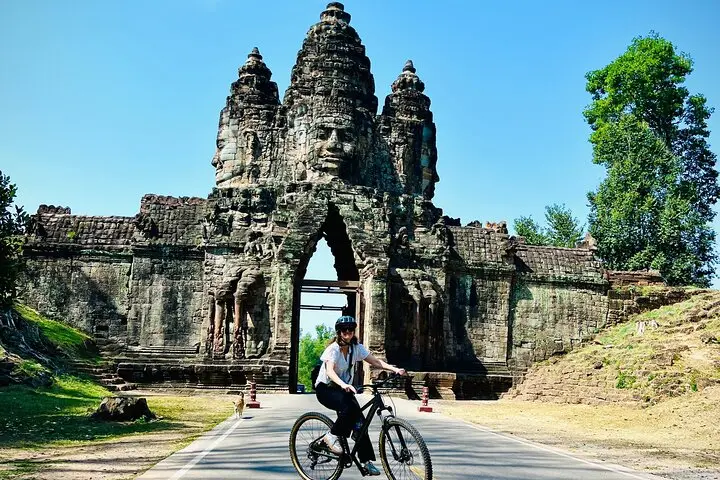
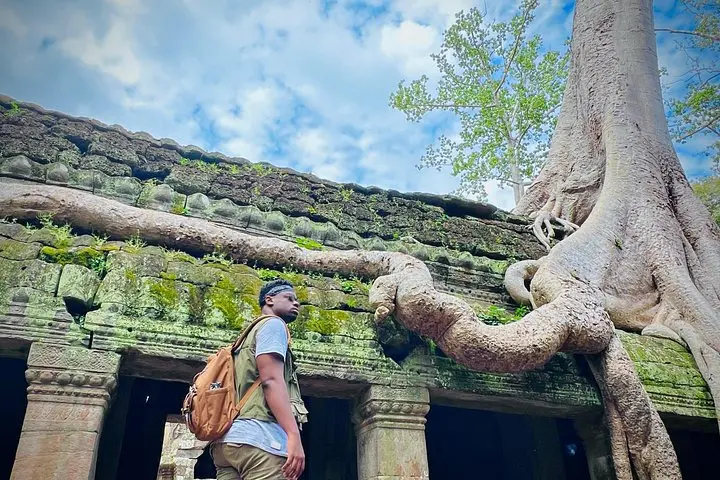
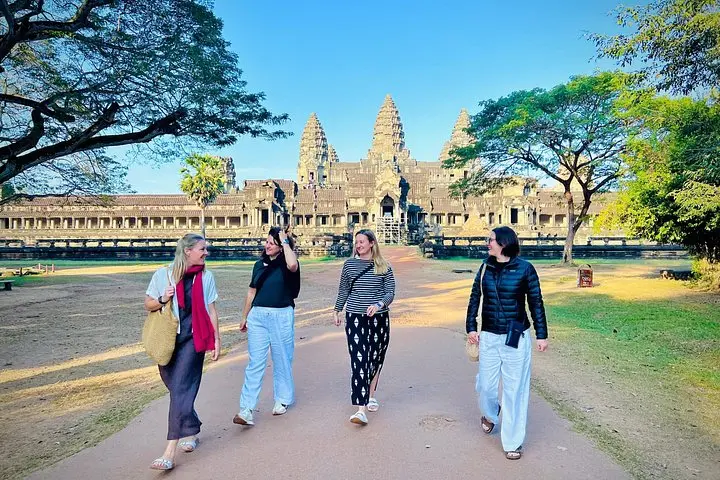
The route threads Angkor Wat, Angkor Thom and Ta Prohm with smaller ruins and village lanes. These temples were raised by the Khmer Empire from sandstone quarried and ferried across vast barays—man-made reservoirs that still irrigate the plain. Ta Prohm’s roots tug at walls like a slow, patient current; Bayon’s carved faces keep an unblinking watch over the avenues of the old royal city.
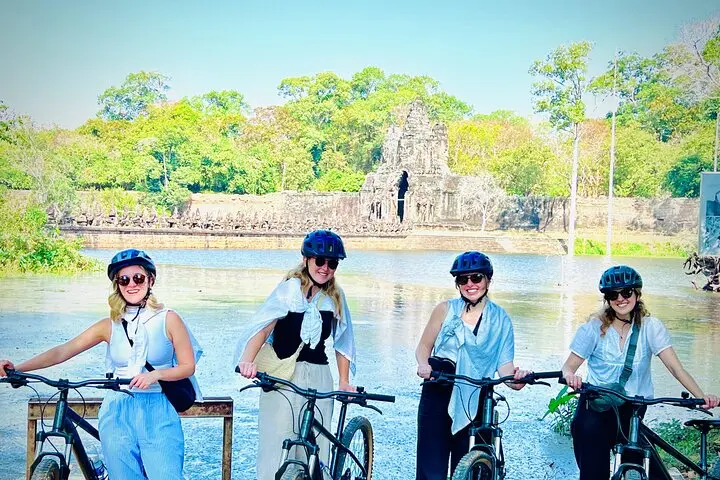
Cycling here is both cultural immersion and landscape study: low, flat terrain but uneven surfaces—dirt tracks, compacted gravel, occasional soft sand—interspersed with shaded jungle trails. You’ll pass rice fields irrigated by the same hydraulic works Khmer engineers used a thousand years ago, and nod to vendors selling fruit by the road.
Practical guide: expect a full day (7–8 hours) with stops—plan 30–40 km of mixed riding. Start early to avoid the heat, carry at least 2–3 liters of water, and wear sun protection; insect repellent helps on forested stretches. A quality mountain bike with front suspension and good tires reduces fatigue on roots and ruts. Bring local cash for lunch and temple passes, and pace your ride—long climbs aren’t required, but endurance in tropical heat is.
This tour balances quiet routes away from coach traffic with close encounters of history and nature—an active, low-impact way to read Angkor’s landscape on two wheels.
Yes—quality mountain bikes and helmets are provided and fitted at the start of the tour.
Yes—entry to Angkor Archaeological Park requires a park pass, which riders must purchase before visiting major temple sites.
This tour is best for experienced cyclists; the full-day distance and tropical heat make it challenging for beginners.
The operator’s standard policy allows full refund if canceled at least 24 hours before departure; tours generally run in light rain but may be rescheduled for heavy storms.
Angkor Guide Sarak operates guided outdoor trips and adventures with an emphasis on safety, stewardship, and memorable experiences.
Before sunrise the stones hold their own cool, and the first pedal strokes cut through mist above flooded rice paddies.
You start on a quiet back road, tires whispering on packed earth, while temple towers appear between palm fronds—ancient spires that have watched centuries of monsoon and market.
Before sunrise the stones hold their own cool, and the first pedal strokes cut through mist above flooded rice paddies.
You start on a quiet back road, tires whispering on packed earth, while temple towers appear between palm fronds—ancient spires that have watched centuries of monsoon and market.
The route threads Angkor Wat, Angkor Thom and Ta Prohm with smaller ruins and village lanes. These temples were raised by the Khmer Empire from sandstone quarried and ferried across vast barays—man-made reservoirs that still irrigate the plain. Ta Prohm’s roots tug at walls like a slow, patient current; Bayon’s carved faces keep an unblinking watch over the avenues of the old royal city.
Cycling here is both cultural immersion and landscape study: low, flat terrain but uneven surfaces—dirt tracks, compacted gravel, occasional soft sand—interspersed with shaded jungle trails. You’ll pass rice fields irrigated by the same hydraulic works Khmer engineers used a thousand years ago, and nod to vendors selling fruit by the road.
Practical guide: expect a full day (7–8 hours) with stops—plan 30–40 km of mixed riding. Start early to avoid the heat, carry at least 2–3 liters of water, and wear sun protection; insect repellent helps on forested stretches. A quality mountain bike with front suspension and good tires reduces fatigue on roots and ruts. Bring local cash for lunch and temple passes, and pace your ride—long climbs aren’t required, but endurance in tropical heat is.
This tour balances quiet routes away from coach traffic with close encounters of history and nature—an active, low-impact way to read Angkor’s landscape on two wheels.