THE ADVENTURE COLLECTIVE® · Independent discovery and booking for outdoor travel

Ride quiet jungle paths and back roads through Angkor’s great temples on a private one-day bicycle loop. This route prioritizes off-the-beaten-track access to Ta Prohm, Bayon and Angkor Wat with a support vehicle and English-speaking guide.
Ride quiet jungle paths and back roads through Angkor’s great temples on a private one-day bicycle loop. This route prioritizes off-the-beaten-track access to Ta Prohm, Bayon and Angkor Wat with a support vehicle and English-speaking guide.
Dawn breaks over rice paddies as the support vehicle drops you at Angkor Thom's south gate. Cool air threads through towering laterite walls and the first bicycle wheels crunch along damp dirt roads. The route threads quiet back-paths that locals use—tight jungle trails, shaded lanes between temples, and short stretches of paved road—so most of the day you’ll have the ruins and the sounds of birds to yourself.
Verified experiences and guided adventures in the surrounding area.
Operated by Happy Angkor Wat Tour · Siem Reap, Siem Reap Province
Dawn breaks over rice paddies as the support vehicle drops you at Angkor Thom's south gate. Cool air threads through towering laterite walls and the first bicycle wheels crunch along damp dirt roads. The route threads quiet back-paths that locals use—tight jungle trails, shaded lanes between temples, and short stretches of paved road—so most of the day you’ll have the ruins and the sounds of birds to yourself.
These monuments were raised by the Khmer Empire between the 9th and 15th centuries from local sandstone and laterite; erosion and regrowth have let large roots reclaim masonry at Ta Prohm while the Bayon’s smiling faces stare out from the center of Angkor Thom. Geologically the plain is recent alluvium, which explains the shallow, flat terrain and the broad reservoirs (barays) that once fed the capital.
Culturally, the tour moves through Hindu and Buddhist layers of design and local craft villages where traditional weaving and sugar-palm stalls remain common. Guides often point out iconography carved into lintels and explain seasonal rituals tied to the monsoon.
Practical notes: the ride is short in distance (roughly 10 km of temple cycling) but stretched into a 7–9 hour day with stops, walking and transfers. Elevation change is negligible; expect uneven surfaces, roots and soft sand on side tracks. Carry sun protection, insect repellent and a hydration system; wear sun-safe but temple-appropriate clothing (shoulders and knees covered). A support vehicle accompanies the group if you need to skip sections. Toilets at major sites, but bring cash for smaller purchases and tips.
The tour runs about 7–9 hours including transport and visits; you’ll cycle roughly 8–12 km between Angkor Thom, Ta Prohm and Angkor Wat with walking at each site.
No—park admission (Cambodia Angkor Pass) is not included; purchase tickets at the official ticket center before the tour or ask your operator to advise on timing.
Riders should have moderate fitness and basic bike-handling skills; the operator provides a support vehicle if you need to skip cycling—children must be capable cyclists to join safely.
Wear modest clothing that covers shoulders and knees to enter temple precincts; lightweight fabrics and a sun hat are recommended for the ride.
Happy Angkor Wat Tour operates guided outdoor trips and adventures with an emphasis on safety, stewardship, and memorable experiences.
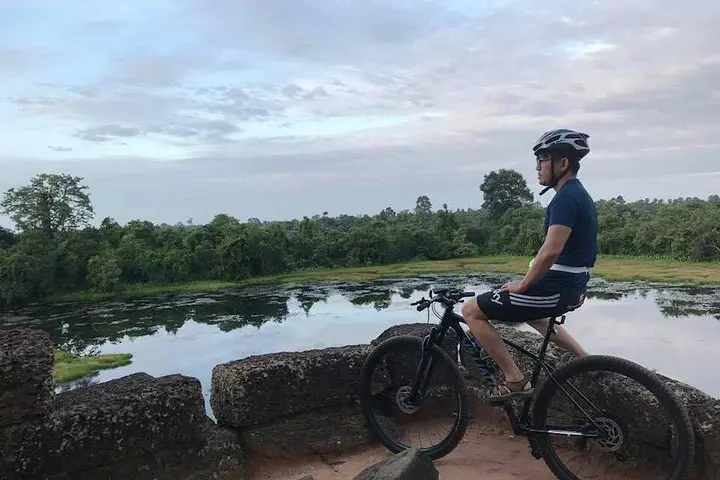
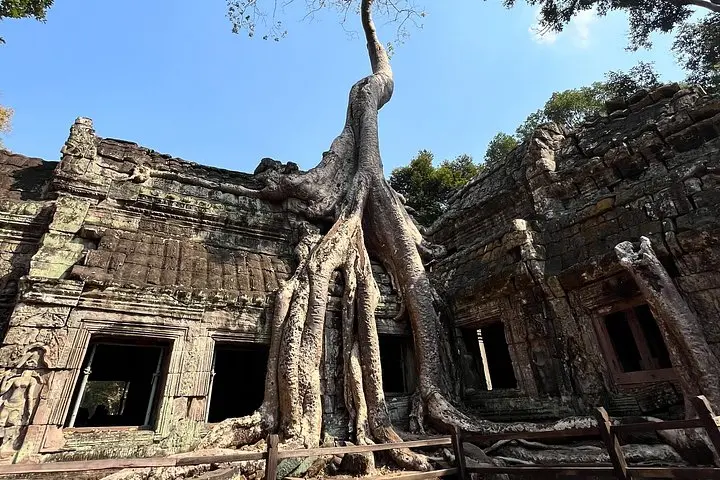
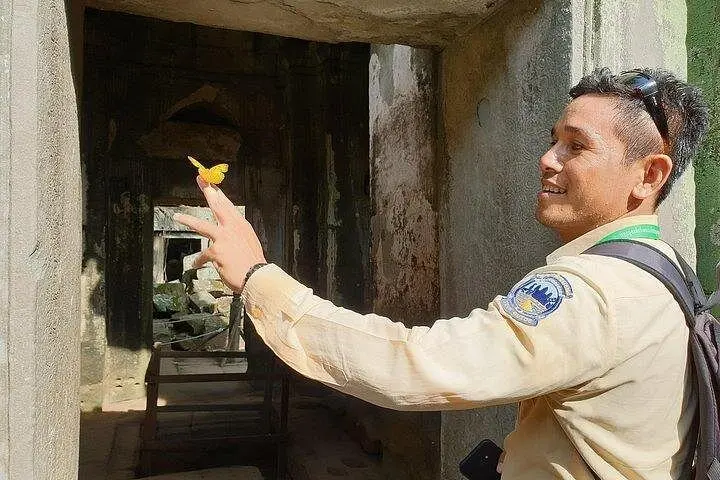
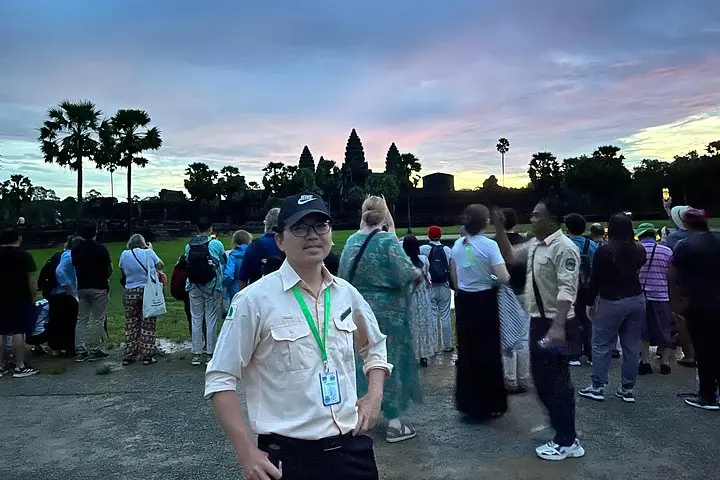
Dawn breaks over rice paddies as the support vehicle drops you at Angkor Thom's south gate. Cool air threads through towering laterite walls and the first bicycle wheels crunch along damp dirt roads. The route threads quiet back-paths that locals use—tight jungle trails, shaded lanes between temples, and short stretches of paved road—so most of the day you’ll have the ruins and the sounds of birds to yourself.
Dawn breaks over rice paddies as the support vehicle drops you at Angkor Thom's south gate. Cool air threads through towering laterite walls and the first bicycle wheels crunch along damp dirt roads. The route threads quiet back-paths that locals use—tight jungle trails, shaded lanes between temples, and short stretches of paved road—so most of the day you’ll have the ruins and the sounds of birds to yourself.
These monuments were raised by the Khmer Empire between the 9th and 15th centuries from local sandstone and laterite; erosion and regrowth have let large roots reclaim masonry at Ta Prohm while the Bayon’s smiling faces stare out from the center of Angkor Thom. Geologically the plain is recent alluvium, which explains the shallow, flat terrain and the broad reservoirs (barays) that once fed the capital.
Culturally, the tour moves through Hindu and Buddhist layers of design and local craft villages where traditional weaving and sugar-palm stalls remain common. Guides often point out iconography carved into lintels and explain seasonal rituals tied to the monsoon.
Practical notes: the ride is short in distance (roughly 10 km of temple cycling) but stretched into a 7–9 hour day with stops, walking and transfers. Elevation change is negligible; expect uneven surfaces, roots and soft sand on side tracks. Carry sun protection, insect repellent and a hydration system; wear sun-safe but temple-appropriate clothing (shoulders and knees covered). A support vehicle accompanies the group if you need to skip sections. Toilets at major sites, but bring cash for smaller purchases and tips.