THE ADVENTURE COLLECTIVE® · Independent discovery and booking for outdoor travel

A focused one-day exploration of Angkor’s highlights—from Angkor Wat’s grand causeway to Bayon’s enigmatic faces, the jungle-wrapped corridors of Ta Prohm, and the finely carved Banteay Srei. Practical route timing and cultural tips make this a manageable, memorable introduction to the Angkor complex.
A focused one-day exploration of Angkor’s highlights—from Angkor Wat’s grand causeway to Bayon’s enigmatic faces, the jungle-wrapped corridors of Ta Prohm, and the finely carved Banteay Srei. Practical route timing and cultural tips make this a manageable, memorable introduction to the Angkor complex.
You arrive at dawn on a quiet causeway, the silhouette of Angkor Wat rising like a stone horizon as light spills over lotus ponds. The guide briefs the small group and the A/C car slips into the shaded lanes toward the city of temples—an 8–9 hour loop that stitches together the complex’s highest-profile ruins and a delicate jewel to the northeast.
Verified experiences and guided adventures in the surrounding area.
Operated by Angkor Special Tours · Siem Reap, Siem Reap Province
You arrive at dawn on a quiet causeway, the silhouette of Angkor Wat rising like a stone horizon as light spills over lotus ponds. The guide briefs the small group and the A/C car slips into the shaded lanes toward the city of temples—an 8–9 hour loop that stitches together the complex’s highest-profile ruins and a delicate jewel to the northeast.
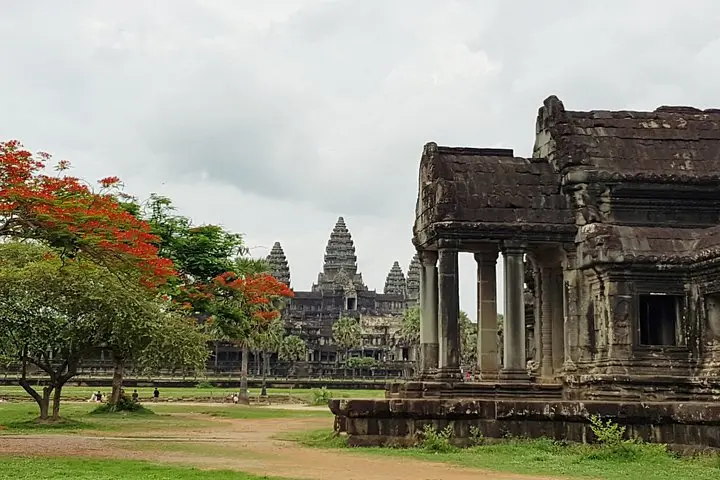
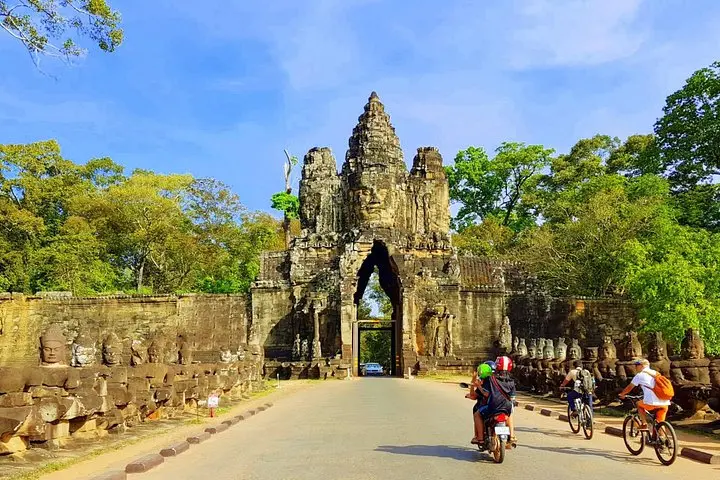
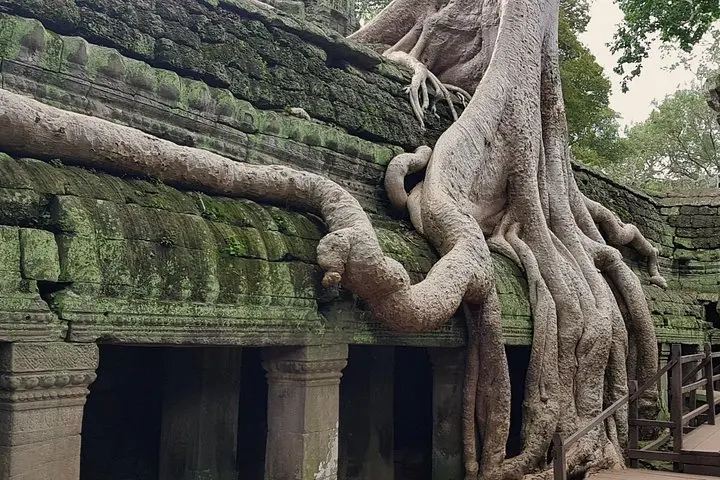
Angkor was the heart of the Khmer Empire; Angkor Wat itself was completed in the early 12th century under Suryavarman II and remains the largest religious monument on earth. The volcanic and sandstone structures show centuries of weathering and restoration, with Bayon’s enormous smiling faces carved into laterite and Ta Prohm’s fig roots pushing like living scaffolding through collapsed corridors. Banteay Srei, the “pink lady,” sits further out—its red sandstone offering some of the most intricately preserved bas-reliefs in the region.
Expect shaded temple courtyards, stepped gopuras, and compact stretches of rice paddies between sites, with local life visible: ox carts, palm sugar workshops and small market stalls. Guides typically handle Angkor Pass logistics and time the route to avoid the largest groups.
Practicalities: wear modest, breathable clothing that covers shoulders and knees; bring 2–3 liters of water, sun protection and comfortable walking shoes with good traction. Start early to beat heat and midday crowds; plan for several flights of stone steps and uneven, root-lifted pathways. Respect restricted areas, follow your guide’s route, and budget cash for the on-site ticket and a temple-area lunch.
Yes—entrance is controlled by the Angkor Archaeological Park ticket system; guides commonly assist you to purchase a one-day pass before the tour begins.
Some areas and main roads are accessible, but many temple interiors have steps and uneven ground; inquire about specific mobility needs when booking.
Photography is generally allowed but avoid flash on fragile carvings and follow signage in restricted sanctuaries.
Tipping is customary and appreciated; budget a modest tip for the guide and driver if service meets expectations.
Angkor Special Tours operates guided outdoor trips and adventures with an emphasis on safety, stewardship, and memorable experiences.
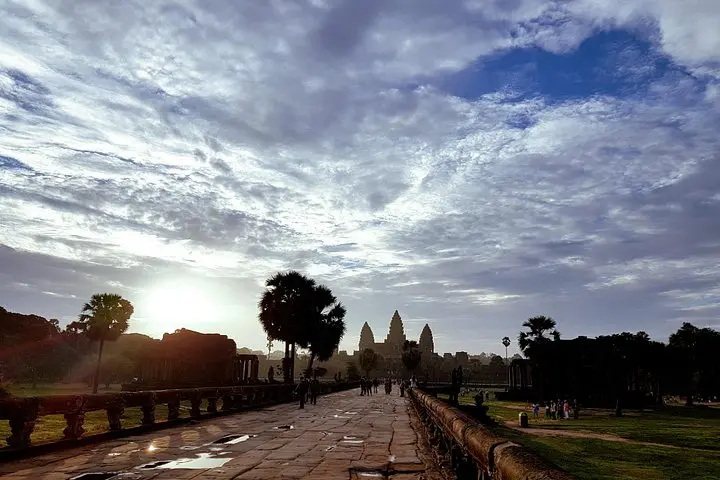
You arrive at dawn on a quiet causeway, the silhouette of Angkor Wat rising like a stone horizon as light spills over lotus ponds. The guide briefs the small group and the A/C car slips into the shaded lanes toward the city of temples—an 8–9 hour loop that stitches together the complex’s highest-profile ruins and a delicate jewel to the northeast.
You arrive at dawn on a quiet causeway, the silhouette of Angkor Wat rising like a stone horizon as light spills over lotus ponds. The guide briefs the small group and the A/C car slips into the shaded lanes toward the city of temples—an 8–9 hour loop that stitches together the complex’s highest-profile ruins and a delicate jewel to the northeast.
Angkor was the heart of the Khmer Empire; Angkor Wat itself was completed in the early 12th century under Suryavarman II and remains the largest religious monument on earth. The volcanic and sandstone structures show centuries of weathering and restoration, with Bayon’s enormous smiling faces carved into laterite and Ta Prohm’s fig roots pushing like living scaffolding through collapsed corridors. Banteay Srei, the “pink lady,” sits further out—its red sandstone offering some of the most intricately preserved bas-reliefs in the region.
Expect shaded temple courtyards, stepped gopuras, and compact stretches of rice paddies between sites, with local life visible: ox carts, palm sugar workshops and small market stalls. Guides typically handle Angkor Pass logistics and time the route to avoid the largest groups.
Practicalities: wear modest, breathable clothing that covers shoulders and knees; bring 2–3 liters of water, sun protection and comfortable walking shoes with good traction. Start early to beat heat and midday crowds; plan for several flights of stone steps and uneven, root-lifted pathways. Respect restricted areas, follow your guide’s route, and budget cash for the on-site ticket and a temple-area lunch.