THE ADVENTURE COLLECTIVE® · Independent discovery and booking for outdoor travel

Catch the pre-dawn glow at Angkor Wat and spend three days biking between major temples and hidden jungle ruins. This private itinerary mixes big monuments with floating-village life, covering 25–30 km riding days and boat time on Tonle Sap.
Catch the pre-dawn glow at Angkor Wat and spend three days biking between major temples and hidden jungle ruins. This private itinerary mixes big monuments with floating-village life, covering 25–30 km riding days and boat time on Tonle Sap.
Dawn pins the silhouette of Angkor Wat against a bruised sky and the first bikes roll past the reflection pools—this tour begins with that decisive sunrise, then unfolds through stone faces, root-choked galleries and the slow life of Tonle Sap.
Verified experiences and guided adventures in the surrounding area.
Operated by Siem Reap Biking Tour · Siem Reap, Siem Reap Province
Dawn pins the silhouette of Angkor Wat against a bruised sky and the first bikes roll past the reflection pools—this tour begins with that decisive sunrise, then unfolds through stone faces, root-choked galleries and the slow life of Tonle Sap.
The three-day route threads classic 12th-century monuments—Angkor Wat, Bayon, Ta Prohm and Preah Khan—with quieter complexes from the Rolous Group and pink-carved Banteay Srei. Geology here is sandstone and laterite: sandstone blocks hewn and stacked into towers, laterite used where the jungle demanded sturdier foundations. Khmer engineers shaped water management across the plains; Neak Pean sits on an artificial island set in the Jayatataka Baray you’ll visit.
Culture is present at every turn—Buddhist iconography layered onto former Hindu shrines, modern villages producing palm sugar beside ancient causeways. The Tonle Sap pushes and pulls life at the region’s edge; boats and stilt houses announce a different rhythm than the temple courtyards.
Practically: expect mostly flat, compacted-earth roads with short dirt sections, and cycling distances of roughly 25 km on day one and up to 30 km on day three. Start times are pre-dawn for the sunrise day (about 4:40 a.m.) and later mornings thereafter. Transfers use tuk-tuk or minivan; a standard bike and guide are included. Bring 3-day Angkor passes (current 3-day pass ~US$62) and cash for the Tonle Sap boat (~US$20). Hydrate, wear sun protection, and plan for humid heat—ride conservatively through temple ruins and follow your guide’s advice to protect fragile stonework.
Yes — most sites require an Angkor pass; the 3-day pass (approx. US$62) covers repeated entry across three consecutive days.
A standard bike is included; it's typically a hybrid/comfort bike suitable for paved and compact dirt roads—bring your own saddle if you prefer extra comfort.
Children under 12 usually do not require an Angkor pass but must provide passport copies; assess your child’s ability to handle long days and heat—tuk-tuk support is available when needed.
The floating village cruise is normally an additional boat ride (~US$20 per person) to view stilted homes and local life; fees can vary by season and water level.
Siem Reap Biking Tour operates guided outdoor trips and adventures with an emphasis on safety, stewardship, and memorable experiences.
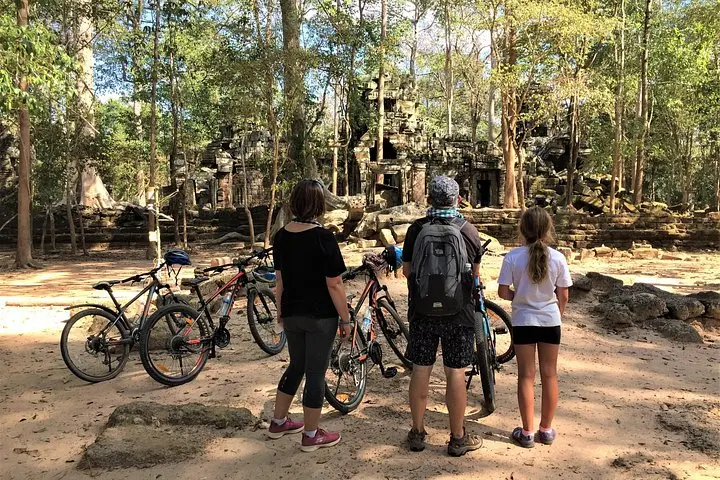
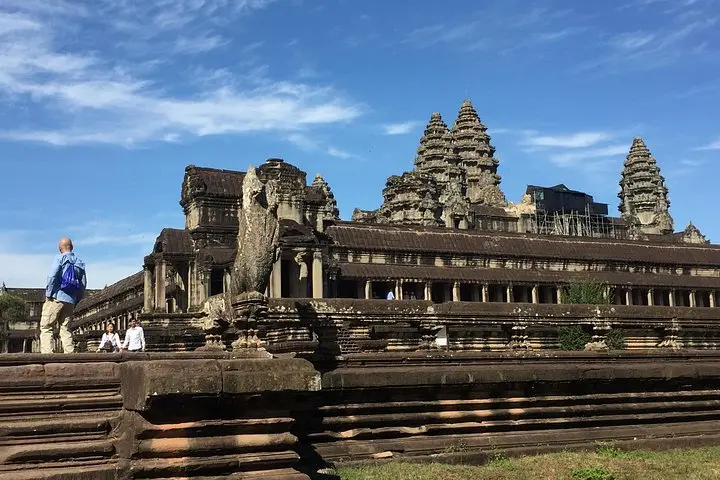
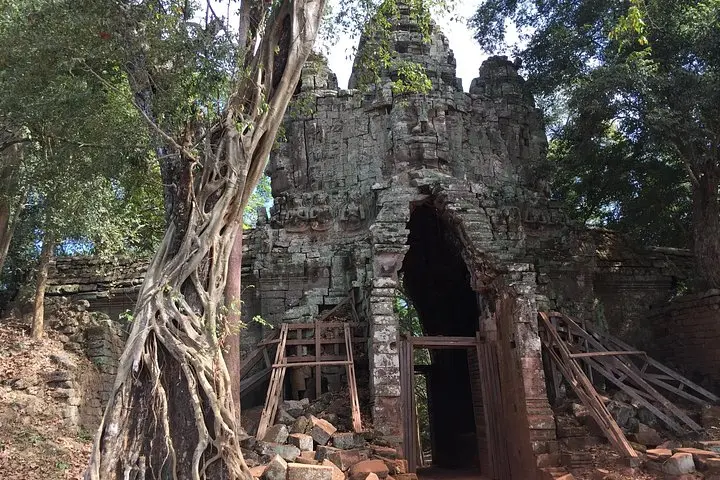
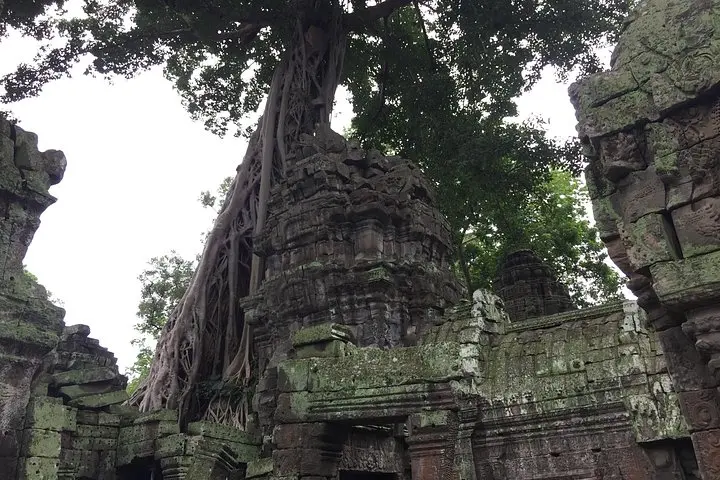
Dawn pins the silhouette of Angkor Wat against a bruised sky and the first bikes roll past the reflection pools—this tour begins with that decisive sunrise, then unfolds through stone faces, root-choked galleries and the slow life of Tonle Sap.
Dawn pins the silhouette of Angkor Wat against a bruised sky and the first bikes roll past the reflection pools—this tour begins with that decisive sunrise, then unfolds through stone faces, root-choked galleries and the slow life of Tonle Sap.
The three-day route threads classic 12th-century monuments—Angkor Wat, Bayon, Ta Prohm and Preah Khan—with quieter complexes from the Rolous Group and pink-carved Banteay Srei. Geology here is sandstone and laterite: sandstone blocks hewn and stacked into towers, laterite used where the jungle demanded sturdier foundations. Khmer engineers shaped water management across the plains; Neak Pean sits on an artificial island set in the Jayatataka Baray you’ll visit.
Culture is present at every turn—Buddhist iconography layered onto former Hindu shrines, modern villages producing palm sugar beside ancient causeways. The Tonle Sap pushes and pulls life at the region’s edge; boats and stilt houses announce a different rhythm than the temple courtyards.
Practically: expect mostly flat, compacted-earth roads with short dirt sections, and cycling distances of roughly 25 km on day one and up to 30 km on day three. Start times are pre-dawn for the sunrise day (about 4:40 a.m.) and later mornings thereafter. Transfers use tuk-tuk or minivan; a standard bike and guide are included. Bring 3-day Angkor passes (current 3-day pass ~US$62) and cash for the Tonle Sap boat (~US$20). Hydrate, wear sun protection, and plan for humid heat—ride conservatively through temple ruins and follow your guide’s advice to protect fragile stonework.