THE ADVENTURE COLLECTIVE® · Independent discovery and booking for outdoor travel

Pedal into dawn at Angkor Wat and ride traffic-free paths between ancient temples. This guided small-group tour includes sunrise viewing, breakfast, lunch, bottled water, and hotel transfers.
Pedal into dawn at Angkor Wat and ride traffic-free paths between ancient temples. This guided small-group tour includes sunrise viewing, breakfast, lunch, bottled water, and hotel transfers.
You pedal through pre-dawn humidity as silhouettes of sandstone towers sharpen against a pale sky — Angkor Wat's reflection trembling on the moat while the first light rearranges shadows on the bas-reliefs.
Verified experiences and guided adventures in the surrounding area.
Operated by Cambodia Transport Service · Siem Reap, Siem Reap Province
You pedal through pre-dawn humidity as silhouettes of sandstone towers sharpen against a pale sky — Angkor Wat's reflection trembling on the moat while the first light rearranges shadows on the bas-reliefs.
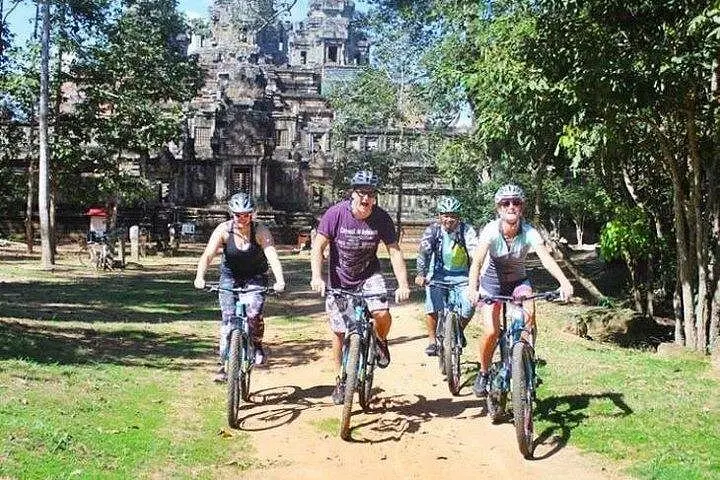
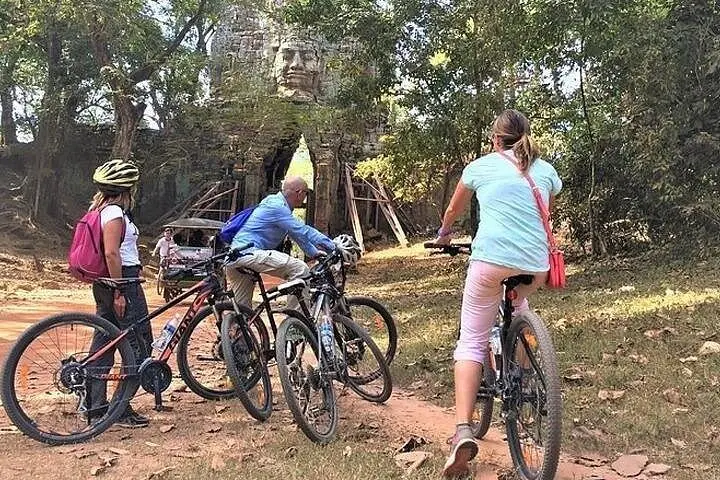
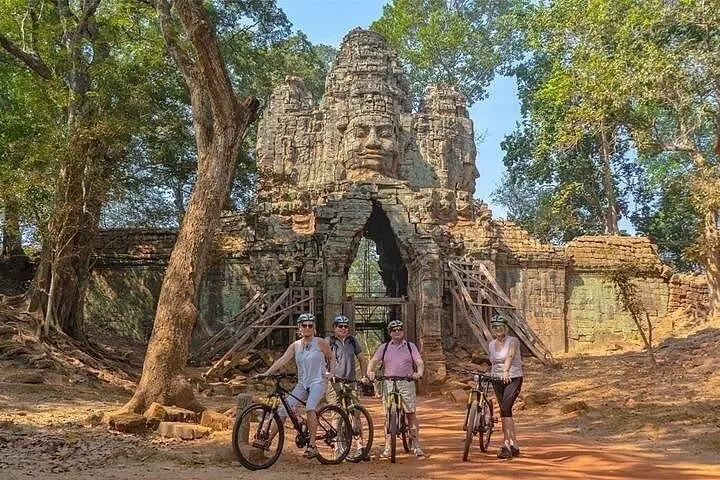
This small-group bike tour gets you to the temple complex in time for sunrise, then routes you between Angkor Wat, Angkor Thom, Bayon, Ta Prohm and Preah Khan over mostly traffic-free lanes and compact dirt tracks. The plain around Angkor is geologically flat — an ancient alluvial basin crosscut by the East Baray and small canals — so expect negligible elevation gain but lots of short, uneven stretches where a steady cadence beats rough patches.
Angkor was the heart of the Khmer Empire (9th–15th centuries); surviving monuments blend hydraulic ingenuity and religious iconography. Cycling keeps momentum with the site’s scale: you move from grand galleries to tree-clasped stones at a human pace, and you’ll pass rural communities where traditional stilt houses and grazing water buffalo mark the living landscape.
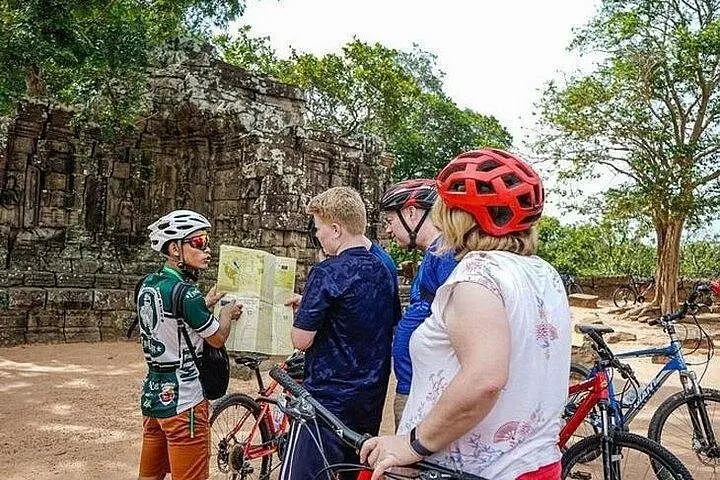
Practical guidance: the full program runs about 8–10 hours including hotel transfers, breaks, and meals — plan for roughly 15–25 km of riding. Helmets and bottled water are provided; bring layered, quick-dry clothing, sun protection, and cash for donations or souvenirs. Start early to beat crowds and midday heat, and follow your guide on where to park the bikes for closer temple exploration. Keep hands off fragile carvings and pack out any trash — these ruins are both cultural treasure and fragile outdoor environment.
Expect roughly 15–25 km of riding spread across the day with frequent stops to explore temples and take photos.
Helmets are provided and strongly recommended; guides may require them for road or uneven-track sections.
Breakfast and lunch are included and typically feature Cambodian dishes; notify the operator in advance for dietary needs.
Yes—beginners with basic bike skills and moderate fitness can participate, but the pace includes several hours of riding and walking.
Cambodia Transport Service operates guided outdoor trips and adventures with an emphasis on safety, stewardship, and memorable experiences.
You pedal through pre-dawn humidity as silhouettes of sandstone towers sharpen against a pale sky — Angkor Wat's reflection trembling on the moat while the first light rearranges shadows on the bas-reliefs.
You pedal through pre-dawn humidity as silhouettes of sandstone towers sharpen against a pale sky — Angkor Wat's reflection trembling on the moat while the first light rearranges shadows on the bas-reliefs.
This small-group bike tour gets you to the temple complex in time for sunrise, then routes you between Angkor Wat, Angkor Thom, Bayon, Ta Prohm and Preah Khan over mostly traffic-free lanes and compact dirt tracks. The plain around Angkor is geologically flat — an ancient alluvial basin crosscut by the East Baray and small canals — so expect negligible elevation gain but lots of short, uneven stretches where a steady cadence beats rough patches.
Angkor was the heart of the Khmer Empire (9th–15th centuries); surviving monuments blend hydraulic ingenuity and religious iconography. Cycling keeps momentum with the site’s scale: you move from grand galleries to tree-clasped stones at a human pace, and you’ll pass rural communities where traditional stilt houses and grazing water buffalo mark the living landscape.
Practical guidance: the full program runs about 8–10 hours including hotel transfers, breaks, and meals — plan for roughly 15–25 km of riding. Helmets and bottled water are provided; bring layered, quick-dry clothing, sun protection, and cash for donations or souvenirs. Start early to beat crowds and midday heat, and follow your guide on where to park the bikes for closer temple exploration. Keep hands off fragile carvings and pack out any trash — these ruins are both cultural treasure and fragile outdoor environment.