THE ADVENTURE COLLECTIVE® · Independent discovery and booking for outdoor travel

Experience Angkor Wat’s sunrise, then explore Bayon’s smiling faces and Ta Prohm’s tree-wrapped ruins on a private, air-conditioned half-day tour. Ideal for travelers who want early access and comfortable transfers between the temples.
Experience Angkor Wat’s sunrise, then explore Bayon’s smiling faces and Ta Prohm’s tree-wrapped ruins on a private, air-conditioned half-day tour. Ideal for travelers who want early access and comfortable transfers between the temples.
Dawn arrives over the moat like a held breath; the silhouette of Angkor Wat sharpens as pink light slides down its towers and the world exhales. On this private half-day, an air-conditioned vehicle moves you between three of Angkor’s most photographed ruins—Angkor Wat at sunrise, the smile-studded towers of Bayon, and the root-entangled corridors of Ta Prohm—so you can focus on the monuments rather than the logistics.
Verified experiences and guided adventures in the surrounding area.
Operated by Siem Reap Shuttle · Siem Reap, Siem Reap Province
Dawn arrives over the moat like a held breath; the silhouette of Angkor Wat sharpens as pink light slides down its towers and the world exhales. On this private half-day, an air-conditioned vehicle moves you between three of Angkor’s most photographed ruins—Angkor Wat at sunrise, the smile-studded towers of Bayon, and the root-entangled corridors of Ta Prohm—so you can focus on the monuments rather than the logistics.
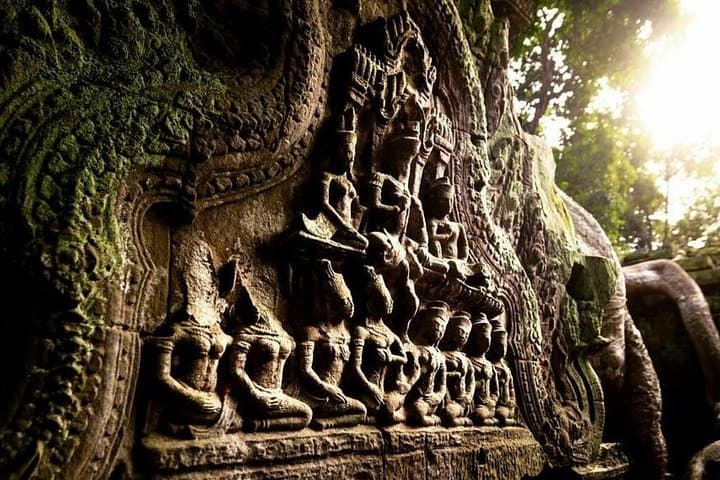
Angkor was the capital of the Khmer Empire from the 9th to 15th centuries; its sandstone temples record a shift from Hindu cosmology to Buddhist practice and show extraordinary bas-reliefs and engineering. Geologically the temples sit on laterite foundations, with sandstone blocks sculpted into serene faces and narrative panels. Culturally, these sites remain active places of reverence; dress and conduct reflect that history.
Practically, this is an early-to-midday excursion: expect a 7–8 hour window that begins before sunrise and finishes around lunchtime. The private vehicle transfers guests short distances between sites, and staff provide cold towels and bottled water. The Angkor Park admission ticket is not included—buy this in advance to save time. Wear sturdy shoes; paths are uneven and sections are steep. Hydrate often and plan for heat or sudden rain depending on season.
Stops include a waterside restaurant by Srah Srang for optional lunch. If you want a guided interpretation, reserve the English-speaking guide in advance (they will occupy a seat). For travelers who prefer a focused, comfortable visit with timetable control, this half-day private option balances awe, access, and practical comfort.
No. The Angkor Park pass must be purchased separately at the ticket center or online before arrival.
Pickup is typically around 5:00 AM to reach Angkor Wat for sunrise; exact time will be confirmed at booking.
No. There is a stop at a restaurant by Srah Srang for optional lunch; guests pay for their own meals.
Yes. An English-speaking guide can be added as an optional extra but will require a seat in your chosen vehicle.
Siem Reap Shuttle operates guided outdoor trips and adventures with an emphasis on safety, stewardship, and memorable experiences.
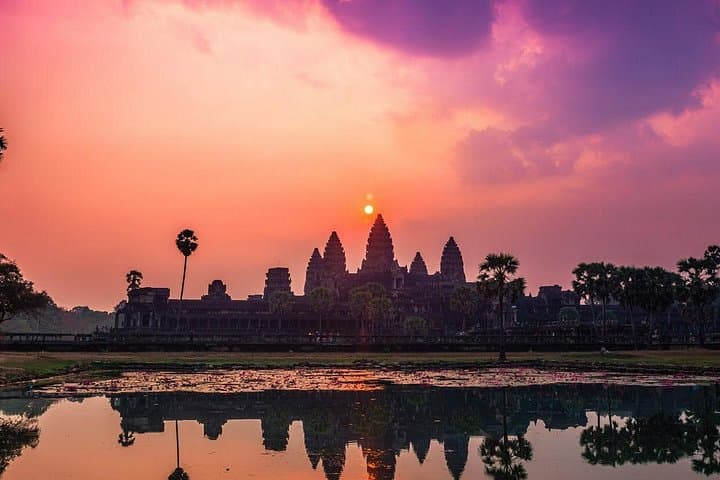
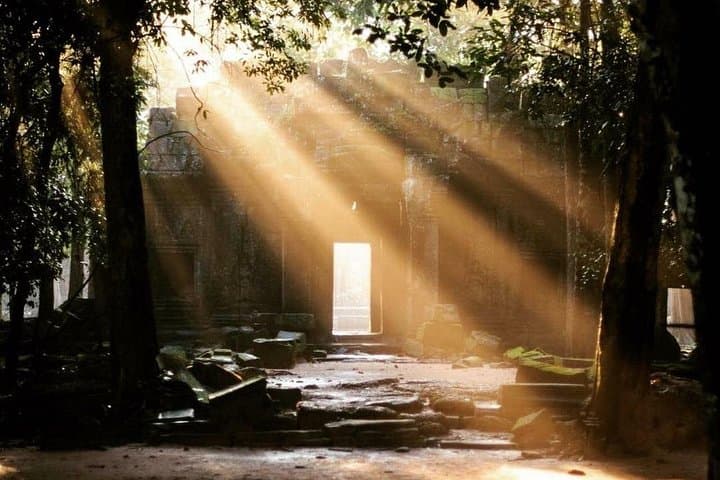
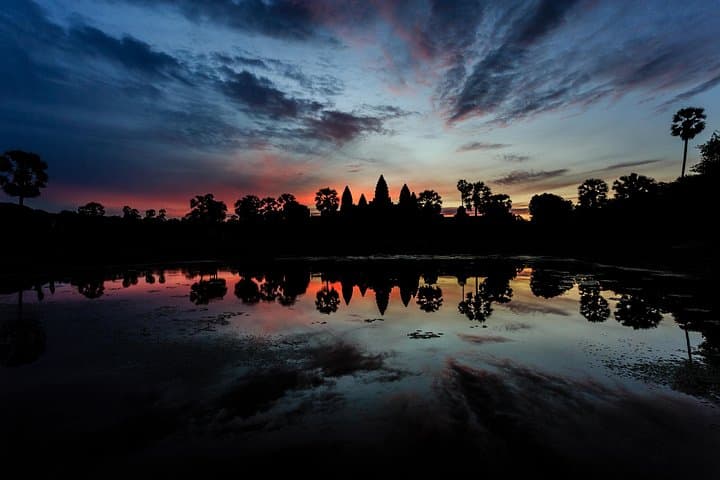
Dawn arrives over the moat like a held breath; the silhouette of Angkor Wat sharpens as pink light slides down its towers and the world exhales. On this private half-day, an air-conditioned vehicle moves you between three of Angkor’s most photographed ruins—Angkor Wat at sunrise, the smile-studded towers of Bayon, and the root-entangled corridors of Ta Prohm—so you can focus on the monuments rather than the logistics.
Dawn arrives over the moat like a held breath; the silhouette of Angkor Wat sharpens as pink light slides down its towers and the world exhales. On this private half-day, an air-conditioned vehicle moves you between three of Angkor’s most photographed ruins—Angkor Wat at sunrise, the smile-studded towers of Bayon, and the root-entangled corridors of Ta Prohm—so you can focus on the monuments rather than the logistics.
Angkor was the capital of the Khmer Empire from the 9th to 15th centuries; its sandstone temples record a shift from Hindu cosmology to Buddhist practice and show extraordinary bas-reliefs and engineering. Geologically the temples sit on laterite foundations, with sandstone blocks sculpted into serene faces and narrative panels. Culturally, these sites remain active places of reverence; dress and conduct reflect that history.
Practically, this is an early-to-midday excursion: expect a 7–8 hour window that begins before sunrise and finishes around lunchtime. The private vehicle transfers guests short distances between sites, and staff provide cold towels and bottled water. The Angkor Park admission ticket is not included—buy this in advance to save time. Wear sturdy shoes; paths are uneven and sections are steep. Hydrate often and plan for heat or sudden rain depending on season.
Stops include a waterside restaurant by Srah Srang for optional lunch. If you want a guided interpretation, reserve the English-speaking guide in advance (they will occupy a seat). For travelers who prefer a focused, comfortable visit with timetable control, this half-day private option balances awe, access, and practical comfort.