THE ADVENTURE COLLECTIVE® · Independent discovery and booking for outdoor travel

Watch Angkor Wat light up at sunrise, trace carved faces at Bayon, and cool off at Phnom Kulen’s waterfall on this compact two-day tour from Siem Reap. Expect early starts, uneven stone underfoot, and separate fees for Kulen.
Watch Angkor Wat light up at sunrise, trace carved faces at Bayon, and cool off at Phnom Kulen’s waterfall on this compact two-day tour from Siem Reap. Expect early starts, uneven stone underfoot, and separate fees for Kulen.
Dawn breaks over the Angkor moat and the silhouette of Angkor Wat deepens from grey to gold. Early risers gather along the reflection pool as guides shepherd small groups through the temple complex; the air is humid and filled with the murmur of tourists and the creak of old stone. The first day moves from the perfect symmetry of Angkor Wat to the many-faced carvings of Bayon and the root-choked corridors of Ta Prohm, where banyans and strangler figs press themselves against ancient lintels like insistent collectors.
Verified experiences and guided adventures in the surrounding area.
Operated by Bayon Temple Tour · Siem Reap, Siem Reap Province
Dawn breaks over the Angkor moat and the silhouette of Angkor Wat deepens from grey to gold. Early risers gather along the reflection pool as guides shepherd small groups through the temple complex; the air is humid and filled with the murmur of tourists and the creak of old stone. The first day moves from the perfect symmetry of Angkor Wat to the many-faced carvings of Bayon and the root-choked corridors of Ta Prohm, where banyans and strangler figs press themselves against ancient lintels like insistent collectors.
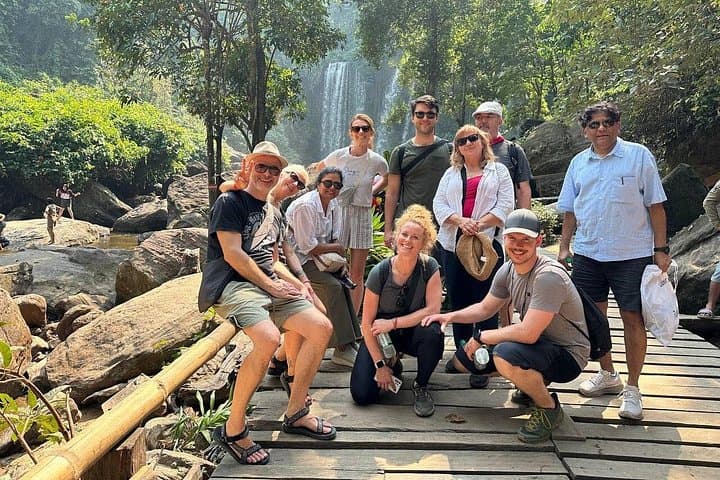
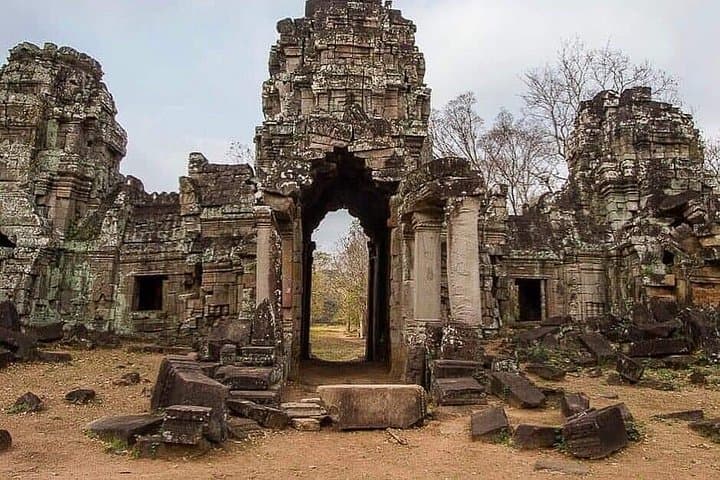
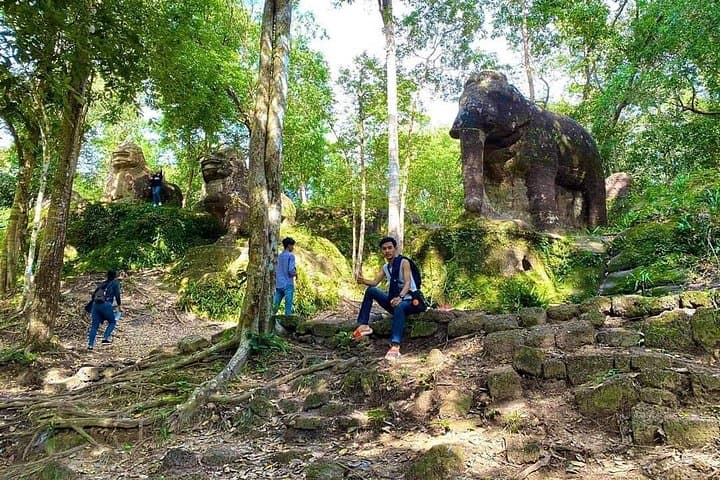
The route threads history and geology: Khmer sandstone quarried and transported across flat floodplains, later carved with Hindu and Buddhist iconography during the Angkorian period (9th–15th centuries). Banteay Srei sits further east on pink sandstone noted for its fine relief work; local villages produce palm sugar and rice in sight of temple towers. On day two the circuit climbs toward Phnom Kulen — a sacred ridge where the riverbed is carved with 1,000 lingas and a reclining Buddha watches over a popular waterfall — before descending to Beng Mealea, a sprawling, overgrown ruin where trees push through collapsed galleries.
Practical notes: expect a very early pickup for sunrise (commonly around 4:30–5:00 a.m.), uneven stone steps, and hot, humid conditions. Carry cash for separate Kulen entrance fees and tips, wear sturdy shoes, and bring sun and rain protection. Timing your visits for early morning or late afternoon minimizes crowds and preserves energy for the swim at Kulen’s falls.
Yes—visitors must purchase an Angkor Archaeological Park pass for Angkor Wat, Bayon, Ta Prohm and Beng Mealea; Phnom Kulen often requires a separate local fee.
Expect several hours of walking each day over uneven stone, stairs and short trails; the tour is not technically difficult but requires stamina for full-day sightseeing.
The itinerary notes general accessibility, but many temple areas and Beng Mealea have ruined, uneven surfaces that limit wheelchair access—check with the operator about specific site access and vehicle arrangements.
Yes—there are cold, popular swimming spots below the waterfall; bring swimwear and a towel, but be cautious on slippery rocks and follow any local safety guidance.
Bayon Temple Tour operates guided outdoor trips and adventures with an emphasis on safety, stewardship, and memorable experiences.

Dawn breaks over the Angkor moat and the silhouette of Angkor Wat deepens from grey to gold. Early risers gather along the reflection pool as guides shepherd small groups through the temple complex; the air is humid and filled with the murmur of tourists and the creak of old stone. The first day moves from the perfect symmetry of Angkor Wat to the many-faced carvings of Bayon and the root-choked corridors of Ta Prohm, where banyans and strangler figs press themselves against ancient lintels like insistent collectors.
Dawn breaks over the Angkor moat and the silhouette of Angkor Wat deepens from grey to gold. Early risers gather along the reflection pool as guides shepherd small groups through the temple complex; the air is humid and filled with the murmur of tourists and the creak of old stone. The first day moves from the perfect symmetry of Angkor Wat to the many-faced carvings of Bayon and the root-choked corridors of Ta Prohm, where banyans and strangler figs press themselves against ancient lintels like insistent collectors.
The route threads history and geology: Khmer sandstone quarried and transported across flat floodplains, later carved with Hindu and Buddhist iconography during the Angkorian period (9th–15th centuries). Banteay Srei sits further east on pink sandstone noted for its fine relief work; local villages produce palm sugar and rice in sight of temple towers. On day two the circuit climbs toward Phnom Kulen — a sacred ridge where the riverbed is carved with 1,000 lingas and a reclining Buddha watches over a popular waterfall — before descending to Beng Mealea, a sprawling, overgrown ruin where trees push through collapsed galleries.
Practical notes: expect a very early pickup for sunrise (commonly around 4:30–5:00 a.m.), uneven stone steps, and hot, humid conditions. Carry cash for separate Kulen entrance fees and tips, wear sturdy shoes, and bring sun and rain protection. Timing your visits for early morning or late afternoon minimizes crowds and preserves energy for the swim at Kulen’s falls.