THE ADVENTURE COLLECTIVE® · Independent discovery and booking for outdoor travel

Spend a private day walking the main monuments of the Angkor complex with a guide: Bayon’s carved faces, the jungle-woven corridors of Ta Prohm, and the monumental galleries of Angkor Wat. This practical guide highlights what to expect, how to prepare, and local nuances to maximize your visit.
Spend a private day walking the main monuments of the Angkor complex with a guide: Bayon’s carved faces, the jungle-woven corridors of Ta Prohm, and the monumental galleries of Angkor Wat. This practical guide highlights what to expect, how to prepare, and local nuances to maximize your visit.
You step from the air-conditioned van into a heat that seems to hold the stone in place—sticky, thick, the scent of wet earth and frangipani. Angkor’s galleries and causeways unfold: a moat that mirrors towers, giant faces watching from Bayon, strangler figs threading Ta Prohm’s corridors.
Verified experiences and guided adventures in the surrounding area.
Operated by K-YORK TRAVEL SERVICE CO.Ltd · Siem Reap, Siem Reap Province
You step from the air-conditioned van into a heat that seems to hold the stone in place—sticky, thick, the scent of wet earth and frangipani. Angkor’s galleries and causeways unfold: a moat that mirrors towers, giant faces watching from Bayon, strangler figs threading Ta Prohm’s corridors.
This landscape was shaped by imperial ambition and monsoon cycles. Between the 9th and 13th centuries the Khmer Empire sculpted these temples as cosmological maps—Angkor Wat a mountain representing Mount Meru, Angkor Thom the walled urban core built by Jayavarman VII. The sandstone tells a geological story of compacted river deposits worked into bas-reliefs that depict gods, armies and daily life.
Culturally, the park remains active: pagodas operate beside ruins and local guides translate iconography the stones cannot say alone. Expect to learn about restoration choices, temple reuse, and the complex balance between tourism income and preservation.
Practical guidance: start early to avoid peak heat and crowds; carry sun protection and water supplied by your private guide; wear knee-covering shorts or lightweight trousers and a sleeve-covering top to meet temple dress codes. Paths are mostly flat but uneven—comfortable sport shoes are recommended. Allow time at Ta Prohm to let the trees “claim” the architecture and at Angkor Wat to study the bas-reliefs in the cool of the galleries. Your private guide paces the day—use breaks to rehydrate and step out of direct sun.
A full day here is a long, low-impact outdoor cultural trek—sensory, educational, and governed by respect for a living heritage.
Yes—entry to the Angkor Archaeological Park requires a purchased Angkor Pass (1‑, 3‑, or 7‑day options); bring the pass and ID as required.
The private format is adaptable, but long walking days and heat can be hard on young children—stroller access is limited on many temple paths.
Admission to the Angkor Archaeological Park is not included in many tour prices—confirm with the operator and buy your pass before entry.
Strict enough to deny access to inner sanctums—shoulders and knees should be covered, and sleeveless tops or short shorts may be refused at some sites.
K-YORK TRAVEL SERVICE CO.Ltd operates guided outdoor trips and adventures with an emphasis on safety, stewardship, and memorable experiences.
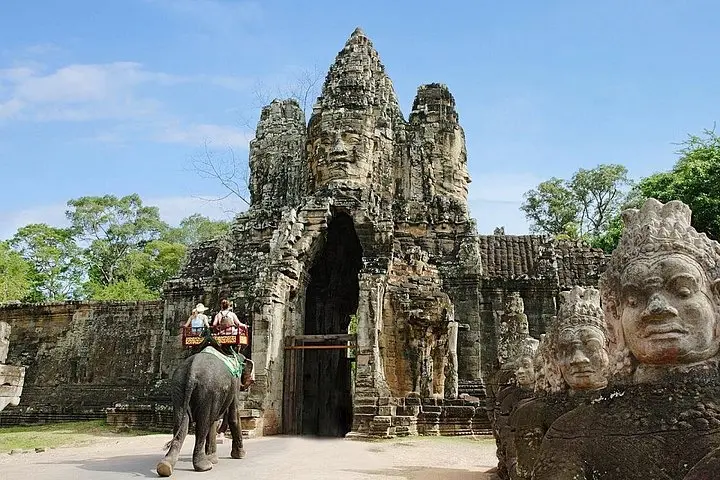
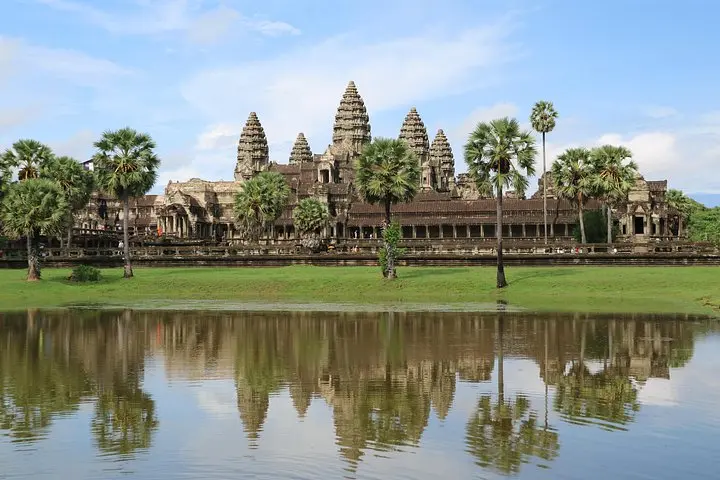
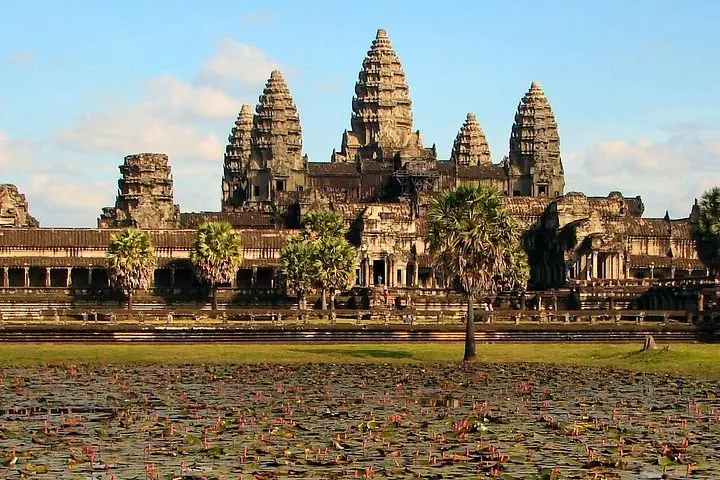
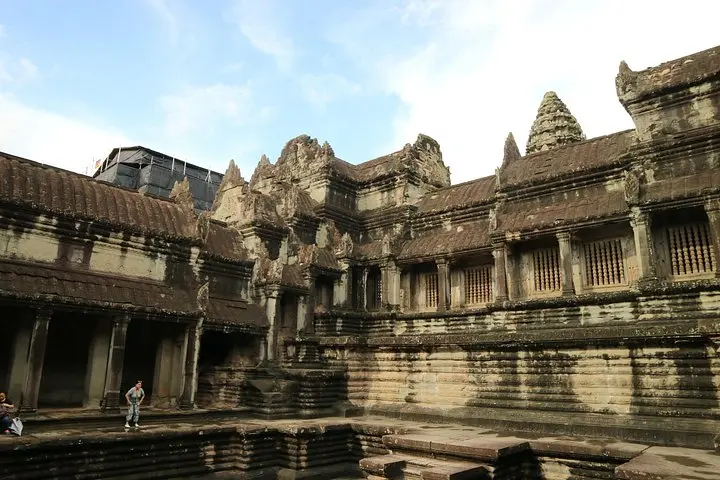
You step from the air-conditioned van into a heat that seems to hold the stone in place—sticky, thick, the scent of wet earth and frangipani. Angkor’s galleries and causeways unfold: a moat that mirrors towers, giant faces watching from Bayon, strangler figs threading Ta Prohm’s corridors.
You step from the air-conditioned van into a heat that seems to hold the stone in place—sticky, thick, the scent of wet earth and frangipani. Angkor’s galleries and causeways unfold: a moat that mirrors towers, giant faces watching from Bayon, strangler figs threading Ta Prohm’s corridors.
This landscape was shaped by imperial ambition and monsoon cycles. Between the 9th and 13th centuries the Khmer Empire sculpted these temples as cosmological maps—Angkor Wat a mountain representing Mount Meru, Angkor Thom the walled urban core built by Jayavarman VII. The sandstone tells a geological story of compacted river deposits worked into bas-reliefs that depict gods, armies and daily life.
Culturally, the park remains active: pagodas operate beside ruins and local guides translate iconography the stones cannot say alone. Expect to learn about restoration choices, temple reuse, and the complex balance between tourism income and preservation.
Practical guidance: start early to avoid peak heat and crowds; carry sun protection and water supplied by your private guide; wear knee-covering shorts or lightweight trousers and a sleeve-covering top to meet temple dress codes. Paths are mostly flat but uneven—comfortable sport shoes are recommended. Allow time at Ta Prohm to let the trees “claim” the architecture and at Angkor Wat to study the bas-reliefs in the cool of the galleries. Your private guide paces the day—use breaks to rehydrate and step out of direct sun.
A full day here is a long, low-impact outdoor cultural trek—sensory, educational, and governed by respect for a living heritage.