THE ADVENTURE COLLECTIVE® · Independent discovery and booking for outdoor travel

Explore the carved pink sandstone of Banteay Srei and the temple-mountains of Pre Rup and East Mebon on a focused full-day tour from Siem Reap. Expect intimate carvings, reflective moats, and 6–7 hours of guided exploration with AC transport.
Explore the carved pink sandstone of Banteay Srei and the temple-mountains of Pre Rup and East Mebon on a focused full-day tour from Siem Reap. Expect intimate carvings, reflective moats, and 6–7 hours of guided exploration with AC transport.
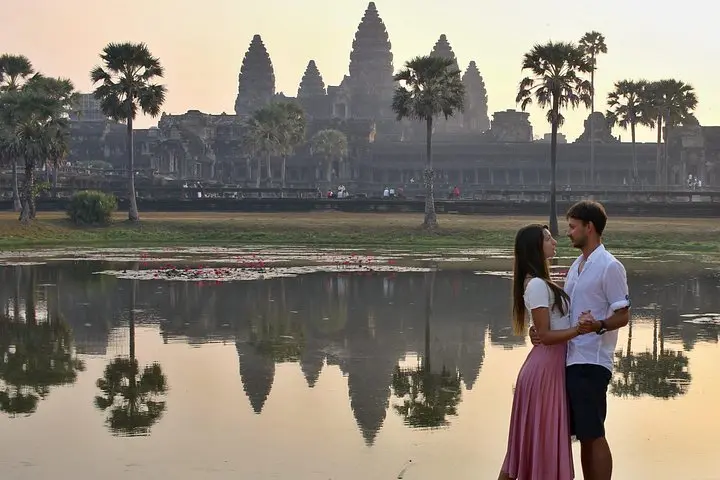
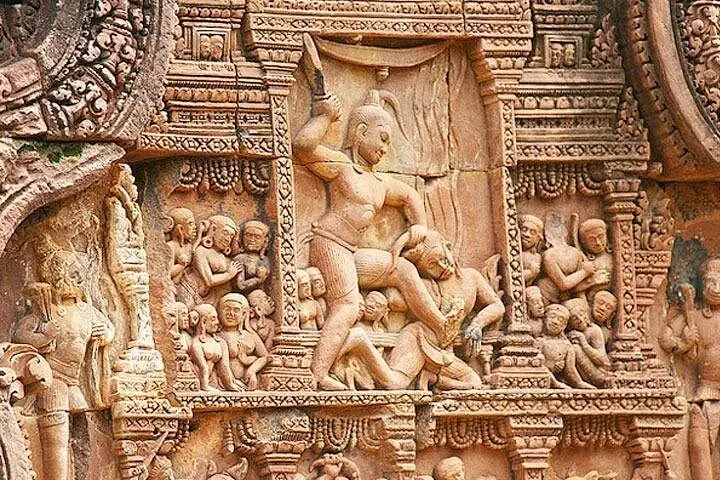
The morning air around Angkor tastes of dust and incense; a tour vehicle turns onto a red-dirt lane and the first temple rises through palms like an ancient city waking. Visitors move from the pink sandstone filigree of Banteay Srei to the stepped silhouette of Pre Rup, feeling scale and time shift with every carved lintel and moss-darkened stair.
Verified experiences and guided adventures in the surrounding area.
Operated by Angkor Dynasty Travel · Siem Reap, Siem Reap Province
The morning air around Angkor tastes of dust and incense; a tour vehicle turns onto a red-dirt lane and the first temple rises through palms like an ancient city waking. Visitors move from the pink sandstone filigree of Banteay Srei to the stepped silhouette of Pre Rup, feeling scale and time shift with every carved lintel and moss-darkened stair.
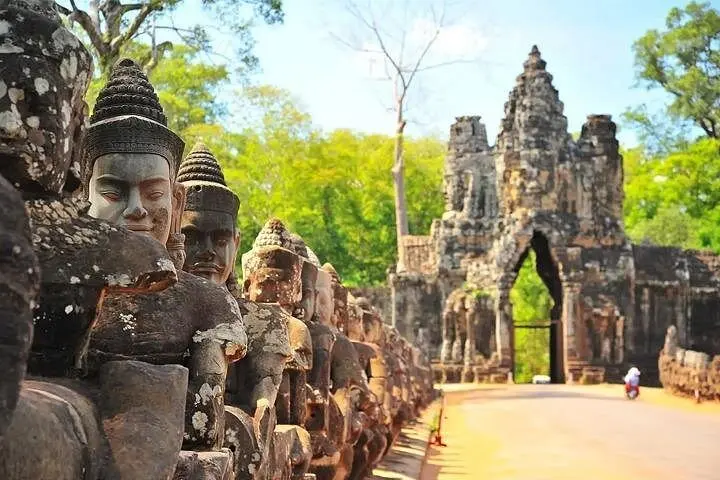
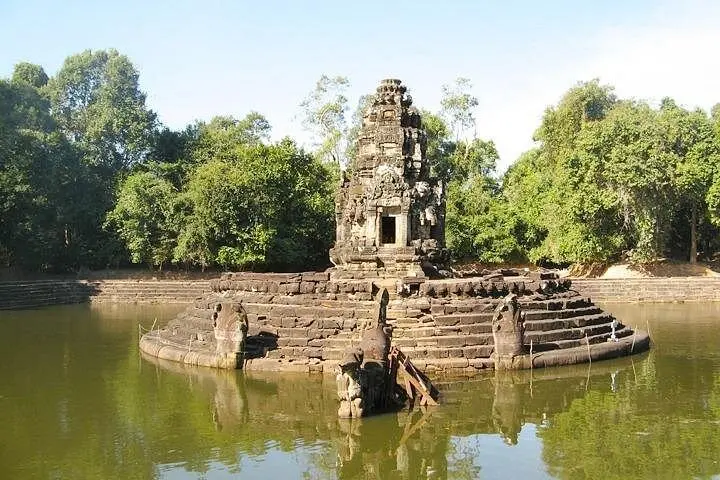
These sites span the 10th–12th centuries: Banteay Srei, created under Rajendravarman V, is famed for its tiny, jewel-like carvings in pink sandstone; Pre Rup and East Mebon are later temple-mountains built as symbolic mountains and water temples tied to the baray irrigation systems. Preah Khan and Ta Som carry Jayavarman VII’s imprint — corridors where tree roots pry at walls and history rubs shoulders with the present.
Expect packed laterite walkways, low stone thresholds, and a landscape shaped by a seasonal monsoon — reservoirs and moats that once ensured rice fields and ceremony now reflect the sky.
Practical guidance: the operator provides AC transport, bottled water and a cool towel, but Angkor Archaeological Park admission is not included — buy your Angkor Pass at the ticket center before arrival. Wear light, breathable clothing that covers shoulders and knees; sturdy closed shoes are best for uneven surfaces. Start early to avoid midday heat and crowds; plan for 6–7 hours on the road with multiple short walks. Respect temple rules: no climbing on unstable masonry, and keep a safe distance from macaques — they’ll test pockets and patience. With a steady pace, this full-day circuit balances texture and scale: intimate carvings, pond reflections, and the slow, patient presence of stone that still shapes the Cambodian countryside.
No — the tour notes that admission is not included; buy a one-day or multi-day Angkor pass at the official ticket center before touring.
Many temple grounds have uneven stones, steps, and narrow passages; some areas are partially restored but overall accessibility is limited—contact the operator to discuss specific needs.
Yes, an English-speaking guide is provided with this tour and will explain iconography, history and layout at each stop.
Drone use in Angkor Archaeological Park is restricted and generally requires prior authorization; assume drones are not allowed without permits.
Angkor Dynasty Travel operates guided outdoor trips and adventures with an emphasis on safety, stewardship, and memorable experiences.
The morning air around Angkor tastes of dust and incense; a tour vehicle turns onto a red-dirt lane and the first temple rises through palms like an ancient city waking. Visitors move from the pink sandstone filigree of Banteay Srei to the stepped silhouette of Pre Rup, feeling scale and time shift with every carved lintel and moss-darkened stair.
The morning air around Angkor tastes of dust and incense; a tour vehicle turns onto a red-dirt lane and the first temple rises through palms like an ancient city waking. Visitors move from the pink sandstone filigree of Banteay Srei to the stepped silhouette of Pre Rup, feeling scale and time shift with every carved lintel and moss-darkened stair.
These sites span the 10th–12th centuries: Banteay Srei, created under Rajendravarman V, is famed for its tiny, jewel-like carvings in pink sandstone; Pre Rup and East Mebon are later temple-mountains built as symbolic mountains and water temples tied to the baray irrigation systems. Preah Khan and Ta Som carry Jayavarman VII’s imprint — corridors where tree roots pry at walls and history rubs shoulders with the present.
Expect packed laterite walkways, low stone thresholds, and a landscape shaped by a seasonal monsoon — reservoirs and moats that once ensured rice fields and ceremony now reflect the sky.
Practical guidance: the operator provides AC transport, bottled water and a cool towel, but Angkor Archaeological Park admission is not included — buy your Angkor Pass at the ticket center before arrival. Wear light, breathable clothing that covers shoulders and knees; sturdy closed shoes are best for uneven surfaces. Start early to avoid midday heat and crowds; plan for 6–7 hours on the road with multiple short walks. Respect temple rules: no climbing on unstable masonry, and keep a safe distance from macaques — they’ll test pockets and patience. With a steady pace, this full-day circuit balances texture and scale: intimate carvings, pond reflections, and the slow, patient presence of stone that still shapes the Cambodian countryside.