THE ADVENTURE COLLECTIVE® · Independent discovery and booking for outdoor travel

Cycle lightly through Angkor’s backroads at dawn—temples, jungle, and village life unfold far from the bus lanes. This full‑day private ride combines gentle miles with deep historical context and hands‑on local encounters.
Cycle lightly through Angkor’s backroads at dawn—temples, jungle, and village life unfold far from the bus lanes. This full‑day private ride combines gentle miles with deep historical context and hands‑on local encounters.
You push off at first light, tires whispering over compacted earth as mist lifts from the moat around Angkor Wat. The air is warm, humid, and alive with bird calls; rice paddies flash green beside the path while the jungle seems to breathe around ruined stone.
Verified experiences and guided adventures in the surrounding area.
Operated by Easy Angkor Trip · Siem Reap, Siem Reap Province
You push off at first light, tires whispering over compacted earth as mist lifts from the moat around Angkor Wat. The air is warm, humid, and alive with bird calls; rice paddies flash green beside the path while the jungle seems to breathe around ruined stone.
This ride threads 12th‑century Khmer history into present‑day rural life. Angkor Wat’s bas‑reliefs and its surrounding moat tell the story of Suryavarman II’s empire, while the later Bayon wears the smiling faces of Jayavarman VII. Ta Prohm’s Spung trees take on an almost willful presence, roots pressing into sandstone blocks as if trying to hold memory in place.
Geologically, the sandstone blocks were quarried and ferried across the East Baray and arranged into massive galleries; today those same quarries are part of the landscape you cross. Culturally, villages along the backroads still rise early—markets, fishermen, and temple caretakers share the same routes you’ll pedal.
Practical guidance: the tour runs 6–8 hours at a leisurely pace with regular stops; expect mixed compacted trail and quiet paved roads. You’ll need an Angkor pass for temple access (not included), cash for side snacks, and modest temple clothing. Helmets and mountain bikes are supplied, but bring sunscreen, insect repellent, and a small daypack for water and camera gear.
Timing matters—start early to avoid the hottest midday stretch and the largest tour groups. Ride steadily, give way to local traffic and ox carts, and allow extra time at Bayon and Ta Prohm; the ruins reward patience. This is an active, eco‑aware way to meet Angkor: slower than a van, richer in detail, and rhythmically tied to the land beneath your wheels.
No, the Angkor pass is not included; purchase 1‑, 3‑, or 7‑day passes at the official ticket center in Siem Reap before entering the temple complex.
Yes—mountain bikes and helmets are included with the tour, along with bottled water and an English‑speaking guide.
Yes; the ride is described as leisurely and suitable for most fitness levels, though children should be comfortable cycling several hours with breaks.
Yes—guides typically advise on dress code, cultural norms, and the best places to stop for photos and short walks at each temple.
Easy Angkor Trip operates guided outdoor trips and adventures with an emphasis on safety, stewardship, and memorable experiences.
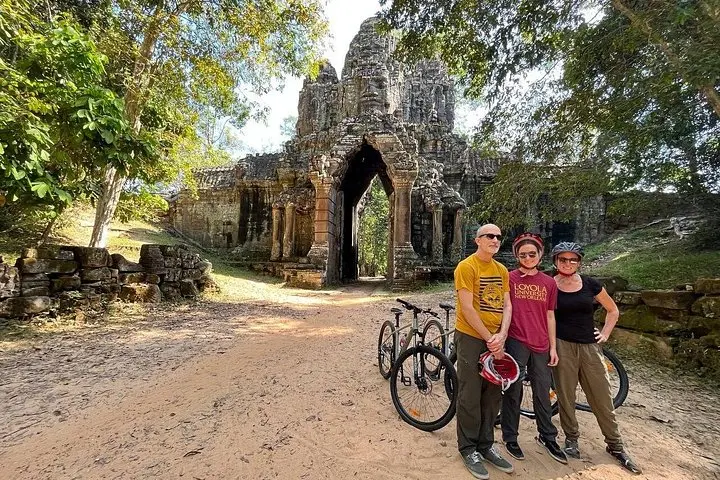
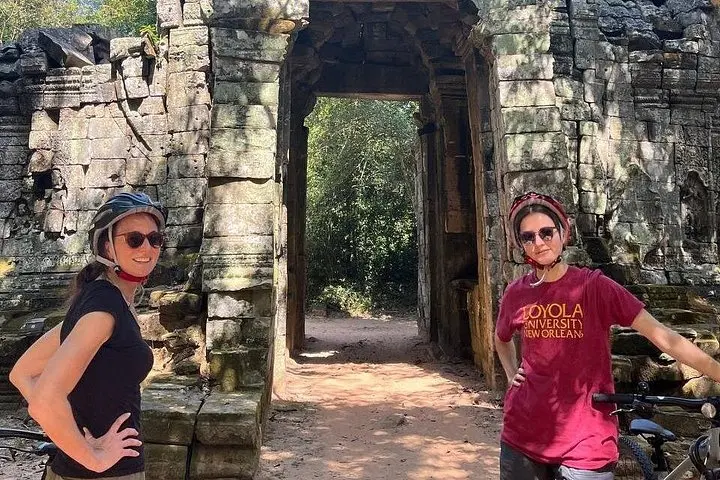
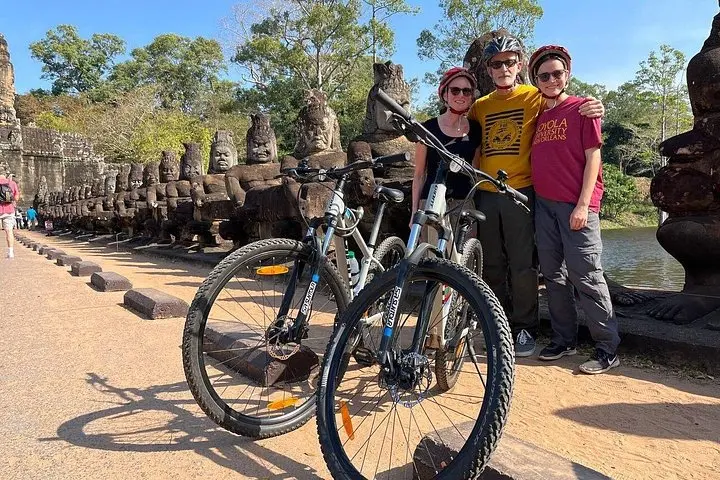
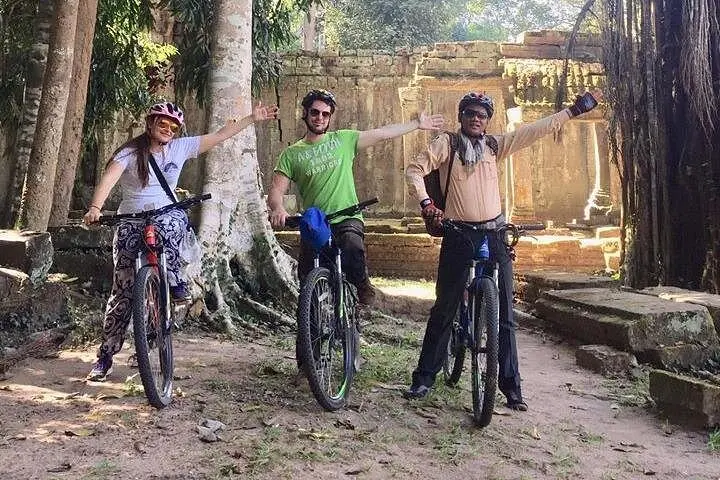
You push off at first light, tires whispering over compacted earth as mist lifts from the moat around Angkor Wat. The air is warm, humid, and alive with bird calls; rice paddies flash green beside the path while the jungle seems to breathe around ruined stone.
You push off at first light, tires whispering over compacted earth as mist lifts from the moat around Angkor Wat. The air is warm, humid, and alive with bird calls; rice paddies flash green beside the path while the jungle seems to breathe around ruined stone.
This ride threads 12th‑century Khmer history into present‑day rural life. Angkor Wat’s bas‑reliefs and its surrounding moat tell the story of Suryavarman II’s empire, while the later Bayon wears the smiling faces of Jayavarman VII. Ta Prohm’s Spung trees take on an almost willful presence, roots pressing into sandstone blocks as if trying to hold memory in place.
Geologically, the sandstone blocks were quarried and ferried across the East Baray and arranged into massive galleries; today those same quarries are part of the landscape you cross. Culturally, villages along the backroads still rise early—markets, fishermen, and temple caretakers share the same routes you’ll pedal.
Practical guidance: the tour runs 6–8 hours at a leisurely pace with regular stops; expect mixed compacted trail and quiet paved roads. You’ll need an Angkor pass for temple access (not included), cash for side snacks, and modest temple clothing. Helmets and mountain bikes are supplied, but bring sunscreen, insect repellent, and a small daypack for water and camera gear.
Timing matters—start early to avoid the hottest midday stretch and the largest tour groups. Ride steadily, give way to local traffic and ox carts, and allow extra time at Bayon and Ta Prohm; the ruins reward patience. This is an active, eco‑aware way to meet Angkor: slower than a van, richer in detail, and rhythmically tied to the land beneath your wheels.