THE ADVENTURE COLLECTIVE® · Independent discovery and booking for outdoor travel

Spend a full day exploring Angkor’s greatest hits with a local private guide — Angkor Wat, Bayon, Ta Prohm and quieter ruins like Ta Nei and Preah Palilay. Expect eight hours of walking across uneven terrain, an Angkor Pass required separately, and a sunset finish at Phnom Bakheng.
Spend a full day exploring Angkor’s greatest hits with a local private guide — Angkor Wat, Bayon, Ta Prohm and quieter ruins like Ta Nei and Preah Palilay. Expect eight hours of walking across uneven terrain, an Angkor Pass required separately, and a sunset finish at Phnom Bakheng.
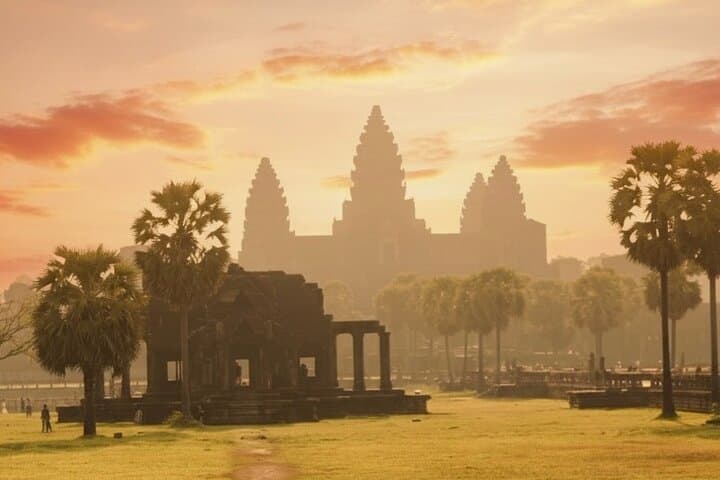
You step out of the air-conditioned van into a sun-scrubbed courtyard, the stone towers of Angkor Wat rising like a row of watchful sentinels. Fragments of shadow and dust move through carved galleries as your guide traces bas-reliefs that still whisper stories of kings and riverine trade.
Verified experiences and guided adventures in the surrounding area.
Operated by Vicheth Tour · Siem Reap, Siem Reap Province
You step out of the air-conditioned van into a sun-scrubbed courtyard, the stone towers of Angkor Wat rising like a row of watchful sentinels. Fragments of shadow and dust move through carved galleries as your guide traces bas-reliefs that still whisper stories of kings and riverine trade.
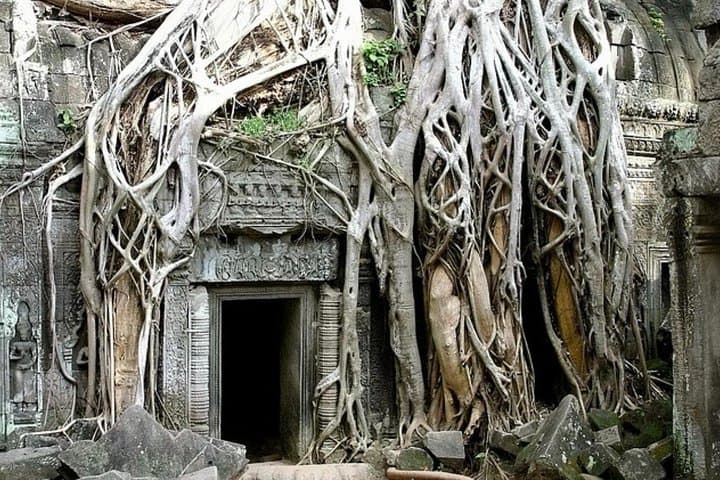
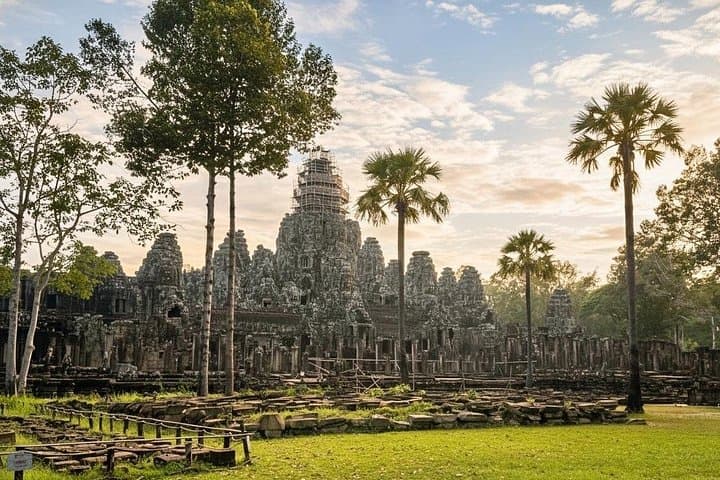
The circuit of temples on this private full-day tour threads history and landscape: Angkor Wat’s soaring central towers built in the 12th century for Suryavarman II; Bayon’s stone faces that observe the old city of Angkor Thom; Ta Prohm where strangler figs and silk-cotton trees claim walls with slow, patient force. Between these household names are quieter sites—Ta Nei and Preah Palilay—smaller compounds where moss, laterite and chapel ruins feel almost private.
This is Khmer Empire terrain: low-lying plains, seasonal rivers, and sandstone that weathered into the crisp reliefs you’ll study up close. Cultural context is constant — Buddhist and Hindu iconography overlap, and legends of Jayavarman VII color the guide’s narration.
Practicalities: expect about eight hours, moderate walking on uneven paths and steep temple stairs, and an Angkor Pass (USD 37 for one day) that you must buy separately. The private format means flexible pacing, hotel pickup and bottled water included, but wear sturdy shoes, bring sun protection, and plan to arrive early at Phnom Bakheng for sunset to beat the 300-person cap. Move respectfully: stay on marked paths, avoid touching carvings, and let the stones tell their history while you listen.
No, the Angkor Pass (USD 37 for a one-day ticket) is not included and must be purchased separately before entering the complex.
Expect around eight hours with repeated short walks, climbs up steep temple stairs, and standing during explanations—comfortable but steady walking is required.
Photography is allowed at most sites; specific inner sanctums may restrict photos—entrance to temples is covered by the Angkor Pass, not the tour price.
Yes—this private tour is paced to your group and suitable for most ages, but uneven ground and staircases may be difficult for those with limited mobility.
Vicheth Tour operates guided outdoor trips and adventures with an emphasis on safety, stewardship, and memorable experiences.

You step out of the air-conditioned van into a sun-scrubbed courtyard, the stone towers of Angkor Wat rising like a row of watchful sentinels. Fragments of shadow and dust move through carved galleries as your guide traces bas-reliefs that still whisper stories of kings and riverine trade.
You step out of the air-conditioned van into a sun-scrubbed courtyard, the stone towers of Angkor Wat rising like a row of watchful sentinels. Fragments of shadow and dust move through carved galleries as your guide traces bas-reliefs that still whisper stories of kings and riverine trade.
The circuit of temples on this private full-day tour threads history and landscape: Angkor Wat’s soaring central towers built in the 12th century for Suryavarman II; Bayon’s stone faces that observe the old city of Angkor Thom; Ta Prohm where strangler figs and silk-cotton trees claim walls with slow, patient force. Between these household names are quieter sites—Ta Nei and Preah Palilay—smaller compounds where moss, laterite and chapel ruins feel almost private.
This is Khmer Empire terrain: low-lying plains, seasonal rivers, and sandstone that weathered into the crisp reliefs you’ll study up close. Cultural context is constant — Buddhist and Hindu iconography overlap, and legends of Jayavarman VII color the guide’s narration.
Practicalities: expect about eight hours, moderate walking on uneven paths and steep temple stairs, and an Angkor Pass (USD 37 for one day) that you must buy separately. The private format means flexible pacing, hotel pickup and bottled water included, but wear sturdy shoes, bring sun protection, and plan to arrive early at Phnom Bakheng for sunset to beat the 300-person cap. Move respectfully: stay on marked paths, avoid touching carvings, and let the stones tell their history while you listen.