THE ADVENTURE COLLECTIVE® · Independent discovery and booking for outdoor travel

Spend a day moving through the major monuments of Angkor Archaeological Park — from the face towers of the Bayon to Ta Prohm’s root‑bound galleries and a sunset climb at Phnom Bakheng. This private full‑day tour balances history, geology, and practical logistics for first‑time visitors.
Spend a day moving through the major monuments of Angkor Archaeological Park — from the face towers of the Bayon to Ta Prohm’s root‑bound galleries and a sunset climb at Phnom Bakheng. This private full‑day tour balances history, geology, and practical logistics for first‑time visitors.
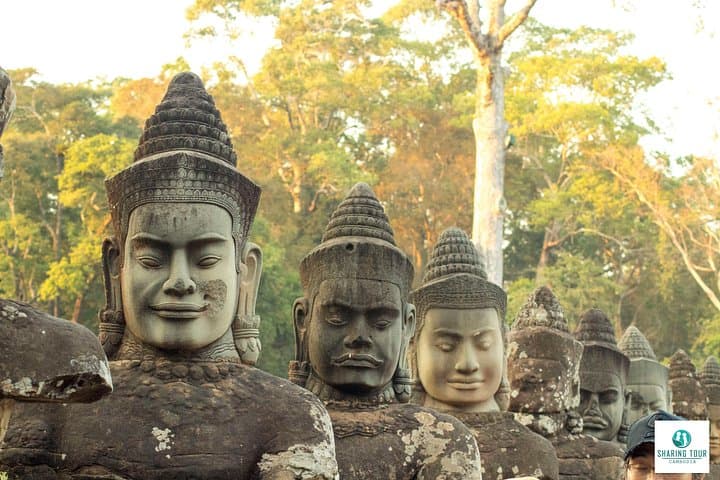
You arrive in the cool hush before mid‑morning, temple spires and carved faces warming as the sun lifts over the floodplain. Small flocks of birds thread between banyan roots and the red roofs of Siem Reap recede; the first stone steps underfoot still hold the dew.
Verified experiences and guided adventures in the surrounding area.
Operated by Sharing tour Cambodia · Siem Reap, Siem Reap
You arrive in the cool hush before mid‑morning, temple spires and carved faces warming as the sun lifts over the floodplain. Small flocks of birds thread between banyan roots and the red roofs of Siem Reap recede; the first stone steps underfoot still hold the dew.
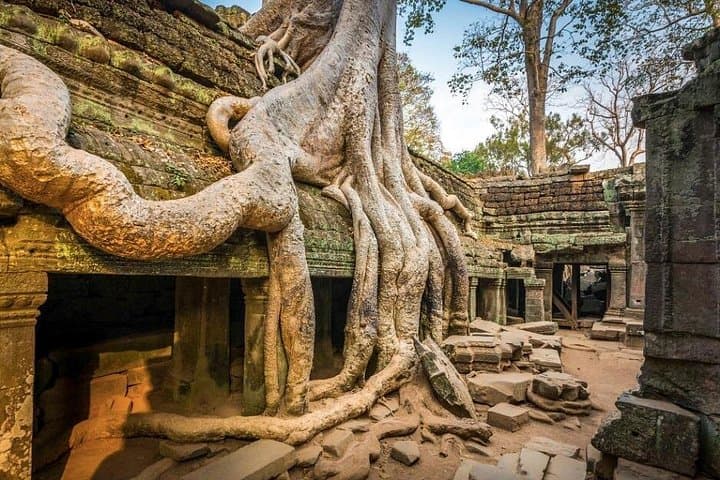
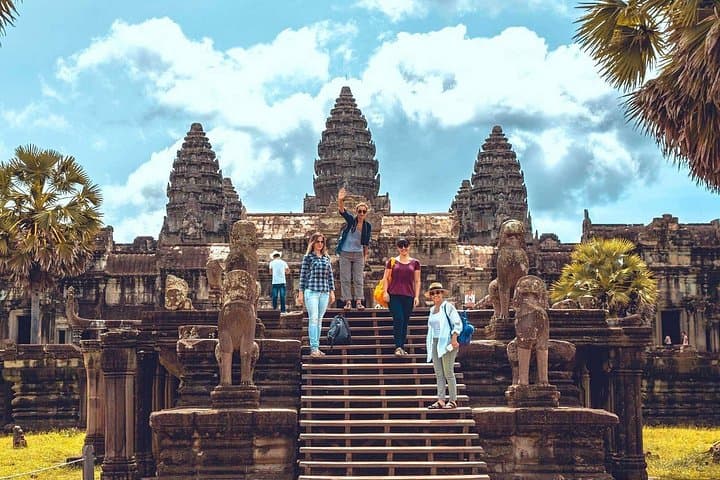
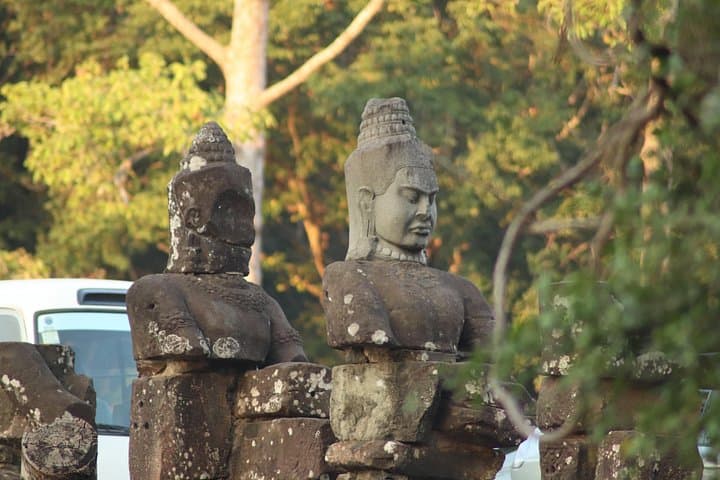
Angkor Archaeological Park spans centuries of Khmer ambition — Angkor Wat began in the 12th century as a state temple and mausoleum, while Angkor Thom and the Bayon reflect urban planning and religious shifts between Hinduism and Buddhism. The stones are sandstone and laterite, exposed to monsoon cycles that both erode and feed the rice plains below. Ta Prohm’s strangler figs declare the quiet contest between architecture and jungle; Phnom Bakheng’s hilltop keeps a compact view that makes the climb worth the crowd.
This full‑day private tour moves logically: Angkor Thom and its 49 Bayon towers, Baphuon and royal terraces, then Ta Prohm with its cinematic roots, lunch nearby, Angkor Wat’s bas‑reliefs, and a sunset ascent of Phnom Bakheng. Expect uneven steps, tight corridors, and crowds at signature viewpoints.
Practical edge: buy a 1‑day Angkor Pass in Siem Reap before entry, wear sun and mosquito protection, and bring a refillable water bottle (drinking water is often provided on tours). Modest clothing that covers shoulders and knees is enforced at main temples. Plan mornings for big monuments and late afternoon for sunset to balance heat and light. If you have spinal, heart, or pregnancy concerns the tour’s walking and stairs can be strenuous; notify your operator — pick up and drop‑off from Siem Reap is commonly included.
Yes — a mandatory Angkor Pass (1‑, 3‑ or 7‑day) is required and must be purchased at the official ticket center in Siem Reap before entering the park.
Many temples have steep, uneven steps and limited handrails; the tour is not recommended for travelers with serious spinal, heart, or mobility issues—notify the operator for alternatives.
Typical full‑day private tours include a lunch stop and often provide bottled drinking water during the day; confirm specifics with your provider at booking.
Early morning for Angkor Wat and Angkor Thom, late afternoon for Phnom Bakheng sunset—midday is busiest and hottest.
Sharing tour Cambodia operates guided outdoor trips and adventures with an emphasis on safety, stewardship, and memorable experiences.
You arrive in the cool hush before mid‑morning, temple spires and carved faces warming as the sun lifts over the floodplain. Small flocks of birds thread between banyan roots and the red roofs of Siem Reap recede; the first stone steps underfoot still hold the dew.
You arrive in the cool hush before mid‑morning, temple spires and carved faces warming as the sun lifts over the floodplain. Small flocks of birds thread between banyan roots and the red roofs of Siem Reap recede; the first stone steps underfoot still hold the dew.
Angkor Archaeological Park spans centuries of Khmer ambition — Angkor Wat began in the 12th century as a state temple and mausoleum, while Angkor Thom and the Bayon reflect urban planning and religious shifts between Hinduism and Buddhism. The stones are sandstone and laterite, exposed to monsoon cycles that both erode and feed the rice plains below. Ta Prohm’s strangler figs declare the quiet contest between architecture and jungle; Phnom Bakheng’s hilltop keeps a compact view that makes the climb worth the crowd.
This full‑day private tour moves logically: Angkor Thom and its 49 Bayon towers, Baphuon and royal terraces, then Ta Prohm with its cinematic roots, lunch nearby, Angkor Wat’s bas‑reliefs, and a sunset ascent of Phnom Bakheng. Expect uneven steps, tight corridors, and crowds at signature viewpoints.
Practical edge: buy a 1‑day Angkor Pass in Siem Reap before entry, wear sun and mosquito protection, and bring a refillable water bottle (drinking water is often provided on tours). Modest clothing that covers shoulders and knees is enforced at main temples. Plan mornings for big monuments and late afternoon for sunset to balance heat and light. If you have spinal, heart, or pregnancy concerns the tour’s walking and stairs can be strenuous; notify your operator — pick up and drop‑off from Siem Reap is commonly included.