THE ADVENTURE COLLECTIVE® · Independent discovery and booking for outdoor travel

Spend a full day by tuk‑tuk through Angkor’s monumental temples—Angkor Wat, Bayon, Ta Prohm and Banteay Kdei—finishing with sunset at Pre Rup. This private circuit combines short walks, temple stairs and plenty of time to absorb Khmer history and jungle‑reclaimed ruins.
Spend a full day by tuk‑tuk through Angkor’s monumental temples—Angkor Wat, Bayon, Ta Prohm and Banteay Kdei—finishing with sunset at Pre Rup. This private circuit combines short walks, temple stairs and plenty of time to absorb Khmer history and jungle‑reclaimed ruins.
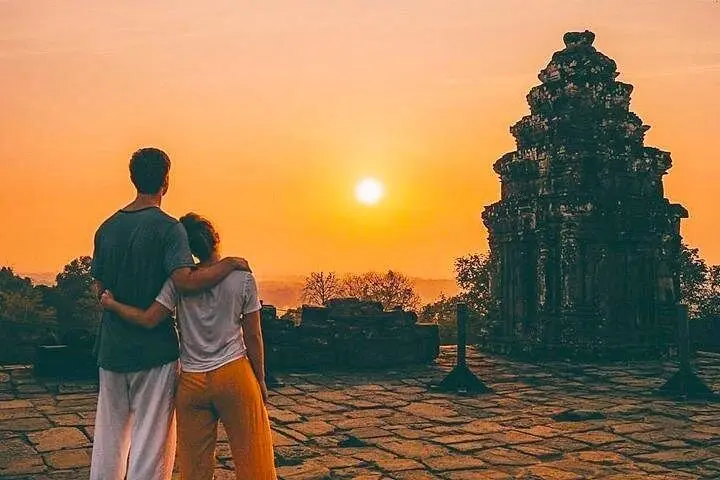
The sun lowers behind Pre Rup, staining the laterite blocks orange while your tuk‑tuk idles on the dusty approach road. A full day among Angkor’s giants moves like that—sudden clearings of carved stone, a tangle of roots pushing through lintels, and long, quiet causeways that force you to slow down and look.
Verified experiences and guided adventures in the surrounding area.
Operated by Cambodia Transport Service · Siem Reap, Siem Reap Province
The sun lowers behind Pre Rup, staining the laterite blocks orange while your tuk‑tuk idles on the dusty approach road. A full day among Angkor’s giants moves like that—sudden clearings of carved stone, a tangle of roots pushing through lintels, and long, quiet causeways that force you to slow down and look.
Begun in the 9th century and reaching its apogee under the Khmer Empire (802–1432), the Angkor complex is a study in sandstone, laterite and hydraulic engineering: Angkor Wat’s raised terraces, Bayon’s 200+ smiling faces, and Ta Prohm’s trees that seem intent on claim and companionship. Culturally the sites shift between Hindu and Buddhist iconography, reflecting centuries of religious evolution that leave the visitor reading stones and bas‑relief like pages in a record.
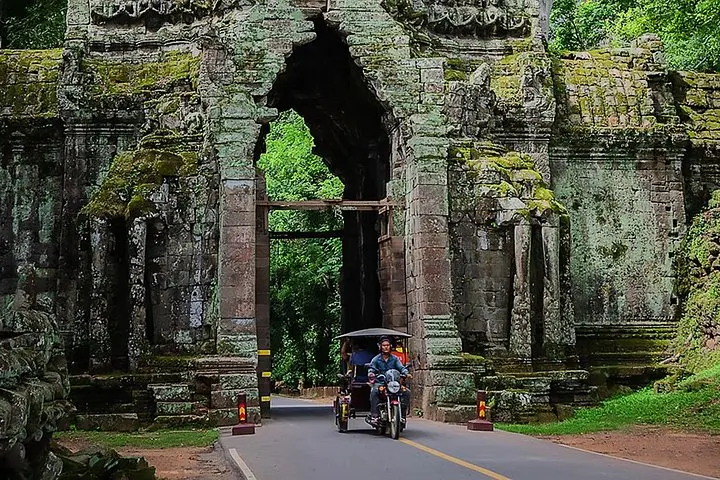
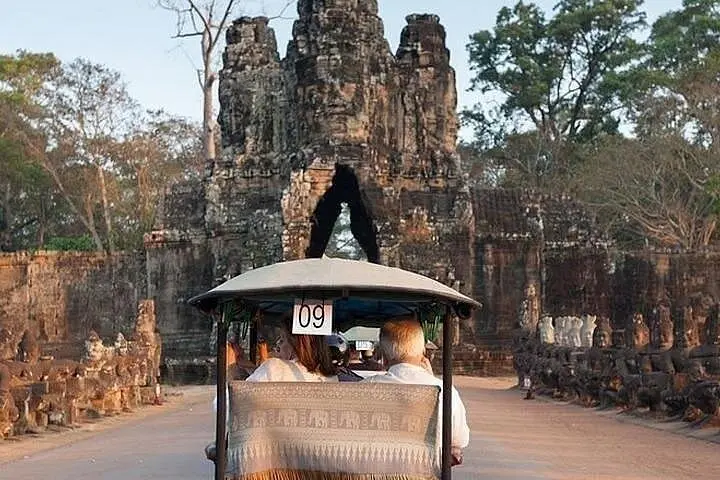
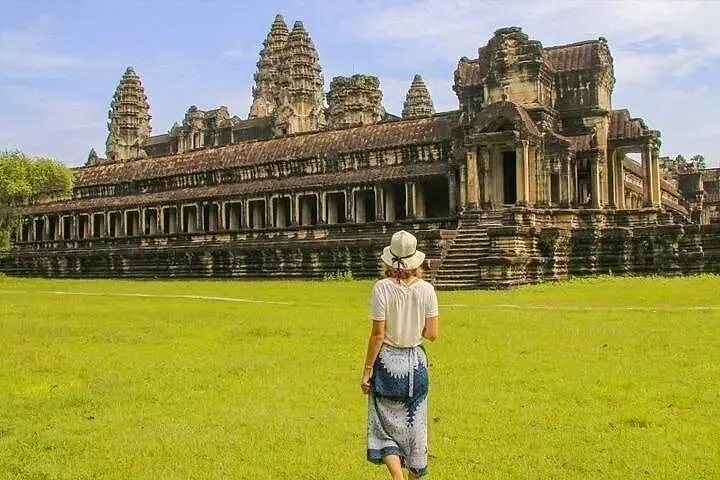
On a tuk‑tuk circuit you’ll cover several kilometers comfortably: morning light at Angkor Wat, the carved faces of Bayon inside Angkor Thom, the jungle drama of Ta Prohm, the tranquil cells of Banteay Kdei, and then a sunset at Pre Rup. Terrain is mostly flat but uneven—stepped galleries, slippery stone, and roots in courtyards.
Practical essentials: secure an Angkor Pass at the official ticket center before entry, wear sturdy closed shoes, carry water and sun protection, and bring small bills for food and donations. Respect temple rules—cover shoulders and knees, avoid climbing carved faces—and allow time to pause; the site rewards slow attention. A private tuk‑tuk lets you tailor stops and timing, but expect walking and stairs at most temples. Travel late afternoon to avoid midday heat and to catch the light that brings these ancient stones alive.
Yes. All visitors must buy an Angkor Pass at the official ticket center and present it at temple entrances; there are one‑day, three‑day and seven‑day options.
Tuk‑tuk drivers handle transport and local logistics; most tours include an English‑speaking licensed guide for deeper historical interpretation if listed in inclusions.
Walking is moderate—expect short to medium walks across temple grounds, uneven stones and some stairs; total mileage varies with chosen stops.
Yes, but plan for shade, regular rests and a slower pace; those with limited mobility should note that many temples have stairs and irregular surfaces.
Cambodia Transport Service operates guided outdoor trips and adventures with an emphasis on safety, stewardship, and memorable experiences.
The sun lowers behind Pre Rup, staining the laterite blocks orange while your tuk‑tuk idles on the dusty approach road. A full day among Angkor’s giants moves like that—sudden clearings of carved stone, a tangle of roots pushing through lintels, and long, quiet causeways that force you to slow down and look.
The sun lowers behind Pre Rup, staining the laterite blocks orange while your tuk‑tuk idles on the dusty approach road. A full day among Angkor’s giants moves like that—sudden clearings of carved stone, a tangle of roots pushing through lintels, and long, quiet causeways that force you to slow down and look.
Begun in the 9th century and reaching its apogee under the Khmer Empire (802–1432), the Angkor complex is a study in sandstone, laterite and hydraulic engineering: Angkor Wat’s raised terraces, Bayon’s 200+ smiling faces, and Ta Prohm’s trees that seem intent on claim and companionship. Culturally the sites shift between Hindu and Buddhist iconography, reflecting centuries of religious evolution that leave the visitor reading stones and bas‑relief like pages in a record.
On a tuk‑tuk circuit you’ll cover several kilometers comfortably: morning light at Angkor Wat, the carved faces of Bayon inside Angkor Thom, the jungle drama of Ta Prohm, the tranquil cells of Banteay Kdei, and then a sunset at Pre Rup. Terrain is mostly flat but uneven—stepped galleries, slippery stone, and roots in courtyards.
Practical essentials: secure an Angkor Pass at the official ticket center before entry, wear sturdy closed shoes, carry water and sun protection, and bring small bills for food and donations. Respect temple rules—cover shoulders and knees, avoid climbing carved faces—and allow time to pause; the site rewards slow attention. A private tuk‑tuk lets you tailor stops and timing, but expect walking and stairs at most temples. Travel late afternoon to avoid midday heat and to catch the light that brings these ancient stones alive.