THE ADVENTURE COLLECTIVE® · Independent discovery and booking for outdoor travel

Spend a full day exploring Angkor’s headline temples with a private guide — from Angkor Wat’s west-facing galleries to Ta Prohm’s tree-wrapped ruins and a sunset viewpoint. Practical advice on timing, dress code, and what to expect on a long but manageable day.
Spend a full day exploring Angkor’s headline temples with a private guide — from Angkor Wat’s west-facing galleries to Ta Prohm’s tree-wrapped ruins and a sunset viewpoint. Practical advice on timing, dress code, and what to expect on a long but manageable day.
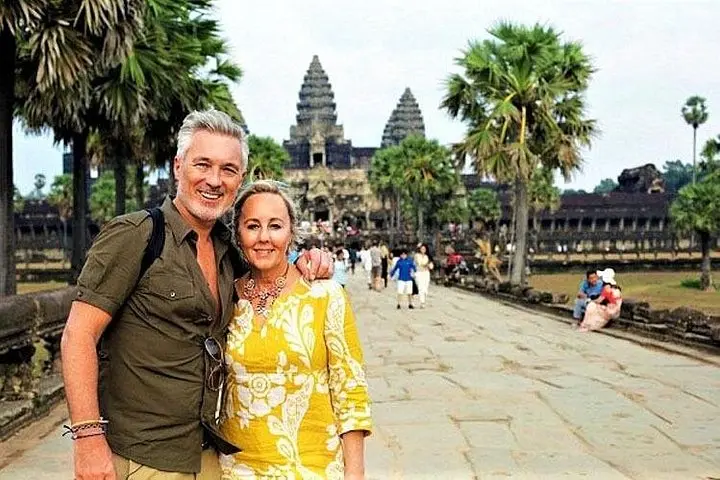
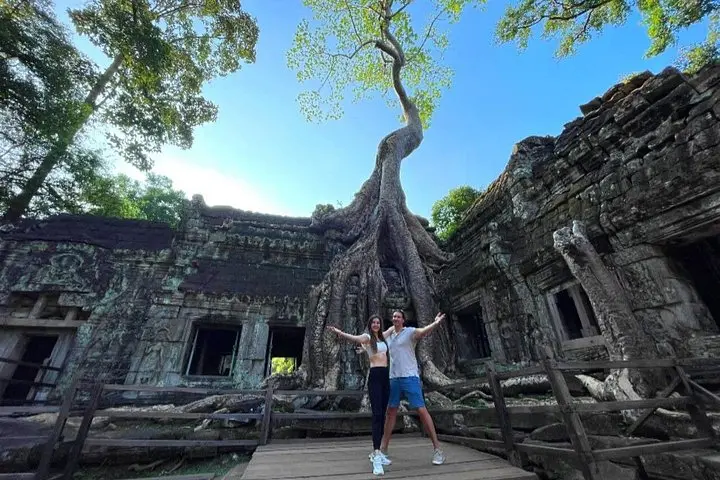
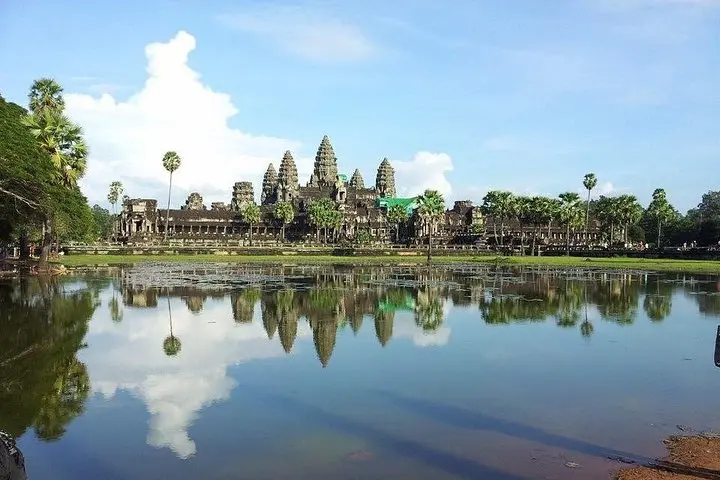
Dawn folds over a broad moat as mirrored towers sharpen into view — the first silhouette of Angkor Wat rises like an engineered mountain at the heart of a ruined kingdom. On a private one-day tour, visitors move from the somber palaces of Angkor Thom to the forest-entwined galleries of Ta Prohm, each temple a different chapter of stone and story.
Verified experiences and guided adventures in the surrounding area.
Operated by About Cambodia Travel & Tours · Siem Reap, Siem Reap Province
Dawn folds over a broad moat as mirrored towers sharpen into view — the first silhouette of Angkor Wat rises like an engineered mountain at the heart of a ruined kingdom. On a private one-day tour, visitors move from the somber palaces of Angkor Thom to the forest-entwined galleries of Ta Prohm, each temple a different chapter of stone and story.
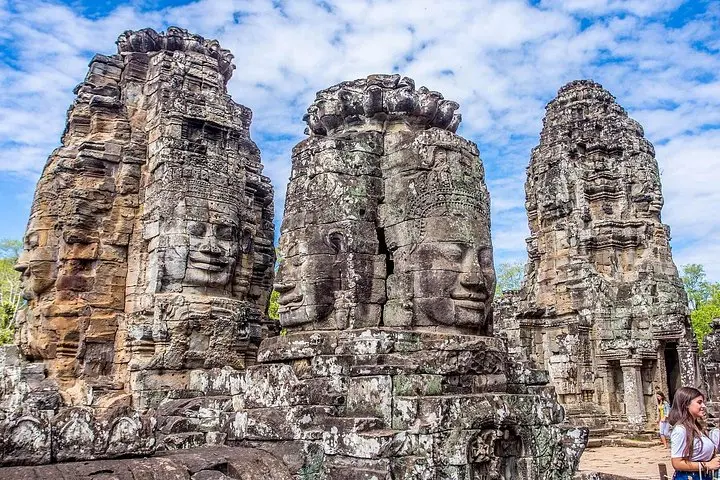
The Angkor complex records the Khmer Empire’s reach between the 9th and 15th centuries; Angkor Wat itself was begun in the early 12th century under Suryavarman II. The sandstone here tells of rivers, shifting water tables and human ambition: carved bas-reliefs of myth and battle, Bayon’s hundreds of serene faces, and vegetative architecture where fig and banyan roots pry at lintels.
Beyond history, the site sits on low alluvial plains fed by the East Baray reservoir and ringed by seasonal forests; the land’s rhythms shape visiting hours and the light for best photographs. Local guides add cultural context — explaining Hindu-Buddhist iconography and the modern restoration efforts led by Cambodian and international teams.
Practically, expect a long day of short walks between expansive sites, intermittent shade, and uneven stone steps. A private vehicle or tuk-tuk reduces transit strain and gives time for sunset at Phnom Bakheng or a quiet moment at Ta Prohm. Dress respectfully (shoulders and knees covered) and carry water, sunscreen and a light rain layer in wet months. With a paced guide and sensible gear, this itinerary turns a packed day into a layered, memorable encounter with one of Southeast Asia’s great archaeological landscapes.
Yes — visitors must purchase an Angkor Archaeological Park pass (1‑day, 3‑day, or 7‑day); keep it on you for inspection at entrances.
Yes — the private format with vehicle transfers makes the itinerary flexible, but be prepared for steps and some uneven ground at temple sites.
The dry season (November–February) offers cooler mornings and clearer skies; early mornings and late afternoons avoid peak heat and crowds.
Many itineraries include sunset at Phnom Bakheng or Angkor Wat — verify with your guide and allow time for short uphill climbs to secure a viewpoint.
About Cambodia Travel & Tours operates guided outdoor trips and adventures with an emphasis on safety, stewardship, and memorable experiences.
Dawn folds over a broad moat as mirrored towers sharpen into view — the first silhouette of Angkor Wat rises like an engineered mountain at the heart of a ruined kingdom. On a private one-day tour, visitors move from the somber palaces of Angkor Thom to the forest-entwined galleries of Ta Prohm, each temple a different chapter of stone and story.
Dawn folds over a broad moat as mirrored towers sharpen into view — the first silhouette of Angkor Wat rises like an engineered mountain at the heart of a ruined kingdom. On a private one-day tour, visitors move from the somber palaces of Angkor Thom to the forest-entwined galleries of Ta Prohm, each temple a different chapter of stone and story.
The Angkor complex records the Khmer Empire’s reach between the 9th and 15th centuries; Angkor Wat itself was begun in the early 12th century under Suryavarman II. The sandstone here tells of rivers, shifting water tables and human ambition: carved bas-reliefs of myth and battle, Bayon’s hundreds of serene faces, and vegetative architecture where fig and banyan roots pry at lintels.
Beyond history, the site sits on low alluvial plains fed by the East Baray reservoir and ringed by seasonal forests; the land’s rhythms shape visiting hours and the light for best photographs. Local guides add cultural context — explaining Hindu-Buddhist iconography and the modern restoration efforts led by Cambodian and international teams.
Practically, expect a long day of short walks between expansive sites, intermittent shade, and uneven stone steps. A private vehicle or tuk-tuk reduces transit strain and gives time for sunset at Phnom Bakheng or a quiet moment at Ta Prohm. Dress respectfully (shoulders and knees covered) and carry water, sunscreen and a light rain layer in wet months. With a paced guide and sensible gear, this itinerary turns a packed day into a layered, memorable encounter with one of Southeast Asia’s great archaeological landscapes.