THE ADVENTURE COLLECTIVE® · Independent discovery and booking for outdoor travel

A private full‑day circuit of Angkor’s highlights—from the sunrise courtyards of Angkor Wat to the face towers of Bayon and the tree‑claimed ruins of Ta Prohm. Practical planning tips, cultural context, and what to expect on a 6–7 hour guided day.
A private full‑day circuit of Angkor’s highlights—from the sunrise courtyards of Angkor Wat to the face towers of Bayon and the tree‑claimed ruins of Ta Prohm. Practical planning tips, cultural context, and what to expect on a 6–7 hour guided day.
You step off the tuk‑tuk onto sunbaked sandstone and the air carries the faint, leafy scent of strangler figs claiming fallen walls. Angkor Wat’s five towers rise like a carved skyline against a cobalt sky; the moat laps quietly as if guarding the stories within.
Verified experiences and guided adventures in the surrounding area.
Operated by Green Era Travel · Siem Reap, Siem Reap Province
You step off the tuk‑tuk onto sunbaked sandstone and the air carries the faint, leafy scent of strangler figs claiming fallen walls. Angkor Wat’s five towers rise like a carved skyline against a cobalt sky; the moat laps quietly as if guarding the stories within.
This private full‑day tour threads through the core of the Angkor Archaeological Park—Angkor Wat, Angkor Thom and Bayon, Ta Prohm and the royal terraces—sites born of the Khmer Empire between the 9th and 13th centuries. The temple stones are not only architecture but living maps of a cosmology: bas‑reliefs that narrate battles, processions and myths, and galleries that orient the sacred around a symbolic Mount Meru.
Geologically, the temples sit on a seasonally saturated plain; the surrounding moats and baray reservoirs were ancient hydraulic achievements that shaped both farming and ritual life. Culturally, you’ll encounter modern Khmer guardianship—APSARA Authority restoration work and local guides who translate the carvings into people and politics.
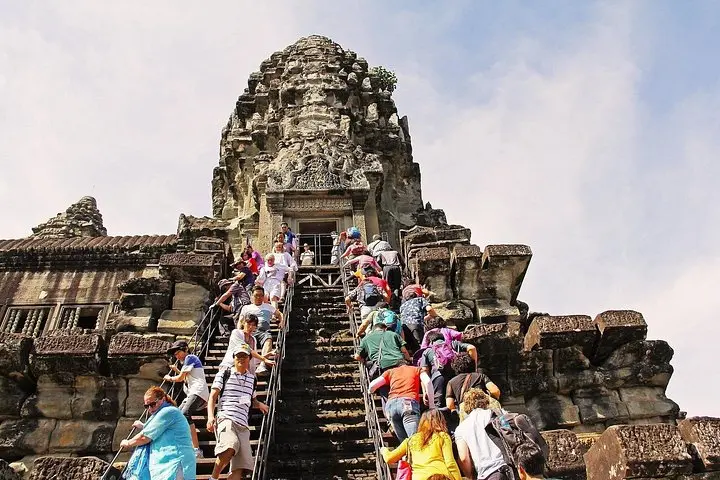
Practically: expect 6–7 hours of mostly level walking across uneven, often sun‑exposed stone and compacted earth. Dress respectfully—covered knees and shoulders are required—and bring a refillable water bottle, sunscreen and breathable footwear. Start early to avoid heat and the largest crowds; allow time to buy the Angkor Pass at the ticket center. A private guide and tuk‑tuk/minivan transport keep transitions efficient, but be prepared for short climbs, narrow staircases and tree roots at Ta Prohm. With a little planning, this tour turns monumental history into a readable, walkable day in the Cambodian landscape.
No; the Angkor Pass is purchased separately at the ticket center before entering the park—your guide can direct you to the counter.
Expect several kilometers and up to 6–7 hours of active time with short climbs and staircases; plan for frequent stops.
Many areas have uneven stone and narrow stairs; some central courtyards are accessible, but full access to towers may be limited for those with reduced mobility.
Yes—Ta Prohm preserves dramatic root‑bound ruins; it’s intentionally left partially in a ‘ruin‑in‑jungle’ state for interpretation and atmosphere.
Green Era Travel operates guided outdoor trips and adventures with an emphasis on safety, stewardship, and memorable experiences.

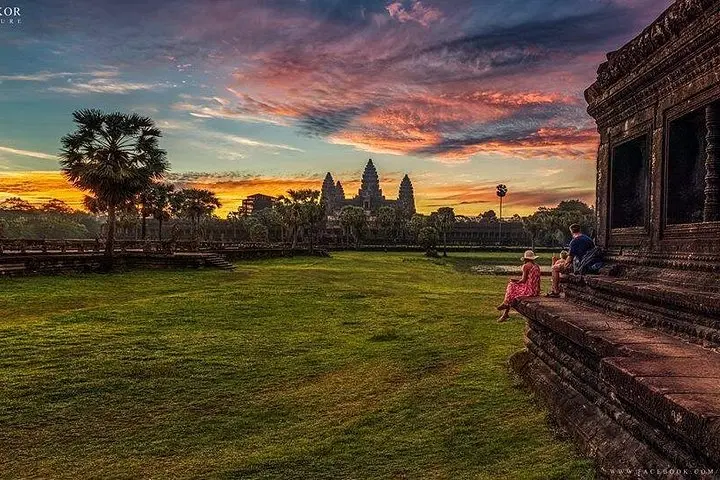
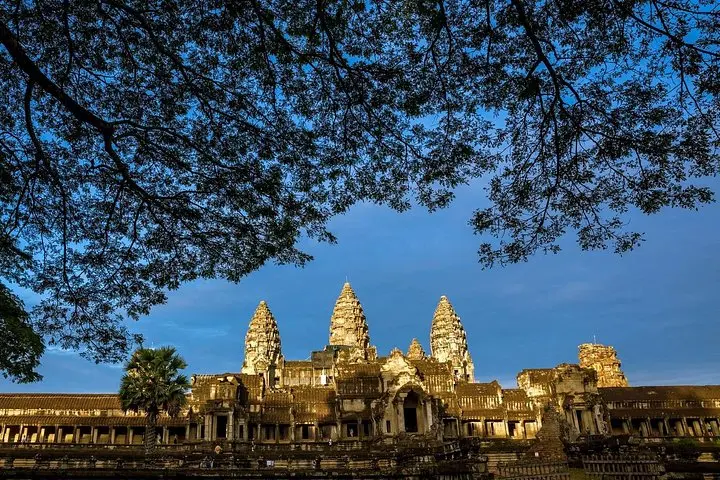
You step off the tuk‑tuk onto sunbaked sandstone and the air carries the faint, leafy scent of strangler figs claiming fallen walls. Angkor Wat’s five towers rise like a carved skyline against a cobalt sky; the moat laps quietly as if guarding the stories within.
You step off the tuk‑tuk onto sunbaked sandstone and the air carries the faint, leafy scent of strangler figs claiming fallen walls. Angkor Wat’s five towers rise like a carved skyline against a cobalt sky; the moat laps quietly as if guarding the stories within.
This private full‑day tour threads through the core of the Angkor Archaeological Park—Angkor Wat, Angkor Thom and Bayon, Ta Prohm and the royal terraces—sites born of the Khmer Empire between the 9th and 13th centuries. The temple stones are not only architecture but living maps of a cosmology: bas‑reliefs that narrate battles, processions and myths, and galleries that orient the sacred around a symbolic Mount Meru.
Geologically, the temples sit on a seasonally saturated plain; the surrounding moats and baray reservoirs were ancient hydraulic achievements that shaped both farming and ritual life. Culturally, you’ll encounter modern Khmer guardianship—APSARA Authority restoration work and local guides who translate the carvings into people and politics.
Practically: expect 6–7 hours of mostly level walking across uneven, often sun‑exposed stone and compacted earth. Dress respectfully—covered knees and shoulders are required—and bring a refillable water bottle, sunscreen and breathable footwear. Start early to avoid heat and the largest crowds; allow time to buy the Angkor Pass at the ticket center. A private guide and tuk‑tuk/minivan transport keep transitions efficient, but be prepared for short climbs, narrow staircases and tree roots at Ta Prohm. With a little planning, this tour turns monumental history into a readable, walkable day in the Cambodian landscape.