THE ADVENTURE COLLECTIVE® · Independent discovery and booking for outdoor travel

Catch Angkor Wat at dawn then trade crowded paths for quiet backroads on a guided bike loop through Angkor Archaeological Park. This half-day tour blends iconic temples, village scenery, and a Khmer meal for a compact, active cultural experience.
Catch Angkor Wat at dawn then trade crowded paths for quiet backroads on a guided bike loop through Angkor Archaeological Park. This half-day tour blends iconic temples, village scenery, and a Khmer meal for a compact, active cultural experience.
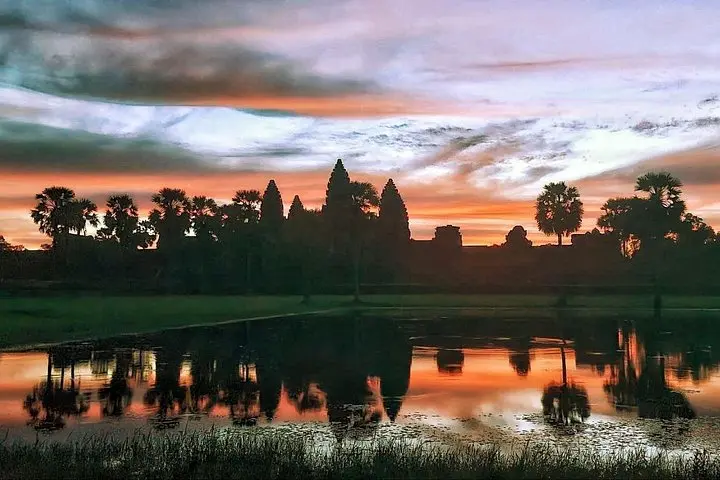
Dark pink light pools behind sandstone towers as you stand with a small group at the western causeway of Angkor Wat. The guide points out the right angle for reflections; a choir of frogs and distant roosters fill the air. That first quiet hour — temple silhouettes, cool air, and a sky that sharpens into gold — is the reason this tour starts before dawn.
Verified experiences and guided adventures in the surrounding area.
Operated by Gocambo Travel · Siem Reap, Siem Reap Province
Dark pink light pools behind sandstone towers as you stand with a small group at the western causeway of Angkor Wat. The guide points out the right angle for reflections; a choir of frogs and distant roosters fill the air. That first quiet hour — temple silhouettes, cool air, and a sky that sharpens into gold — is the reason this tour starts before dawn.
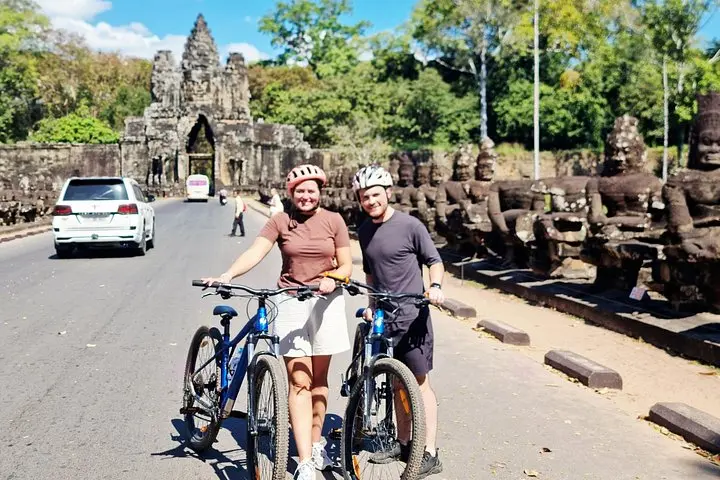
Angkor Wat was raised in the 12th century under King Suryavarman II and evolved from a Hindu state temple into a Buddhist pilgrimage site. The stones come from nearby Phnom Kulen ridges; galleries of bas-reliefs narrate empire, ritual, and riverine trade. Cycling out from the main complex, you move from manicured courtyards into backroads lined with rice paddies, village wooden homes, and scattered shrine mounds. Bayon’s carved faces watch over the walled city of Angkor Thom, while Ta Prohm’s banyan roots tug at the carvings like slow fingers.
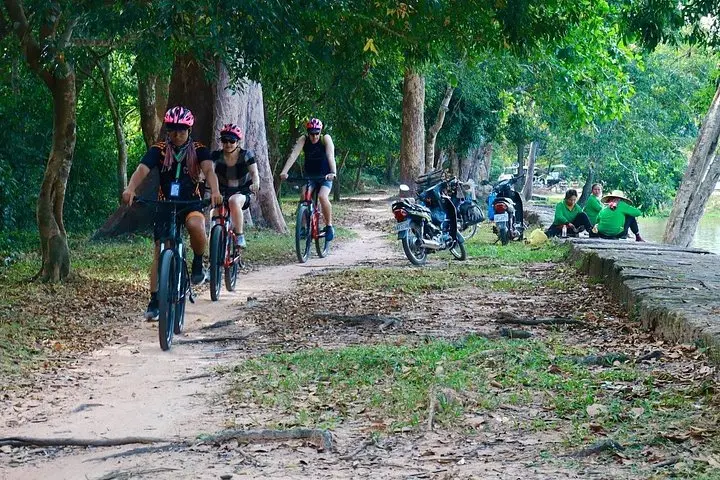
Expect mostly flat, compacted-dirt and low-traffic paved roads across 15–25 km of riding over a half-day, with frequent stops for ruins and photos. Wear a helmet, sun protection, and lightweight layers for humidity that rises fast after sunrise. Carry cash for the Angkor Pass (required) and small purchases. Hydrate before the ride, sit with a local Khmer breakfast to refuel, and plan to finish with a leisurely Khmer lunch.
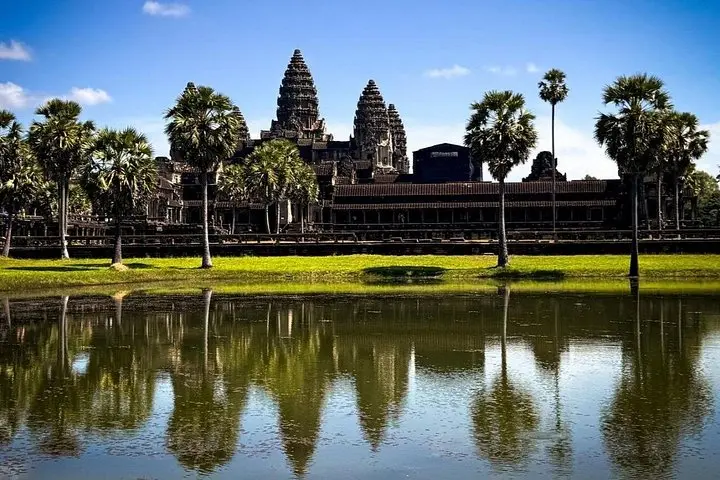
Practical pacing matters: sunrise at the western moat, then inward to the inner galleries, followed by a guided cycle through quiet backlanes to Bayon and Ta Prohm. The route balances culture with motion — the ruins invite inspection, the roads push you forward.
Yes, an Angkor Park pass is required for entry; guides typically advise where to purchase it in Siem Reap or at the park entrance before sunrise.
Moderate fitness is sufficient—routes are mostly flat but involve 15–25 km of mixed paved and packed-dirt surfaces with frequent stops.
Tours usually supply a well-maintained mountain or hybrid bike suitable for dirt trails and paved roads, plus a helmet.
Sunrise viewpoints can be busy at the most iconic spots; guides often take you to less-crowded vantage points nearby for better compositions.
Gocambo Travel operates guided outdoor trips and adventures with an emphasis on safety, stewardship, and memorable experiences.
Dark pink light pools behind sandstone towers as you stand with a small group at the western causeway of Angkor Wat. The guide points out the right angle for reflections; a choir of frogs and distant roosters fill the air. That first quiet hour — temple silhouettes, cool air, and a sky that sharpens into gold — is the reason this tour starts before dawn.
Dark pink light pools behind sandstone towers as you stand with a small group at the western causeway of Angkor Wat. The guide points out the right angle for reflections; a choir of frogs and distant roosters fill the air. That first quiet hour — temple silhouettes, cool air, and a sky that sharpens into gold — is the reason this tour starts before dawn.
Angkor Wat was raised in the 12th century under King Suryavarman II and evolved from a Hindu state temple into a Buddhist pilgrimage site. The stones come from nearby Phnom Kulen ridges; galleries of bas-reliefs narrate empire, ritual, and riverine trade. Cycling out from the main complex, you move from manicured courtyards into backroads lined with rice paddies, village wooden homes, and scattered shrine mounds. Bayon’s carved faces watch over the walled city of Angkor Thom, while Ta Prohm’s banyan roots tug at the carvings like slow fingers.
Expect mostly flat, compacted-dirt and low-traffic paved roads across 15–25 km of riding over a half-day, with frequent stops for ruins and photos. Wear a helmet, sun protection, and lightweight layers for humidity that rises fast after sunrise. Carry cash for the Angkor Pass (required) and small purchases. Hydrate before the ride, sit with a local Khmer breakfast to refuel, and plan to finish with a leisurely Khmer lunch.
Practical pacing matters: sunrise at the western moat, then inward to the inner galleries, followed by a guided cycle through quiet backlanes to Bayon and Ta Prohm. The route balances culture with motion — the ruins invite inspection, the roads push you forward.