THE ADVENTURE COLLECTIVE® · Independent discovery and booking for outdoor travel

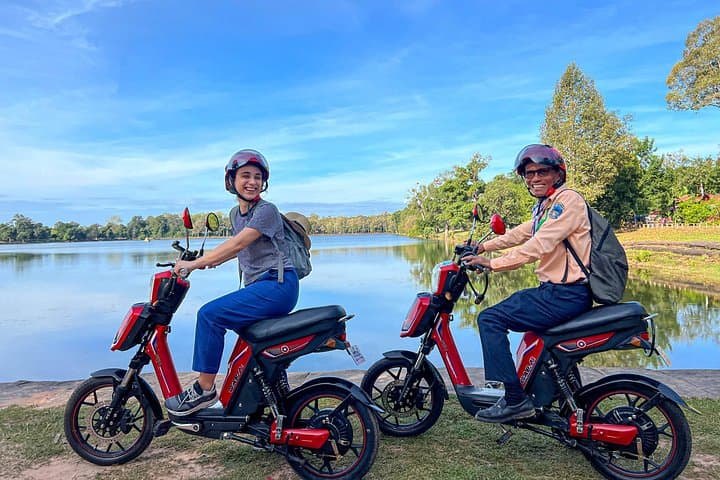
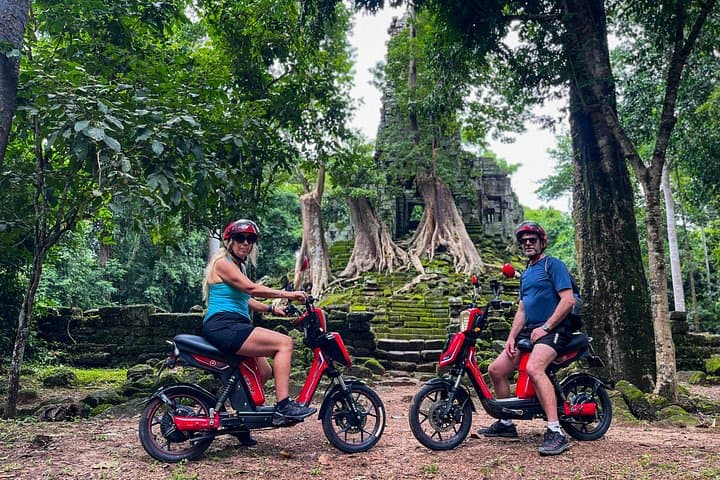
Catch the sunrise over Angkor Wat on an early tuk‑tuk ride and explore Ta Prohm and Bayon by e‑bike, returning for a village breakfast of Khmer noodle soup and fresh coconut. This guided outing combines quiet temple moments with short, flat e‑bike rides through rural lanes.
Catch the sunrise over Angkor Wat on an early tuk‑tuk ride and explore Ta Prohm and Bayon by e‑bike, returning for a village breakfast of Khmer noodle soup and fresh coconut. This guided outing combines quiet temple moments with short, flat e‑bike rides through rural lanes.
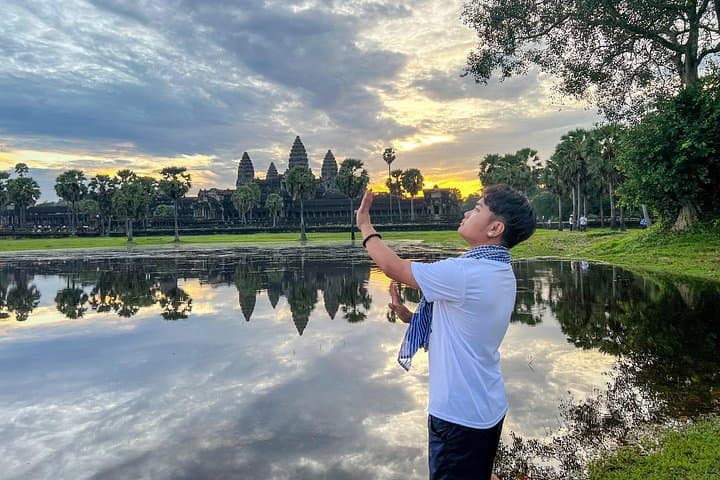
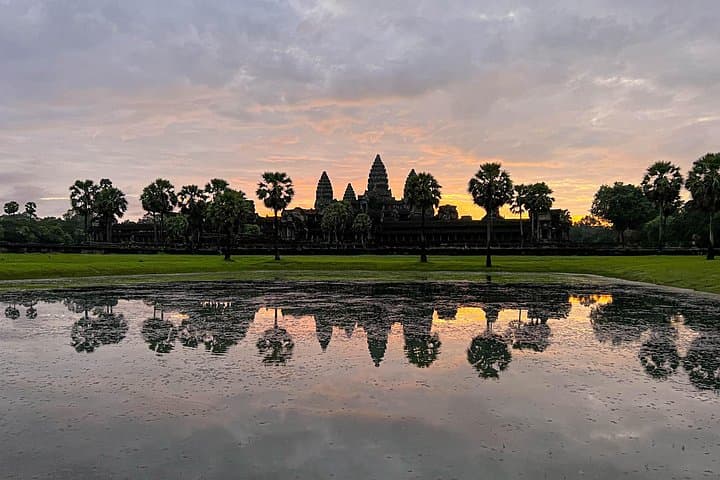
Before dawn the causeway feels cool and empty; your tuk‑tuk hums toward Angkor Wat while the central tower cuts a silhouette against a pale sky. By the time the sun lifts, the reflection pools glitter and the sandstone bas‑reliefs begin to show their stories — a slow reveal you watch from a low wooden bench or a quiet edge of the terrace.
Verified experiences and guided adventures in the surrounding area.
Operated by Asean Angkor Guide · Siem Reap, Siem Reap Province
Before dawn the causeway feels cool and empty; your tuk‑tuk hums toward Angkor Wat while the central tower cuts a silhouette against a pale sky. By the time the sun lifts, the reflection pools glitter and the sandstone bas‑reliefs begin to show their stories — a slow reveal you watch from a low wooden bench or a quiet edge of the terrace.
The temples here were carved at the height of the Khmer Empire in the 12th century; Angkor Wat began as a Hindu state temple and later became a major Buddhist site. The geology is flat alluvium around Tonlé Sap, so stone platforms, moat walls, and root-wrapped ruins (Ta Prohm) dominate the experience rather than steep climbs. Culture moves at village pace between sites: markets, morning breakfasts of kuy teav (noodle soup) and coconut, and farmers guiding cattle across shaded lanes.
Practically, the trip mixes short tuk‑tuk transfers with 10–20 km of e‑bike riding on compact dirt and paved roads, plus walking across uneven temple stones and brief stair sections — total elevation gain is negligible. The guide handles logistics and routes; you handle the camera, modest temple attire, and pacing. Bring hydration and insect repellent, use the e‑bike’s assist on longer stretches, and allow time to let the crowd cycles thin. If you want fewer people in your shots, ask about alternate vantage points or a later start for specific temples. Respect the site: stay on marked paths, remove shoes where required, and tip local vendors for fresh fruit and breakfast you’ll remember long after the sunrise.
No—this tour typically does not include the Angkor Park admission pass; buy your pass at the official ticket center or confirm inclusion before booking.
Expect roughly 10–20 km of e‑biking spread across the morning with short district road rides and temple approach paths; most terrain is flat.
The tour is generally family-friendly, but e‑bike use and early start may be tiring—consult the operator about age limits and mobility concerns.
Photography is allowed at most sites, but be respectful of religious areas and any restricted interiors; avoid flash where signs prohibit it.
Asean Angkor Guide operates guided outdoor trips and adventures with an emphasis on safety, stewardship, and memorable experiences.
Before dawn the causeway feels cool and empty; your tuk‑tuk hums toward Angkor Wat while the central tower cuts a silhouette against a pale sky. By the time the sun lifts, the reflection pools glitter and the sandstone bas‑reliefs begin to show their stories — a slow reveal you watch from a low wooden bench or a quiet edge of the terrace.
Before dawn the causeway feels cool and empty; your tuk‑tuk hums toward Angkor Wat while the central tower cuts a silhouette against a pale sky. By the time the sun lifts, the reflection pools glitter and the sandstone bas‑reliefs begin to show their stories — a slow reveal you watch from a low wooden bench or a quiet edge of the terrace.
The temples here were carved at the height of the Khmer Empire in the 12th century; Angkor Wat began as a Hindu state temple and later became a major Buddhist site. The geology is flat alluvium around Tonlé Sap, so stone platforms, moat walls, and root-wrapped ruins (Ta Prohm) dominate the experience rather than steep climbs. Culture moves at village pace between sites: markets, morning breakfasts of kuy teav (noodle soup) and coconut, and farmers guiding cattle across shaded lanes.
Practically, the trip mixes short tuk‑tuk transfers with 10–20 km of e‑bike riding on compact dirt and paved roads, plus walking across uneven temple stones and brief stair sections — total elevation gain is negligible. The guide handles logistics and routes; you handle the camera, modest temple attire, and pacing. Bring hydration and insect repellent, use the e‑bike’s assist on longer stretches, and allow time to let the crowd cycles thin. If you want fewer people in your shots, ask about alternate vantage points or a later start for specific temples. Respect the site: stay on marked paths, remove shoes where required, and tip local vendors for fresh fruit and breakfast you’ll remember long after the sunrise.