THE ADVENTURE COLLECTIVE® · Independent discovery and booking for outdoor travel

Watch sunrise paint Angkor Wat’s towers and spend a private day moving from the reflection pools to Bayon’s carved faces and Ta Prohm’s root‑entwined walls. This guided tour combines early‑morning light with expert context to make the complex legible and manageable in one full day.
Watch sunrise paint Angkor Wat’s towers and spend a private day moving from the reflection pools to Bayon’s carved faces and Ta Prohm’s root‑entwined walls. This guided tour combines early‑morning light with expert context to make the complex legible and manageable in one full day.
You arrive before dawn, tuk‑tuk rattling over a dust road as the first light edges over a flat reservoir. The reflection pools in front of Angkor Wat hold a breath of sky; silhouettes of towers emerge, and the crowd hushes while the sun spills gold across carved sandstone.
Verified experiences and guided adventures in the surrounding area.
Operated by About Cambodia Travel & Tours · Siem Reap, Siem Reap Province
You arrive before dawn, tuk‑tuk rattling over a dust road as the first light edges over a flat reservoir. The reflection pools in front of Angkor Wat hold a breath of sky; silhouettes of towers emerge, and the crowd hushes while the sun spills gold across carved sandstone.
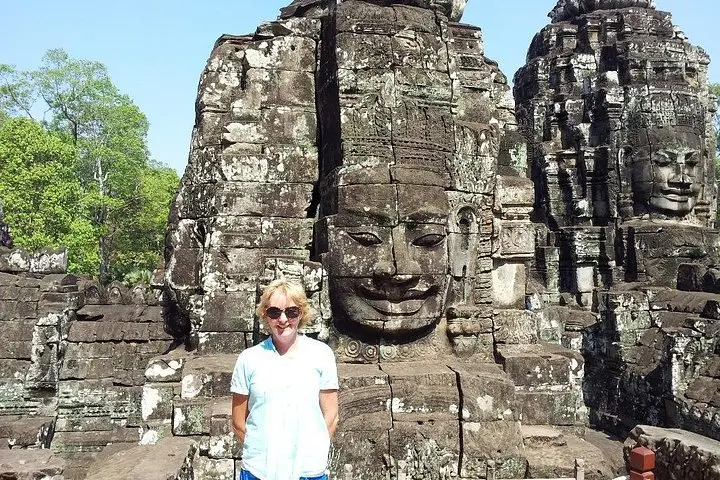
This private day tour threads through the Angkor Archaeological Park—Angkor Wat’s classical 12th‑century grandeur, the 12th–13th‑century Bayon with its hundred-faced towers, the tree‑entwined corridors of Ta Prohm, and the royal scale of Angkor Thom. Geologically the monuments are hewn from sandstone and laterite—soft stone that records centuries of weather and restoration—while the surrounding East Baray reservoir hints at the Khmer engineers’ mastery of water management.
Culturally, the sites shift from Hindu cosmology to Mahayana and Theravada Buddhist layers; a local guide decodes bas‑reliefs and royal symbolism that can otherwise feel opaque. Expect long stretches of flat walking on uneven stone and shaded paths through forest where monkeys and monitor lizards are common.
Practical edge: arrive before sunrise to secure prime viewing and quieter passages through Angkor Wat; bring a valid Angkor pass, modest clothing covering shoulders and knees, and refillable water—the heat and humidity build quickly. Photography is excellent but be mindful of pulpit areas and preserve fragile roots at Ta Prohm by staying on marked paths. With a private vehicle or tuk‑tuk and an informed guide, you can cover the major temples in a single full day without rushing, leaving the late afternoon for Siem Reap’s markets or a quiet temple vantage point.
You can buy the Angkor pass at the ticket center near the park, but buying or confirming pass details ahead saves time on a sunrise start.
Sunrise is very popular; arriving early reduces crowds, but expect photographers and tour groups in front of the reflection pools.
Yes—many areas are stroller accessible, though some ruined temples have steps and uneven ground that may restrict movement.
A guide isn’t mandatory, but a licensed English‑speaking guide greatly enhances understanding of inscriptions, bas‑reliefs and the site’s layered history.
About Cambodia Travel & Tours operates guided outdoor trips and adventures with an emphasis on safety, stewardship, and memorable experiences.
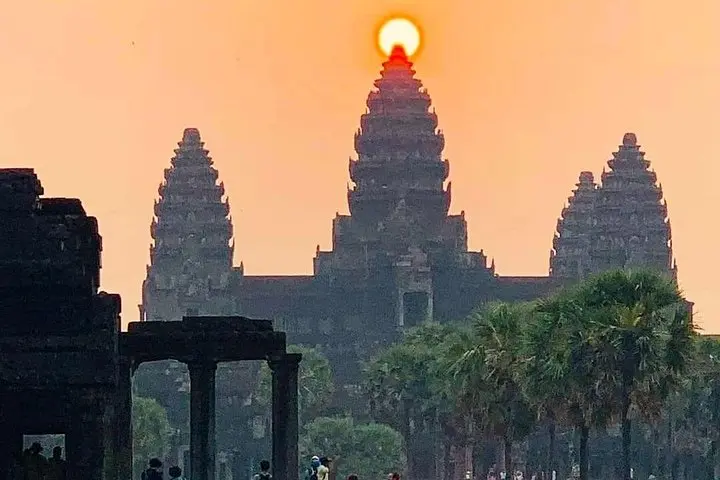
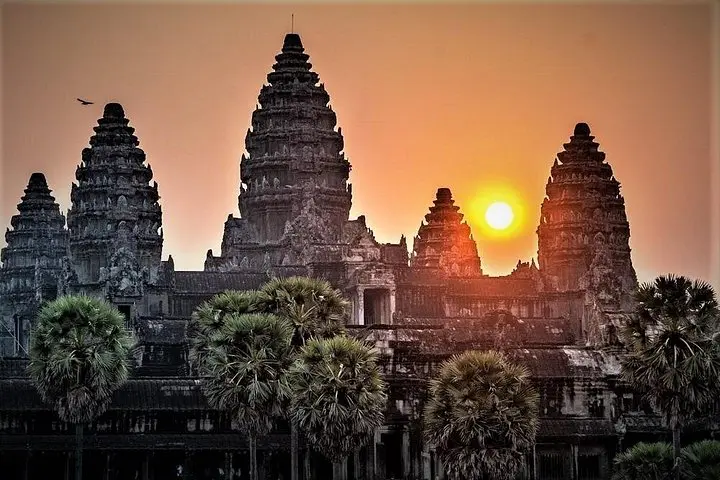
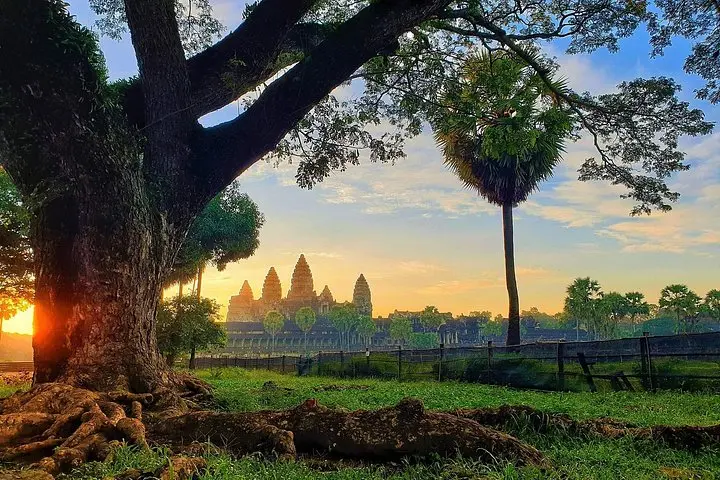
You arrive before dawn, tuk‑tuk rattling over a dust road as the first light edges over a flat reservoir. The reflection pools in front of Angkor Wat hold a breath of sky; silhouettes of towers emerge, and the crowd hushes while the sun spills gold across carved sandstone.
You arrive before dawn, tuk‑tuk rattling over a dust road as the first light edges over a flat reservoir. The reflection pools in front of Angkor Wat hold a breath of sky; silhouettes of towers emerge, and the crowd hushes while the sun spills gold across carved sandstone.
This private day tour threads through the Angkor Archaeological Park—Angkor Wat’s classical 12th‑century grandeur, the 12th–13th‑century Bayon with its hundred-faced towers, the tree‑entwined corridors of Ta Prohm, and the royal scale of Angkor Thom. Geologically the monuments are hewn from sandstone and laterite—soft stone that records centuries of weather and restoration—while the surrounding East Baray reservoir hints at the Khmer engineers’ mastery of water management.
Culturally, the sites shift from Hindu cosmology to Mahayana and Theravada Buddhist layers; a local guide decodes bas‑reliefs and royal symbolism that can otherwise feel opaque. Expect long stretches of flat walking on uneven stone and shaded paths through forest where monkeys and monitor lizards are common.
Practical edge: arrive before sunrise to secure prime viewing and quieter passages through Angkor Wat; bring a valid Angkor pass, modest clothing covering shoulders and knees, and refillable water—the heat and humidity build quickly. Photography is excellent but be mindful of pulpit areas and preserve fragile roots at Ta Prohm by staying on marked paths. With a private vehicle or tuk‑tuk and an informed guide, you can cover the major temples in a single full day without rushing, leaving the late afternoon for Siem Reap’s markets or a quiet temple vantage point.