THE ADVENTURE COLLECTIVE® · Independent discovery and booking for outdoor travel

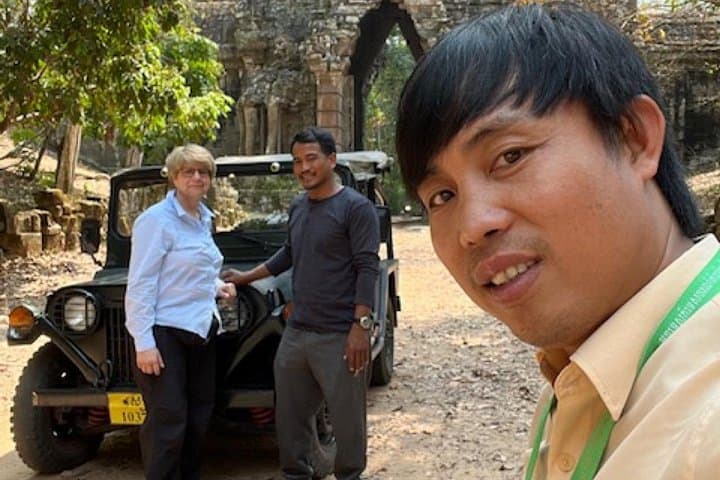
Catch Angkor Wat at first light from an open vintage jeep, then explore Bayon’s smiling faces and the overgrown corridors of Ta Prohm. This private offbeat route mixes iconic vistas with quieter jungle temples.
Catch Angkor Wat at first light from an open vintage jeep, then explore Bayon’s smiling faces and the overgrown corridors of Ta Prohm. This private offbeat route mixes iconic vistas with quieter jungle temples.
The jeep rolls through predawn fields, the air sharp with river mist and diesel. Headlights pick out silhouettes of sugar palms as Angkor’s stone towers begin to ghost out of the darkness; by the time the sun edges up, the five towers of Angkor Wat glow against a cooling sky.
Verified experiences and guided adventures in the surrounding area.
Operated by Siem Reap Locals · Siem Reap, Siem Reap Province
The jeep rolls through predawn fields, the air sharp with river mist and diesel. Headlights pick out silhouettes of sugar palms as Angkor’s stone towers begin to ghost out of the darkness; by the time the sun edges up, the five towers of Angkor Wat glow against a cooling sky.
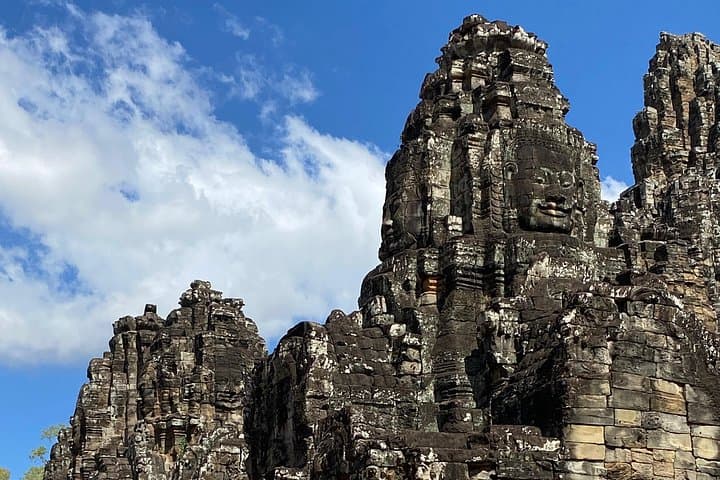
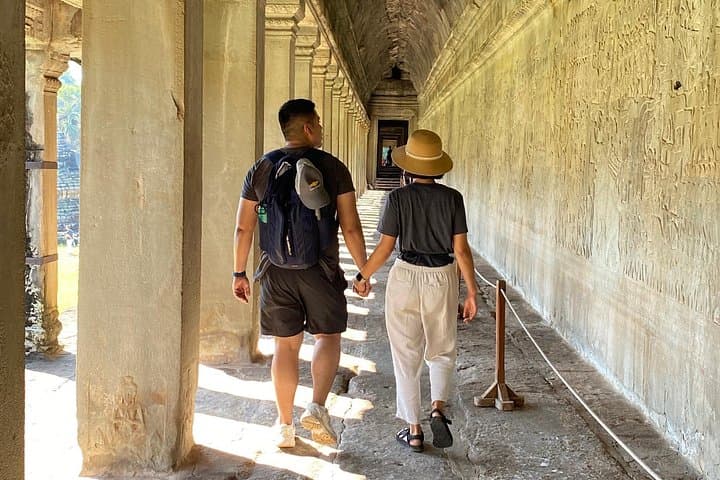
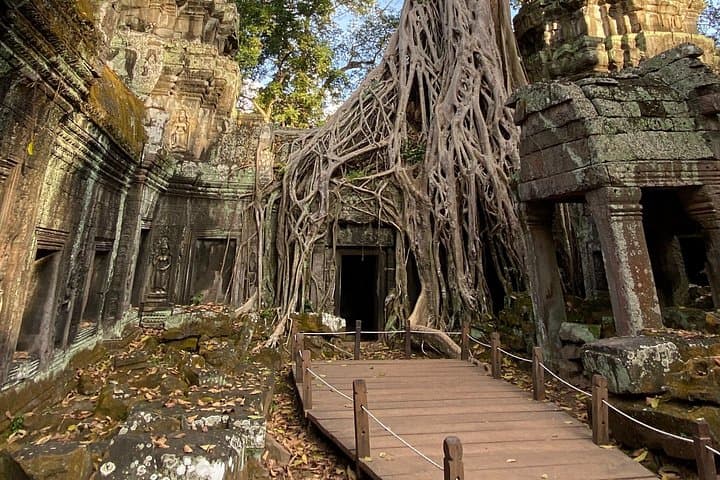
This private, open-jeep experience moves fast but thoughtfully—sunrise at Angkor Wat followed by Bayon’s smiling faces, the vine-choked galleries of Ta Prohm (the Tomb Raider temple), and quieter ruins like Palilay or Ta Nei deep in the green. Angkor Wat dates to the 12th century under King Suryavarman II, built as both temple and state mausoleum; the surrounding complex reflects Khmer temple-mountain geometry carved in sandstone.
Geology here is limestone and sandstone laid down and sculpted, with laterite foundations giving the structures surprising durability in a tropical climate that encourages rapid vegetation regrowth. Local culture centers on Theravada Buddhism and a living village rhythm—markets, rice paddies and ferries that frame a temple sunrise as much as the ruins themselves.
Practical guidance: arrive with a printed or mobile Angkor pass and wear a shirt and sarong or long shorts that cover shoulders and knees for temple respect. Bring a compact daypack with water, insect repellent and a light rain layer during monsoon months. The jeep access reduces walking distance between sites but expect uneven temple steps and short walks on soft earth.
Timing matters: sunrise at Angkor Wat draws crowds; a private jeep gives earlier access and alternate angles. Listen to your guide for the best vantage points, and keep cameras ready—the light shifts fast and the ruins often reveal small carvings that reward a patient eye.
Yes. Visitors must present a valid Angkor Archaeological Park pass at checkpoints; bring the pass or purchase it in Siem Reap before the tour.
The tour accommodates families and offers infant seats, but early start times and long walking periods may be tiring for young children.
Access rules vary; sunrise viewing is allowed at Angkor Wat and some nearby areas, but guides will direct you to designated viewpoints and restricted zones.
Angkor Park admission is not included in most tour prices—confirm with the operator and purchase passes separately if needed.
Siem Reap Locals operates guided outdoor trips and adventures with an emphasis on safety, stewardship, and memorable experiences.
The jeep rolls through predawn fields, the air sharp with river mist and diesel. Headlights pick out silhouettes of sugar palms as Angkor’s stone towers begin to ghost out of the darkness; by the time the sun edges up, the five towers of Angkor Wat glow against a cooling sky.
The jeep rolls through predawn fields, the air sharp with river mist and diesel. Headlights pick out silhouettes of sugar palms as Angkor’s stone towers begin to ghost out of the darkness; by the time the sun edges up, the five towers of Angkor Wat glow against a cooling sky.
This private, open-jeep experience moves fast but thoughtfully—sunrise at Angkor Wat followed by Bayon’s smiling faces, the vine-choked galleries of Ta Prohm (the Tomb Raider temple), and quieter ruins like Palilay or Ta Nei deep in the green. Angkor Wat dates to the 12th century under King Suryavarman II, built as both temple and state mausoleum; the surrounding complex reflects Khmer temple-mountain geometry carved in sandstone.
Geology here is limestone and sandstone laid down and sculpted, with laterite foundations giving the structures surprising durability in a tropical climate that encourages rapid vegetation regrowth. Local culture centers on Theravada Buddhism and a living village rhythm—markets, rice paddies and ferries that frame a temple sunrise as much as the ruins themselves.
Practical guidance: arrive with a printed or mobile Angkor pass and wear a shirt and sarong or long shorts that cover shoulders and knees for temple respect. Bring a compact daypack with water, insect repellent and a light rain layer during monsoon months. The jeep access reduces walking distance between sites but expect uneven temple steps and short walks on soft earth.
Timing matters: sunrise at Angkor Wat draws crowds; a private jeep gives earlier access and alternate angles. Listen to your guide for the best vantage points, and keep cameras ready—the light shifts fast and the ruins often reveal small carvings that reward a patient eye.