THE ADVENTURE COLLECTIVE® · Independent discovery and booking for outdoor travel

Watch the sun lift over Angkor Wat’s towers on a private full-day tour that pairs early-morning reflection with in-depth visits to Bayon, Ta Prohm and Angkor Thom. Practical tips and local context help you move through the park like someone who knows where to look.
Watch the sun lift over Angkor Wat’s towers on a private full-day tour that pairs early-morning reflection with in-depth visits to Bayon, Ta Prohm and Angkor Thom. Practical tips and local context help you move through the park like someone who knows where to look.
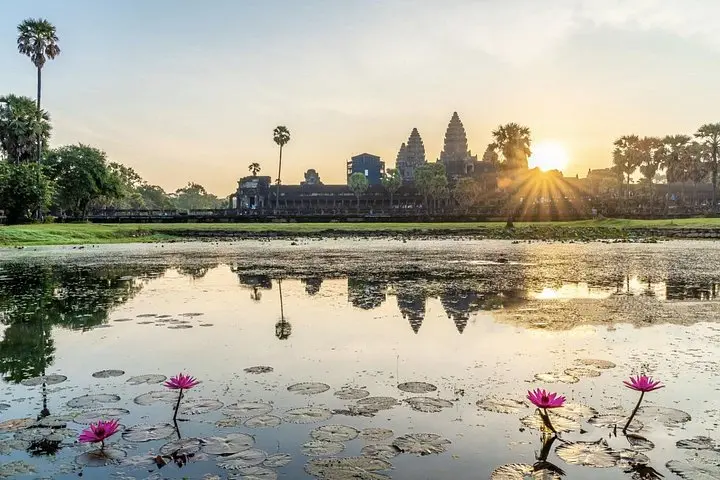
Before dawn the moat is a mirror and the five towers of Angkor Wat are silhouettes against a cooling sky. Visitors gather on the western causeway as color creeps up behind the central sanctuary, reflections trembling with the first footfalls of the day.
Verified experiences and guided adventures in the surrounding area.
Operated by SARUS Co., Ltd · Siem Reap, Siem Reap Province
Before dawn the moat is a mirror and the five towers of Angkor Wat are silhouettes against a cooling sky. Visitors gather on the western causeway as color creeps up behind the central sanctuary, reflections trembling with the first footfalls of the day.
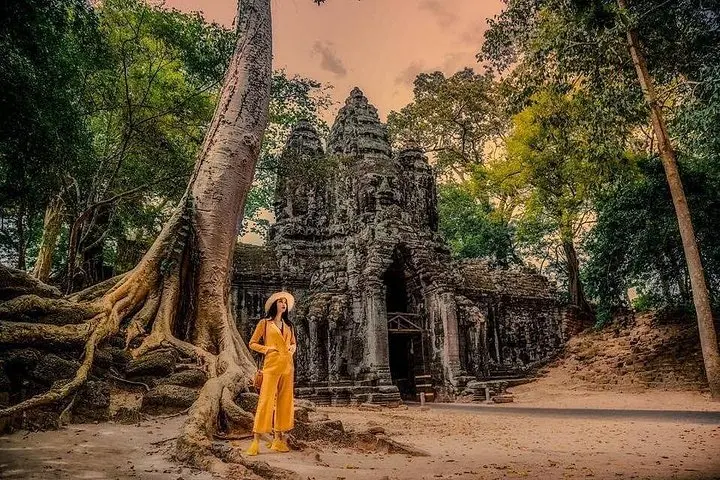
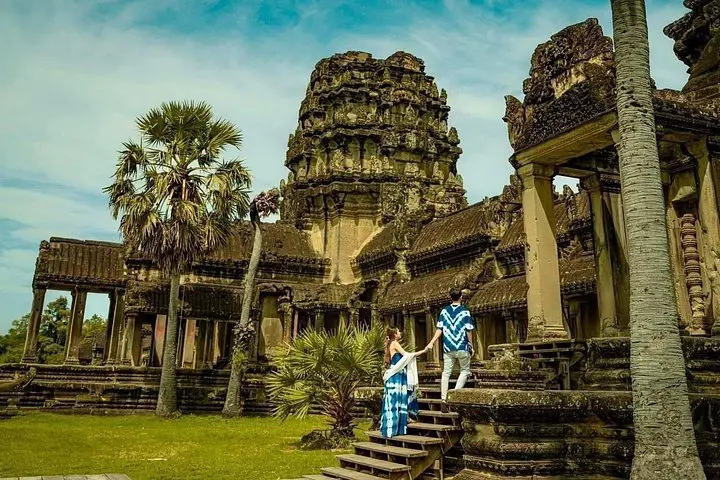
The complex at Angkor stretches over decades of Khmer ambition: the core temple was raised in the early 12th century by King Suryavarman II as a Hindu state temple and later became a Buddhist pilgrimage site. Built of sandstone and laterite, its bas-reliefs and causeways survived cyclonic weather, human neglect, and reclamation by forest — Ta Prohm still carries the ghostly roots of fig and silk-cotton trees that reclaim carved stone.
Beyond geology and architecture, the tour exposes the living culture: English-speaking guides explain scenes of daily life and royal ceremony carved into galleries, while small villages around Siem Reap maintain crafts and rice-field rhythms that supported the ancient city.
Practicalities matter: this private, full-day tour begins before sunrise with hotel pickup and runs about 8–9 hours. Expect steady walking on uneven steps and slick stones; modest clothing (knees and shoulders covered) is required at major temples. Angkor Pass is purchased separately at the ticket center; bring cash, sun protection, and reusable water. Visit quieter corners midafternoon if the heat allows, and allow time at Ta Prohm to appreciate the root-wrapped ruins without the morning crowds.
With a knowledgeable guide and an early start, the sunrise becomes more than a photo — it’s the opening scene to a day of layered history and bold stonework that still demands careful, respectful travel.
Yes — the Angkor Pass is purchased at the ticket center near the park before temple entry; multi-day passes are available and required for full exploration.
Yes — the private tour includes hotel pickup and drop-off; confirm precise pickup time and point when you book.
Photography is permitted in most outdoor and gallery areas, but avoid flash on delicate carvings and respect signs prohibiting photos in certain sanctuaries.
The tour involves uneven steps and long periods of walking; it’s not recommended for travelers with significant spinal or mobility limitations, though vehicle access minimizes distances between sites.
SARUS Co., Ltd operates guided outdoor trips and adventures with an emphasis on safety, stewardship, and memorable experiences.

Before dawn the moat is a mirror and the five towers of Angkor Wat are silhouettes against a cooling sky. Visitors gather on the western causeway as color creeps up behind the central sanctuary, reflections trembling with the first footfalls of the day.
Before dawn the moat is a mirror and the five towers of Angkor Wat are silhouettes against a cooling sky. Visitors gather on the western causeway as color creeps up behind the central sanctuary, reflections trembling with the first footfalls of the day.
The complex at Angkor stretches over decades of Khmer ambition: the core temple was raised in the early 12th century by King Suryavarman II as a Hindu state temple and later became a Buddhist pilgrimage site. Built of sandstone and laterite, its bas-reliefs and causeways survived cyclonic weather, human neglect, and reclamation by forest — Ta Prohm still carries the ghostly roots of fig and silk-cotton trees that reclaim carved stone.
Beyond geology and architecture, the tour exposes the living culture: English-speaking guides explain scenes of daily life and royal ceremony carved into galleries, while small villages around Siem Reap maintain crafts and rice-field rhythms that supported the ancient city.
Practicalities matter: this private, full-day tour begins before sunrise with hotel pickup and runs about 8–9 hours. Expect steady walking on uneven steps and slick stones; modest clothing (knees and shoulders covered) is required at major temples. Angkor Pass is purchased separately at the ticket center; bring cash, sun protection, and reusable water. Visit quieter corners midafternoon if the heat allows, and allow time at Ta Prohm to appreciate the root-wrapped ruins without the morning crowds.
With a knowledgeable guide and an early start, the sunrise becomes more than a photo — it’s the opening scene to a day of layered history and bold stonework that still demands careful, respectful travel.