THE ADVENTURE COLLECTIVE® · Independent discovery and booking for outdoor travel

Catch both sunrise and sunset at Angkor Wat on a private two-day tour that mixes guided bike loops through quiet jungle trails with vehicle-supported transfers to farther temples. Expect early mornings, uneven temple steps, and expert local interpretation of Khmer history.
Catch both sunrise and sunset at Angkor Wat on a private two-day tour that mixes guided bike loops through quiet jungle trails with vehicle-supported transfers to farther temples. Expect early mornings, uneven temple steps, and expert local interpretation of Khmer history.
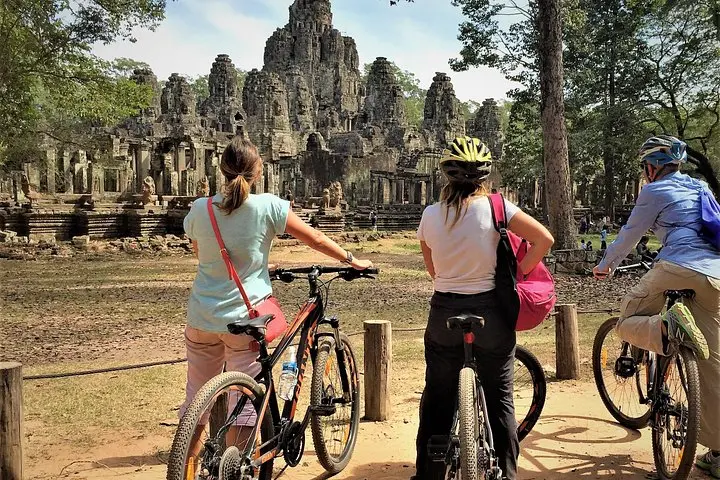
Dawn breaks over the reflecting pool and Angkor Wat exhales orange light across cooled stone; the guide waits as cycles clatter softly on the causeway. For two days travelers trade crowded routes for quieter jungle tracks, pedaling between monument moats, scraggly banyans and rooflines threaded with roots that seem to be holding the ruins together.
Verified experiences and guided adventures in the surrounding area.
Operated by Angkor Friendly tour · Siem Reap, Siem Reap
Dawn breaks over the reflecting pool and Angkor Wat exhales orange light across cooled stone; the guide waits as cycles clatter softly on the causeway. For two days travelers trade crowded routes for quieter jungle tracks, pedaling between monument moats, scraggly banyans and rooflines threaded with roots that seem to be holding the ruins together.
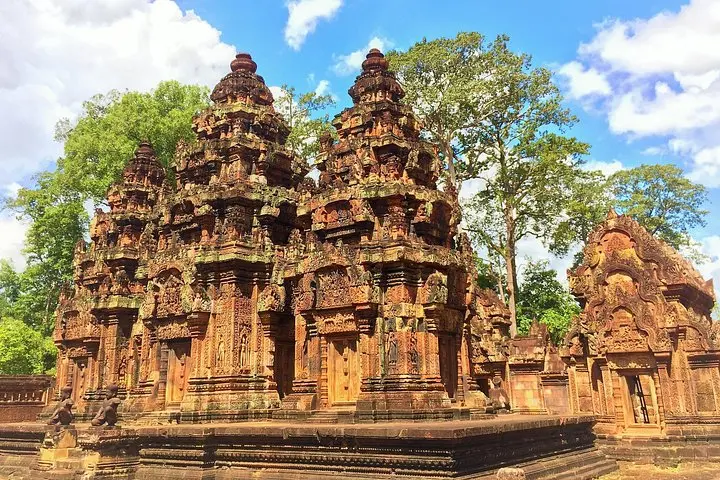
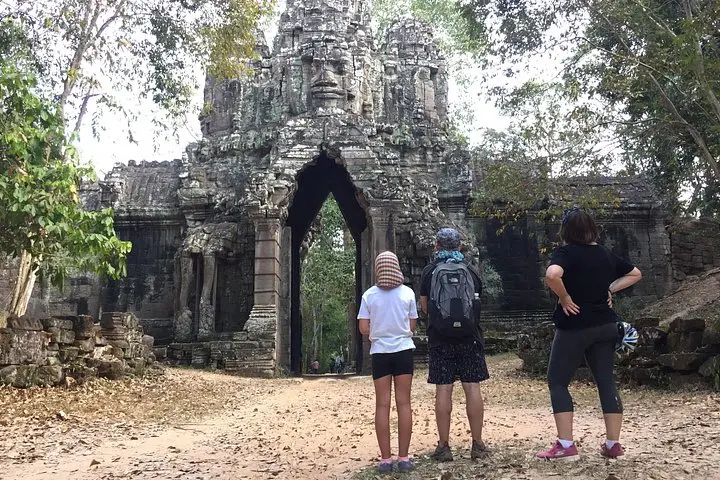
Angkor’s monuments were raised by Khmer kings between the 9th and 13th centuries—sandstone galleries carved with Hindu epics later reworked by Buddhist kings like Jayavarman VII. The complex sits on flat alluvial plains; laterite and sandstone blocks were quarried and hauled here, then stacked into terraces, gopuras (entry towers) and bas-reliefs that read like a history carved in stone.
Culturally, Angkor blends Hindu cosmology and Theravada/Buddhist practice; local guides bring the myths alive and explain strict dress codes and temple etiquette. Expect the smell of damp earth in forested corridors and the click of bicycle chains as the group slips off main roads to avoid crowds.
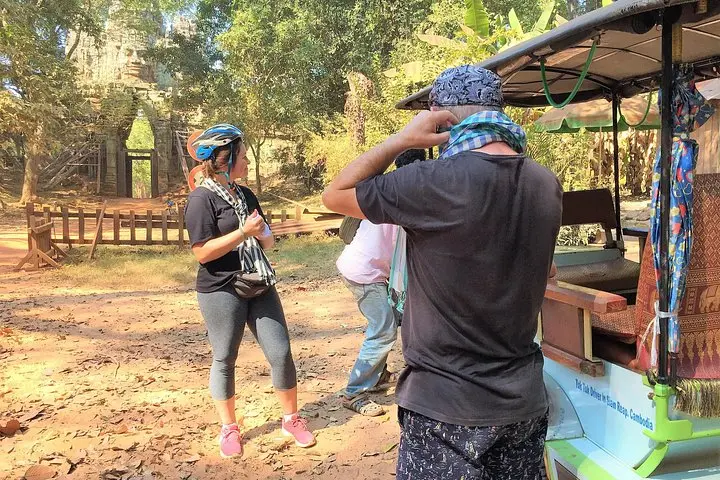
Practical guidance: sunrise at Angkor Wat requires early pickup and a valid Angkor pass; bring a lightweight shirt and long pants that cover shoulders and knees, and carry water and sun protection. Terrain alternates between paved causeways, compact dirt trails and uneven temple steps—basic cycling skills and steady footing are essential. Guides will alternate bike segments with vehicle transfers for longer distances or midday heat.
Plan for variable weather (rainstorms in the wet season, strong sun in the dry) and allow time to linger at quieter temples like Ta Prohm and Neak Pean where roots and lotus ponds give the ruins a very different voice.
Yes, an Angkor Archaeological Park pass is required; the tour includes admission information but verify whether the ticket is provided or needs purchase on arrival.
Yes—standard mountain bikes are supplied; bring your own helmet or use the one provided and note basic cycling ability is expected.
Children under 12 are generally exempt from the park pass but the operator requires passport copies and suitability depends on stamina and bike skills.
Professional English-speaking guides are provided for history and cultural interpretation; confirm other language needs when booking.
Angkor Friendly tour operates guided outdoor trips and adventures with an emphasis on safety, stewardship, and memorable experiences.
Dawn breaks over the reflecting pool and Angkor Wat exhales orange light across cooled stone; the guide waits as cycles clatter softly on the causeway. For two days travelers trade crowded routes for quieter jungle tracks, pedaling between monument moats, scraggly banyans and rooflines threaded with roots that seem to be holding the ruins together.
Dawn breaks over the reflecting pool and Angkor Wat exhales orange light across cooled stone; the guide waits as cycles clatter softly on the causeway. For two days travelers trade crowded routes for quieter jungle tracks, pedaling between monument moats, scraggly banyans and rooflines threaded with roots that seem to be holding the ruins together.
Angkor’s monuments were raised by Khmer kings between the 9th and 13th centuries—sandstone galleries carved with Hindu epics later reworked by Buddhist kings like Jayavarman VII. The complex sits on flat alluvial plains; laterite and sandstone blocks were quarried and hauled here, then stacked into terraces, gopuras (entry towers) and bas-reliefs that read like a history carved in stone.
Culturally, Angkor blends Hindu cosmology and Theravada/Buddhist practice; local guides bring the myths alive and explain strict dress codes and temple etiquette. Expect the smell of damp earth in forested corridors and the click of bicycle chains as the group slips off main roads to avoid crowds.
Practical guidance: sunrise at Angkor Wat requires early pickup and a valid Angkor pass; bring a lightweight shirt and long pants that cover shoulders and knees, and carry water and sun protection. Terrain alternates between paved causeways, compact dirt trails and uneven temple steps—basic cycling skills and steady footing are essential. Guides will alternate bike segments with vehicle transfers for longer distances or midday heat.
Plan for variable weather (rainstorms in the wet season, strong sun in the dry) and allow time to linger at quieter temples like Ta Prohm and Neak Pean where roots and lotus ponds give the ruins a very different voice.