THE ADVENTURE COLLECTIVE® · Independent discovery and booking for outdoor travel

Witness Angkor Wat at first light, then explore Angkor Thom, the Bayon and Ta Prohm with a licensed guide. This small-group sunrise tour pairs cooler morning conditions with cultural context and practical logistics like hotel pickup.
Witness Angkor Wat at first light, then explore Angkor Thom, the Bayon and Ta Prohm with a licensed guide. This small-group sunrise tour pairs cooler morning conditions with cultural context and practical logistics like hotel pickup.
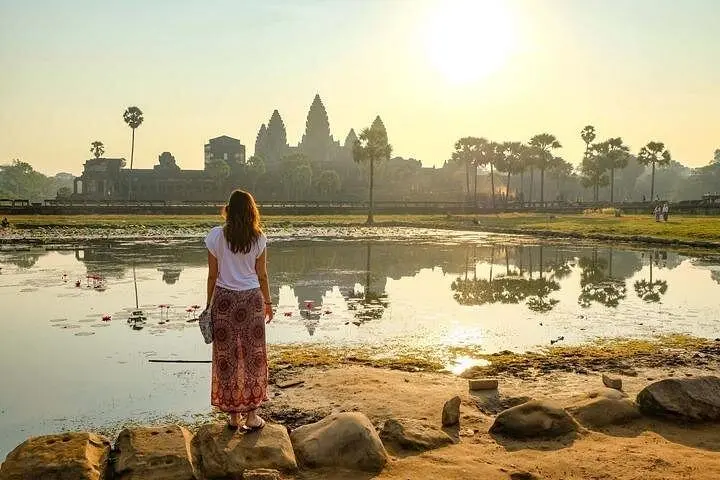
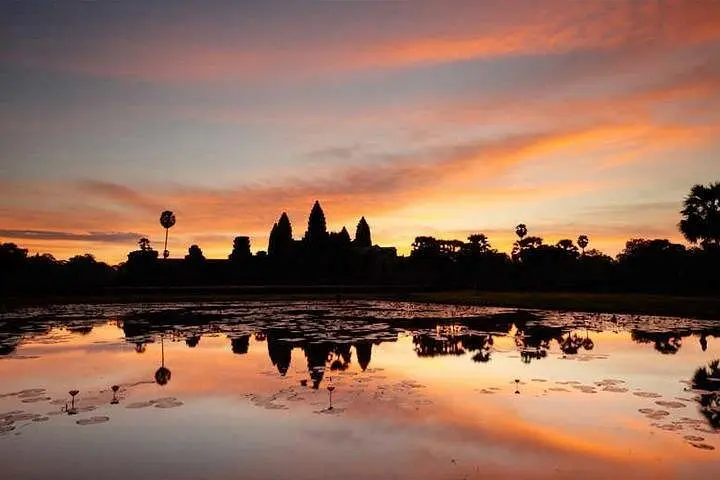
Before dawn the minivan eases through quiet Siem Reap streets and the jungle exhales cool air; by the time you reach Angkor Wat the first light is already prying open shadowed galleries. You enter from the eastern causeway in near-darkness, moving along bas‑reliefs that keep their stories close until the sun spills over lotus ponds and gilded cornices.
Verified experiences and guided adventures in the surrounding area.
Operated by Angkor Dynasty Travel · Siem Reap, Siem Reap Province
Before dawn the minivan eases through quiet Siem Reap streets and the jungle exhales cool air; by the time you reach Angkor Wat the first light is already prying open shadowed galleries. You enter from the eastern causeway in near-darkness, moving along bas‑reliefs that keep their stories close until the sun spills over lotus ponds and gilded cornices.
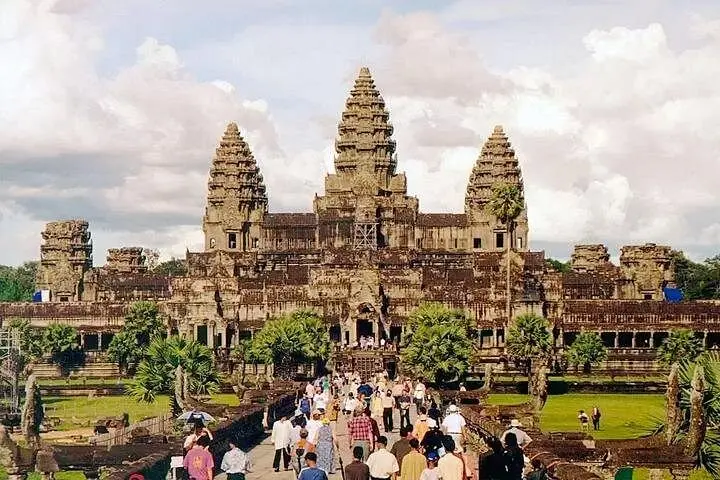
These stone complexes are slabs of history: Angkor Wat’s terraces and bas‑reliefs date to the 12th-century reign of Suryavarman II, while Angkor Thom and the Bayon’s carved faces reflect later royal ambition. The sandstone was quarried and floated across ancient reservoirs — the West Baray still holds hints of the hydraulic engineering that underpinned Khmer power. Ta Prohm offers the reverse spectacle: trees press roots into corridors, the jungle pushing back with deliberate patience.
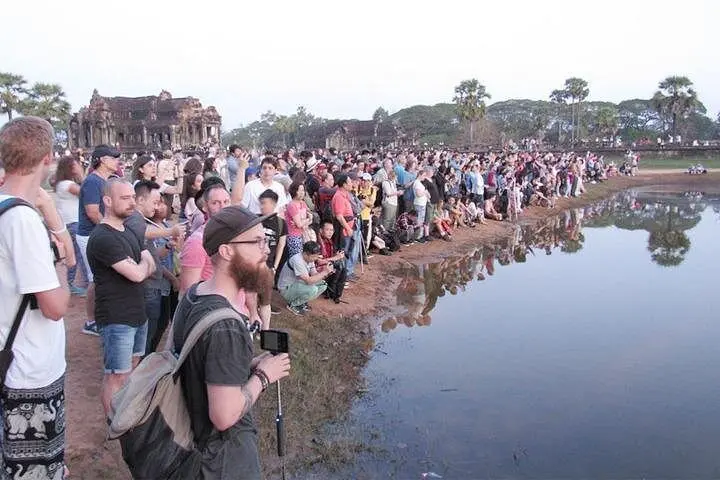
Expect a steady rhythm of short walks, stair climbs and corridor exploration. Your guide will unpack iconography, explain Khmer cosmology and point out conservation work around fragile carvings. Early mornings are cooler and less crowded; the light at Angkor Wat’s reflection pools is why most groups rise before 4:30 a.m.
Practical edge: wear grippy, closed-toe shoes and carry a refillable water bottle and sunscreen. Respect temple rules—no tank tops or shorts above the knee—and budget time for lines at ticket gates. Breakfast is commonly taken after sunrise; bring modest cash for stalls and tips. If you want quieter corners, ask your guide about lateral walkways and secondary temples that few tours stop to explore.
Yes—most tours require you to purchase a valid Angkor Archaeological Park pass (available for 1, 3 or 7 days) upon arrival; your guide can advise where to buy it.
Yes—the itinerary targets the classic reflection view; however, crowd size and water levels can affect the exact composition of the scene.
Admission is usually not included in third‑party tour prices—confirm at booking; budget separately for the park pass.
Yes—this tour is categorized as easy but includes stairs and uneven surfaces; inform providers of mobility concerns so they can accommodate pickup and pacing.
Angkor Dynasty Travel operates guided outdoor trips and adventures with an emphasis on safety, stewardship, and memorable experiences.
Before dawn the minivan eases through quiet Siem Reap streets and the jungle exhales cool air; by the time you reach Angkor Wat the first light is already prying open shadowed galleries. You enter from the eastern causeway in near-darkness, moving along bas‑reliefs that keep their stories close until the sun spills over lotus ponds and gilded cornices.
Before dawn the minivan eases through quiet Siem Reap streets and the jungle exhales cool air; by the time you reach Angkor Wat the first light is already prying open shadowed galleries. You enter from the eastern causeway in near-darkness, moving along bas‑reliefs that keep their stories close until the sun spills over lotus ponds and gilded cornices.
These stone complexes are slabs of history: Angkor Wat’s terraces and bas‑reliefs date to the 12th-century reign of Suryavarman II, while Angkor Thom and the Bayon’s carved faces reflect later royal ambition. The sandstone was quarried and floated across ancient reservoirs — the West Baray still holds hints of the hydraulic engineering that underpinned Khmer power. Ta Prohm offers the reverse spectacle: trees press roots into corridors, the jungle pushing back with deliberate patience.
Expect a steady rhythm of short walks, stair climbs and corridor exploration. Your guide will unpack iconography, explain Khmer cosmology and point out conservation work around fragile carvings. Early mornings are cooler and less crowded; the light at Angkor Wat’s reflection pools is why most groups rise before 4:30 a.m.
Practical edge: wear grippy, closed-toe shoes and carry a refillable water bottle and sunscreen. Respect temple rules—no tank tops or shorts above the knee—and budget time for lines at ticket gates. Breakfast is commonly taken after sunrise; bring modest cash for stalls and tips. If you want quieter corners, ask your guide about lateral walkways and secondary temples that few tours stop to explore.