THE ADVENTURE COLLECTIVE® · Independent discovery and booking for outdoor travel

Watch Angkor Wat’s iconic towers emerge from darkness as dawn paints bas-reliefs and water alike. This early-morning private tour pairs a dramatic sunrise viewpoint with guided exploration of the temple’s history and carvings.
Watch Angkor Wat’s iconic towers emerge from darkness as dawn paints bas-reliefs and water alike. This early-morning private tour pairs a dramatic sunrise viewpoint with guided exploration of the temple’s history and carvings.
Before the sun rises you stand on damp grass beside a reflective pool, the silhouette of Angkor Wat's towers cutting a patient profile against the ink-dark sky. As first light eases the silhouette into shape, the stone seems to breathe — shadows lifting from bas-reliefs while the moat catches the morning like a slow-moving mirror.
Verified experiences and guided adventures in the surrounding area.
Operated by Tour East Cambodia · Siem Reap, Siem Reap Province
Before the sun rises you stand on damp grass beside a reflective pool, the silhouette of Angkor Wat's towers cutting a patient profile against the ink-dark sky. As first light eases the silhouette into shape, the stone seems to breathe — shadows lifting from bas-reliefs while the moat catches the morning like a slow-moving mirror.
Angkor Wat was built in the early 12th century under King Suryavarman II as a Hindu temple that later became a major Buddhist site. The complex sits on flat, alluvial plains sculpted by ancient water-management systems; the moat and reservoirs still regulate the site’s seasonal flows. Cultural layers show in carvings and galleries: epic stories of gods, kings, and local life engraved in laterite and sandstone.
This sunrise tour is equal parts spectacle and orientation. You’ll arrive before dawn to claim a viewpoint, then move inside with a guide to learn about the temple’s iconography, its astronomical alignments, and restoration efforts. Expect cool pre-dawn air, shifting light that changes colors in minutes, and crowds that thin once the main light show ends.
Practicalities: wear modest clothing (shoulders and knees covered) and slip-resistant shoes for wet boardwalks. Bring a light layer for the early chill, a recycled-water bottle, and a camera with a wide-angle lens. Plan hotel pickup at 5:00am, allow 3–4 hours for the experience, and conserve energy for exploring later temples when heat builds. Respect restricted areas — some towers close on Buddhist holidays — and leave no trace; the stones are fragile and the site depends on careful tourism.
Pickup is typically around 5:00am so you can reach the viewing area before sunrise; check your booking for the exact lobby time.
The top tower may be closed on certain Buddhist holidays; access also varies with conservation work, so follow your guide’s instructions.
Yes, entry to Angkor Archaeological Park requires a pass (one-day, three-day, or seven-day); this tour does not include the official park pass unless specified.
The sunrise viewpoint and surrounding grounds are accessible for many, but some temple interiors and steps are not wheelchair-friendly—confirm specifics with the operator.
Tour East Cambodia operates guided outdoor trips and adventures with an emphasis on safety, stewardship, and memorable experiences.
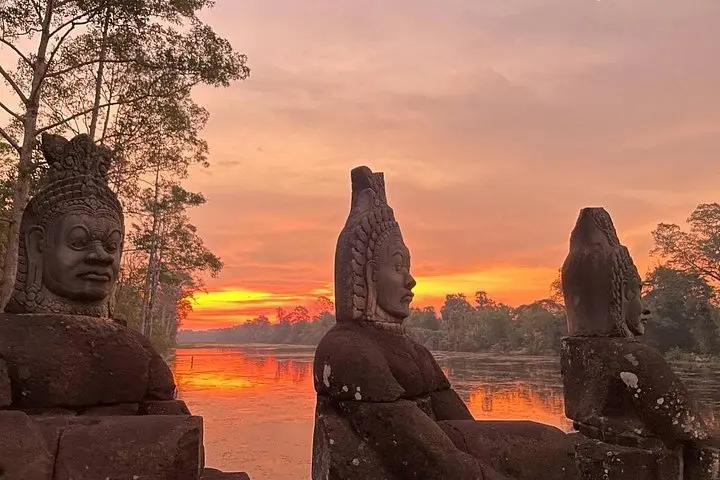
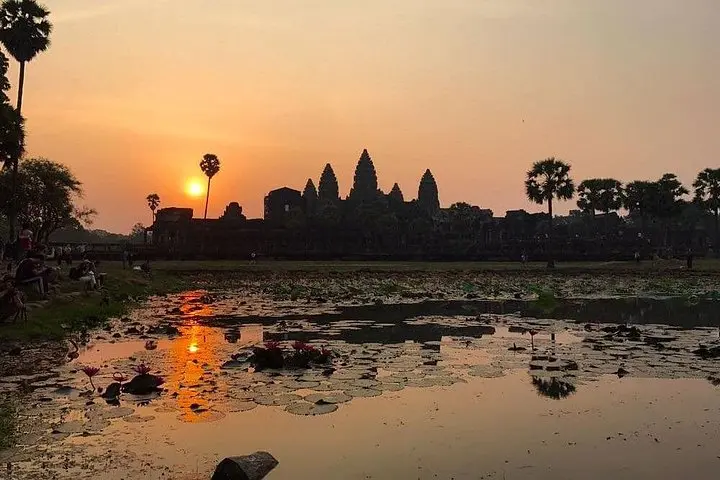
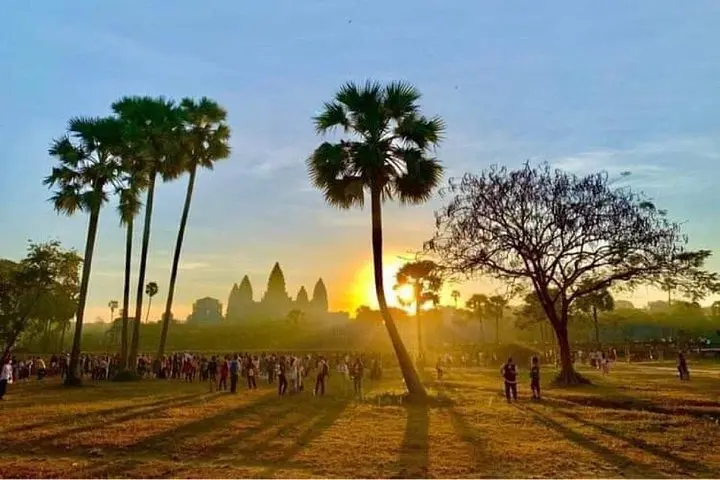
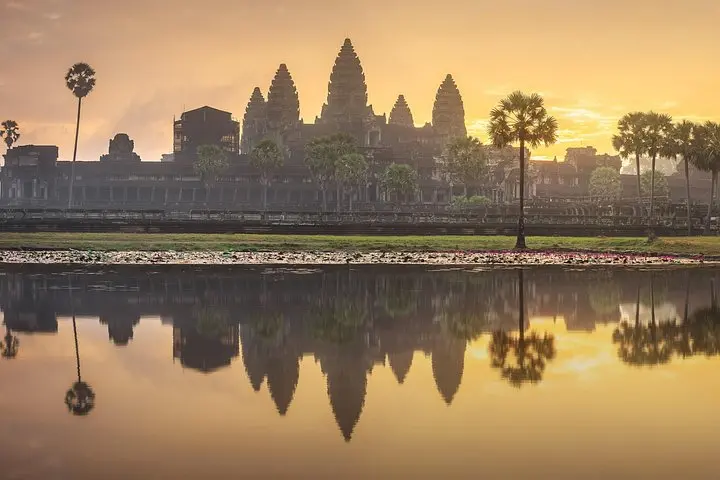
Before the sun rises you stand on damp grass beside a reflective pool, the silhouette of Angkor Wat's towers cutting a patient profile against the ink-dark sky. As first light eases the silhouette into shape, the stone seems to breathe — shadows lifting from bas-reliefs while the moat catches the morning like a slow-moving mirror.
Before the sun rises you stand on damp grass beside a reflective pool, the silhouette of Angkor Wat's towers cutting a patient profile against the ink-dark sky. As first light eases the silhouette into shape, the stone seems to breathe — shadows lifting from bas-reliefs while the moat catches the morning like a slow-moving mirror.
Angkor Wat was built in the early 12th century under King Suryavarman II as a Hindu temple that later became a major Buddhist site. The complex sits on flat, alluvial plains sculpted by ancient water-management systems; the moat and reservoirs still regulate the site’s seasonal flows. Cultural layers show in carvings and galleries: epic stories of gods, kings, and local life engraved in laterite and sandstone.
This sunrise tour is equal parts spectacle and orientation. You’ll arrive before dawn to claim a viewpoint, then move inside with a guide to learn about the temple’s iconography, its astronomical alignments, and restoration efforts. Expect cool pre-dawn air, shifting light that changes colors in minutes, and crowds that thin once the main light show ends.
Practicalities: wear modest clothing (shoulders and knees covered) and slip-resistant shoes for wet boardwalks. Bring a light layer for the early chill, a recycled-water bottle, and a camera with a wide-angle lens. Plan hotel pickup at 5:00am, allow 3–4 hours for the experience, and conserve energy for exploring later temples when heat builds. Respect restricted areas — some towers close on Buddhist holidays — and leave no trace; the stones are fragile and the site depends on careful tourism.