THE ADVENTURE COLLECTIVE® · Independent discovery and booking for outdoor travel

Glide through Angkor’s giants by tuk‑tuk on a private full‑day tour from Siem Reap. See Bayon, Ta Prohm, the Terrace of the Elephants and Angkor Wat with a local guide and practical pacing for temple walking and heat.
Glide through Angkor’s giants by tuk‑tuk on a private full‑day tour from Siem Reap. See Bayon, Ta Prohm, the Terrace of the Elephants and Angkor Wat with a local guide and practical pacing for temple walking and heat.
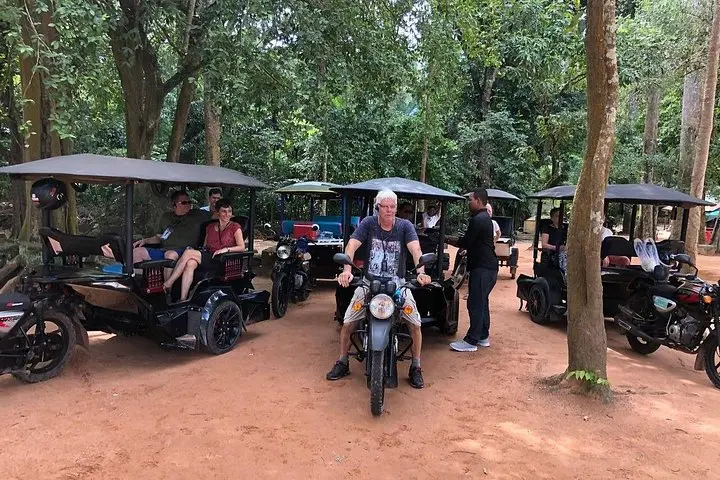
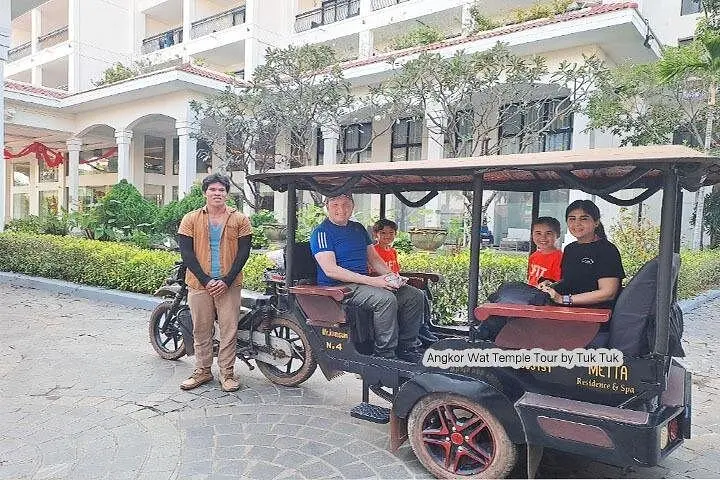
Dawn breaks over the moat and the first towers of Angkor Wat silhouette against a pink sky. You slide into a tuk‑tuk as the driver threads through palm-lined lanes, the engine and breeze setting the day’s tempo. The transport is purposeful—small, nimble, and ideal for weaving between temple entrances and narrow causeways.
Verified experiences and guided adventures in the surrounding area.
Operated by Angkor Elephant Tour · Siem Reap, Siem Reap Province
Dawn breaks over the moat and the first towers of Angkor Wat silhouette against a pink sky. You slide into a tuk‑tuk as the driver threads through palm-lined lanes, the engine and breeze setting the day’s tempo. The transport is purposeful—small, nimble, and ideal for weaving between temple entrances and narrow causeways.
This private full‑day route traces the arc of the Khmer empire: Angkor Thom’s fortified walls and Bayon’s hundred smiling faces (late 12th/early 13th century under Jayavarman VII), the ceremonial terraces where kings reviewed armies, and Ta Prohm, where strangler figs continue their slow, architectural takeover. Angkor Wat itself—Suryavarman II’s 12th‑century monument—rises from its moat like a carved mountain, designed to mirror Mount Meru.
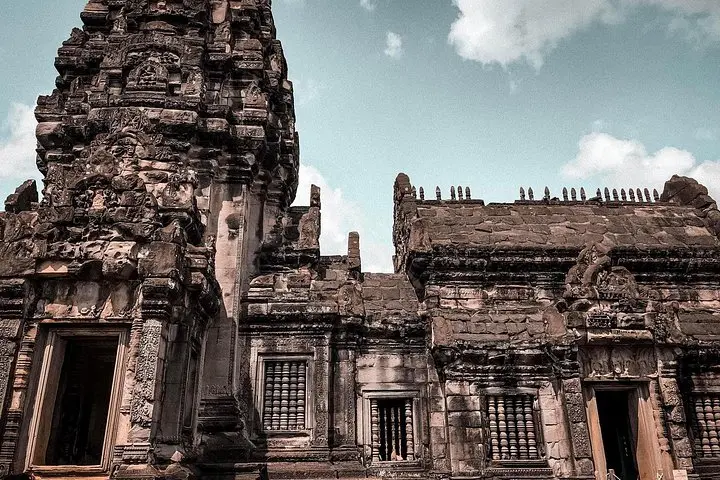
Geology and jungle are part of the story: blocks of sandstone and laterite weather into steps and shallow bas‑reliefs, and roots thread through lintels and galleries, pushing history into the present. You’ll pass local life—markets, monks in saffron, children racing bicycles—reminders that Angkor is an active cultural landscape as much as an archaeological site.
Practical edge: expect 8 hours with multiple stops, short climbs, uneven stones, low doorways and tight passageways. Bring sun protection, a refillable water bottle, and a respectful dress that covers shoulders and knees for temple entry. Buy your Angkor Pass in advance and start early to avoid midday heat and crowds. A private guide and tuk‑tuk let you spend more time at key spots—Bayon, Terrace of the Elephants, Ta Prohm and Angkor Wat—without losing pace. Move deliberately, hydrate often, and let the stones and trees reveal their stories on their own slow schedule.
This private full‑day tour runs about eight hours and typically stops at Angkor Thom (Bayon), Terrace of the Elephants, Ta Prohm, and Angkor Wat, with time allotted for walking and photo stops.
Yes; entry to the Angkor Archaeological Park requires a paid Angkor Pass (1‑, 3‑ or 7‑day) purchased at the official ticket center before visiting temples.
The tuk‑tuk transport is accessible and the tour is paced, but many temples have uneven steps and narrow passages; travelers with significant mobility issues should plan for limited access to some areas.
Cover shoulders and knees; avoid sleeveless tops and short shorts. Lightweight long sleeves or a sarong are practical and respectful choices.
Angkor Elephant Tour operates guided outdoor trips and adventures with an emphasis on safety, stewardship, and memorable experiences.

Dawn breaks over the moat and the first towers of Angkor Wat silhouette against a pink sky. You slide into a tuk‑tuk as the driver threads through palm-lined lanes, the engine and breeze setting the day’s tempo. The transport is purposeful—small, nimble, and ideal for weaving between temple entrances and narrow causeways.
Dawn breaks over the moat and the first towers of Angkor Wat silhouette against a pink sky. You slide into a tuk‑tuk as the driver threads through palm-lined lanes, the engine and breeze setting the day’s tempo. The transport is purposeful—small, nimble, and ideal for weaving between temple entrances and narrow causeways.
This private full‑day route traces the arc of the Khmer empire: Angkor Thom’s fortified walls and Bayon’s hundred smiling faces (late 12th/early 13th century under Jayavarman VII), the ceremonial terraces where kings reviewed armies, and Ta Prohm, where strangler figs continue their slow, architectural takeover. Angkor Wat itself—Suryavarman II’s 12th‑century monument—rises from its moat like a carved mountain, designed to mirror Mount Meru.
Geology and jungle are part of the story: blocks of sandstone and laterite weather into steps and shallow bas‑reliefs, and roots thread through lintels and galleries, pushing history into the present. You’ll pass local life—markets, monks in saffron, children racing bicycles—reminders that Angkor is an active cultural landscape as much as an archaeological site.
Practical edge: expect 8 hours with multiple stops, short climbs, uneven stones, low doorways and tight passageways. Bring sun protection, a refillable water bottle, and a respectful dress that covers shoulders and knees for temple entry. Buy your Angkor Pass in advance and start early to avoid midday heat and crowds. A private guide and tuk‑tuk let you spend more time at key spots—Bayon, Terrace of the Elephants, Ta Prohm and Angkor Wat—without losing pace. Move deliberately, hydrate often, and let the stones and trees reveal their stories on their own slow schedule.