THE ADVENTURE COLLECTIVE® · Independent discovery and booking for outdoor travel

Beat the crowds and watch Angkor Wat wake from the back of a private tuk‑tuk. This flexible sunrise-to-late-morning tour pairs iconic temples—Angkor Wat, Bayon, Ta Prohm—with local insight and relaxed transport.
Beat the crowds and watch Angkor Wat wake from the back of a private tuk‑tuk. This flexible sunrise-to-late-morning tour pairs iconic temples—Angkor Wat, Bayon, Ta Prohm—with local insight and relaxed transport.
The early tuk‑tuk hums through damp rice paddies as the towers of Angkor Wat pierce a pale morning sky. You arrive before the crowds: the moat mirrors the central quincunx, egrets wheel, and the first light edges the bas‑reliefs in gold. The driver parks; for a few quiet minutes the temple feels like a secret kept between stone and sky.
Verified experiences and guided adventures in the surrounding area.
Operated by Sok Saroom’s TukTuk Adventures: Explore Siem Reap in Style and Comfort · Siem Reap, Siem Reap Province
The early tuk‑tuk hums through damp rice paddies as the towers of Angkor Wat pierce a pale morning sky. You arrive before the crowds: the moat mirrors the central quincunx, egrets wheel, and the first light edges the bas‑reliefs in gold. The driver parks; for a few quiet minutes the temple feels like a secret kept between stone and sky.
This landscape was engineered by the Khmer Empire in the 9th–15th centuries. Angkor Wat, built in the 12th century from fired sandstone and laterite, began as a Hindu state temple and evolved into a Buddhist complex. Nearby Bayon’s enigmatic face towers and Ta Prohm’s massive tree roots offer contrasting chapters: carved narratives of daily life at Bayon and nature reclaiming architecture at Ta Prohm. The region’s geology—soft sandstones over laterite—explains both the exquisite carving and the sites’ vulnerability to erosion and root pressure.
A private tuk‑tuk tour through these sites gives flexibility: time sunrise at Angkor Wat, linger at Ta Prohm’s root‑entwined galleries, and read the battlefield and market scenes at Bayon. Practicalities matter: arrive early for light and cooler temperatures, buy your Angkor pass in Siem Reap, and dress modestly (shoulders and knees covered) for active temples.
Bring sun protection, a refillable water bottle, and comfortable shoes for uneven stone. Expect lots of walking on uneven surfaces, intermittent shade, and humid air; plan breaks and carry cash for small vendors. Your English‑speaking driver/guide and a stocked cooler make the day comfortable—perfect for travelers who want deep context with relaxed transport between sites.
Yes—purchase an Angkor pass in Siem Reap before entering; single‑day and multi‑day options are available and must be shown at checkpoints.
Yes—tuk‑tuk pickup is timed for sunrise viewing; expect an early departure from Siem Reap to reach the temple before crowds.
Basic facilities and snack stalls are available near major temples; bring cash for small purchases and use restroom stops between temples.
The tuk‑tuk reduces walking distance between sites, but temple interiors have steps and uneven flooring; travelers with mobility concerns should discuss accessibility needs when booking.
Sok Saroom’s TukTuk Adventures: Explore Siem Reap in Style and Comfort operates guided outdoor trips and adventures with an emphasis on safety, stewardship, and memorable experiences.



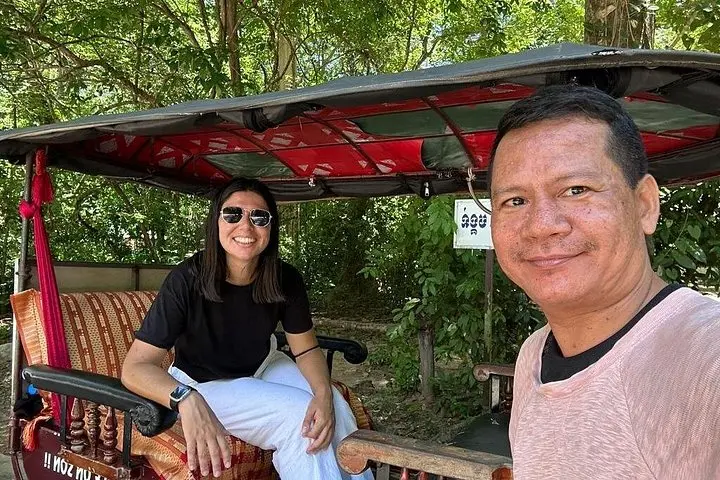
The early tuk‑tuk hums through damp rice paddies as the towers of Angkor Wat pierce a pale morning sky. You arrive before the crowds: the moat mirrors the central quincunx, egrets wheel, and the first light edges the bas‑reliefs in gold. The driver parks; for a few quiet minutes the temple feels like a secret kept between stone and sky.
The early tuk‑tuk hums through damp rice paddies as the towers of Angkor Wat pierce a pale morning sky. You arrive before the crowds: the moat mirrors the central quincunx, egrets wheel, and the first light edges the bas‑reliefs in gold. The driver parks; for a few quiet minutes the temple feels like a secret kept between stone and sky.
This landscape was engineered by the Khmer Empire in the 9th–15th centuries. Angkor Wat, built in the 12th century from fired sandstone and laterite, began as a Hindu state temple and evolved into a Buddhist complex. Nearby Bayon’s enigmatic face towers and Ta Prohm’s massive tree roots offer contrasting chapters: carved narratives of daily life at Bayon and nature reclaiming architecture at Ta Prohm. The region’s geology—soft sandstones over laterite—explains both the exquisite carving and the sites’ vulnerability to erosion and root pressure.
A private tuk‑tuk tour through these sites gives flexibility: time sunrise at Angkor Wat, linger at Ta Prohm’s root‑entwined galleries, and read the battlefield and market scenes at Bayon. Practicalities matter: arrive early for light and cooler temperatures, buy your Angkor pass in Siem Reap, and dress modestly (shoulders and knees covered) for active temples.
Bring sun protection, a refillable water bottle, and comfortable shoes for uneven stone. Expect lots of walking on uneven surfaces, intermittent shade, and humid air; plan breaks and carry cash for small vendors. Your English‑speaking driver/guide and a stocked cooler make the day comfortable—perfect for travelers who want deep context with relaxed transport between sites.