THE ADVENTURE COLLECTIVE® · Independent discovery and booking for outdoor travel

Two days of private touring take you from Angkor Wat’s dawn reflection to Phnom Kulen’s river-carved lingas and waterfall. This practical guide explains what to expect, how to prepare, and the cultural rules that keep these ancient places intact.
Two days of private touring take you from Angkor Wat’s dawn reflection to Phnom Kulen’s river-carved lingas and waterfall. This practical guide explains what to expect, how to prepare, and the cultural rules that keep these ancient places intact.
Morning mist lifts off the moat as your private vehicle drops you at Angkor Wat for a sunrise that pushes the sky to pale gold. You stand on the causeway as the temple’s reflection breaks into ripples — the stones keep their silence, but the site feels alive with movement: guides pointing, cameras clicking, a gentle current of visitors moving through laterals and galleries.
Verified experiences and guided adventures in the surrounding area.
Operated by Angkor Wat Private Day Tours · Siem Reap, Siem Reap Province
Morning mist lifts off the moat as your private vehicle drops you at Angkor Wat for a sunrise that pushes the sky to pale gold. You stand on the causeway as the temple’s reflection breaks into ripples — the stones keep their silence, but the site feels alive with movement: guides pointing, cameras clicking, a gentle current of visitors moving through laterals and galleries.
This two-day itinerary pairs Angkor’s 12th-century classical Khmer architecture with Phnom Kulen’s older, 9th-century Hindu sites and rainforest waterfalls. Angkor Wat and Bayon show the empire’s stone craftsmanship — bas-reliefs, carved faces, and astronomical alignments — while Ta Prohm’s tree-root choreography speaks to a landscape reclaiming its past. Phnom Kulen adds geology: sandstone plateaus, river-carved lingas and a cool waterfall where locals harvest palm sugar.
Expect mostly flat walking between temple terraces but uneven laterite and sandstone steps at shrine thresholds. Cultural notes: dress with shoulders and knees covered at all temple sites; modesty is both law and respect. Practical guidance: start before dawn for Angkor Wat’s sunrise to avoid heat and crowds, carry 2–3 liters of water per person, and plan sunscreen and a wide-brim hat. Your private guide will handle logistics, offer historical context, and stop for local food — expect simple Khmer lunches and opportunities to see palm-sugar demonstrations.
Accessibility is good for many sites and the tour provides vehicle pickup and drop-off; however, some temple interiors have steps and rough surfaces. Carry small local currency for entrance fees, snacks, and donations, and move deliberately — these stones are old and sensitive.
No, park entrance fees are not included; your guide can assist with purchasing a 1- or multi-day pass at the ticket center.
The tour and vehicle options are wheelchair-accessible, but many temple interiors and steep steps are not fully accessible—check with your operator in advance for specific sites.
Expect several hours of walking each day with periods of standing at viewpoints; distances between sites vary but much transit is by vehicle.
You may see local forest birds, macaques and occasional monitor lizards near water; wildlife viewing is incidental rather than the tour’s primary focus.
Angkor Wat Private Day Tours operates guided outdoor trips and adventures with an emphasis on safety, stewardship, and memorable experiences.
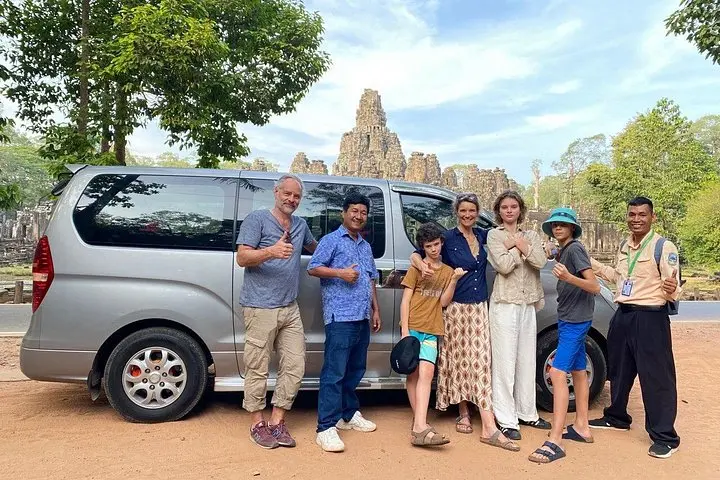

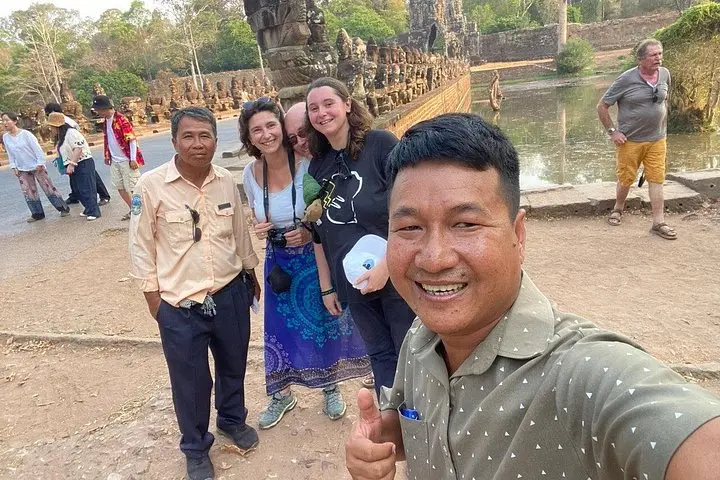
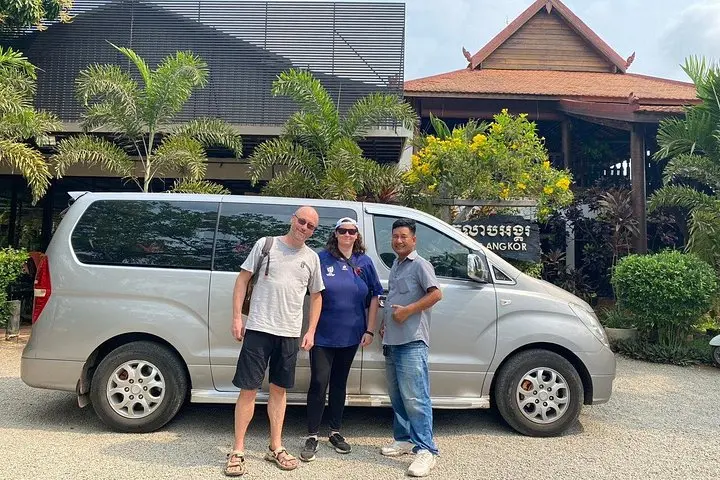
Morning mist lifts off the moat as your private vehicle drops you at Angkor Wat for a sunrise that pushes the sky to pale gold. You stand on the causeway as the temple’s reflection breaks into ripples — the stones keep their silence, but the site feels alive with movement: guides pointing, cameras clicking, a gentle current of visitors moving through laterals and galleries.
Morning mist lifts off the moat as your private vehicle drops you at Angkor Wat for a sunrise that pushes the sky to pale gold. You stand on the causeway as the temple’s reflection breaks into ripples — the stones keep their silence, but the site feels alive with movement: guides pointing, cameras clicking, a gentle current of visitors moving through laterals and galleries.
This two-day itinerary pairs Angkor’s 12th-century classical Khmer architecture with Phnom Kulen’s older, 9th-century Hindu sites and rainforest waterfalls. Angkor Wat and Bayon show the empire’s stone craftsmanship — bas-reliefs, carved faces, and astronomical alignments — while Ta Prohm’s tree-root choreography speaks to a landscape reclaiming its past. Phnom Kulen adds geology: sandstone plateaus, river-carved lingas and a cool waterfall where locals harvest palm sugar.
Expect mostly flat walking between temple terraces but uneven laterite and sandstone steps at shrine thresholds. Cultural notes: dress with shoulders and knees covered at all temple sites; modesty is both law and respect. Practical guidance: start before dawn for Angkor Wat’s sunrise to avoid heat and crowds, carry 2–3 liters of water per person, and plan sunscreen and a wide-brim hat. Your private guide will handle logistics, offer historical context, and stop for local food — expect simple Khmer lunches and opportunities to see palm-sugar demonstrations.
Accessibility is good for many sites and the tour provides vehicle pickup and drop-off; however, some temple interiors have steps and rough surfaces. Carry small local currency for entrance fees, snacks, and donations, and move deliberately — these stones are old and sensitive.