THE ADVENTURE COLLECTIVE® · Independent discovery and booking for outdoor travel

Short on time but eager for high-mountain views? This 60-minute helicopter tour from Pokhara drops you at Annapurna Base Camp (≈4,200 m) for a compact, high-altitude panorama of Annapurna I, Dhaulagiri, and the Sanctuary.
Short on time but eager for high-mountain views? This 60-minute helicopter tour from Pokhara drops you at Annapurna Base Camp (≈4,200 m) for a compact, high-altitude panorama of Annapurna I, Dhaulagiri, and the Sanctuary.
The helicopter lifts off over Pokhara like a camera sliding out of a pocket—city roofs shrink, Phewa Lake gleams, and the Himalaya push forward with sudden height and presence.
Verified experiences and guided adventures in the surrounding area.
Operated by Himalayan Adventure Treks and Tours Pvt Ltd · Pokhara, Gandaki Province
The helicopter lifts off over Pokhara like a camera sliding out of a pocket—city roofs shrink, Phewa Lake gleams, and the Himalaya push forward with sudden height and presence.
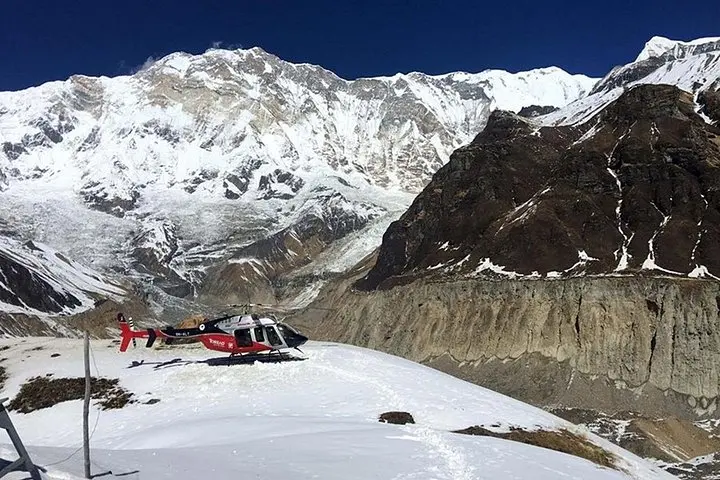
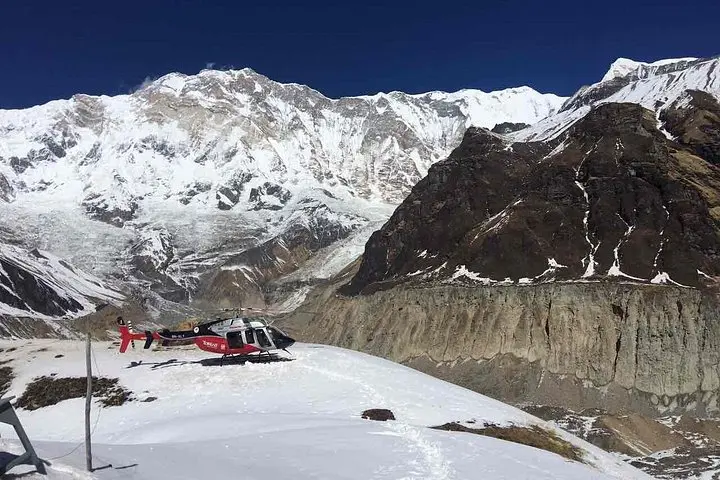
Within thirty minutes passengers are hovering at Annapurna Base Camp (around 4,200 m), where wind and light sculpt the faces of Annapurna I and Dhaulagiri. Geologically this is young, sharply uplifted terrain of the Greater Himalaya—granite and metamorphic rock carved by glaciers that still sculpt cirques and moraines below the ridgelines. Culturally the approach crosses Gurung and Magar villages; from the air you can trace livestock terraces and paths that years of trekking made famous.
The experience is primarily visual: panoramic windows frame jagged summits, seracs, and the amphitheater of the Annapurna Sanctuary. Pilots brief guests on timing and safe movement; photos and short walks on stable ground are typical during the stop. Weather, visibility, and payload limits determine routing—operators regularly screen for cardiovascular or weight restrictions.
Practical guidance: book early for morning slots when thermals are minimal and visibility is clearest. Dress in warm layers—temperatures at 4,200 m can be several degrees below Pokhara—and bring a windproof shell and gloves for the brief on-ground time. Keep liquids and camera batteries accessible; the stop is short, often 20–40 minutes total on site including ascent and descent.
For travelers short on time or unable to trek, the heli tour delivers high-mountain perspective with minimal exertion—an intense, reliable way to see the Annapurna massif without days on the trail.
The total experience is about 60 minutes; flight to and from base camp takes roughly 30 minutes round trip with a brief stop on-site for photos and a short walk.
Yes—operators screen for cardiovascular issues and enforce weight and balance limits; disclose true weights at booking and consult your provider if you have heart or breathing problems.
Flights operate year-round but are weather-dependent; monsoon months often see more cancellations—book flexible options and morning slots for best odds.
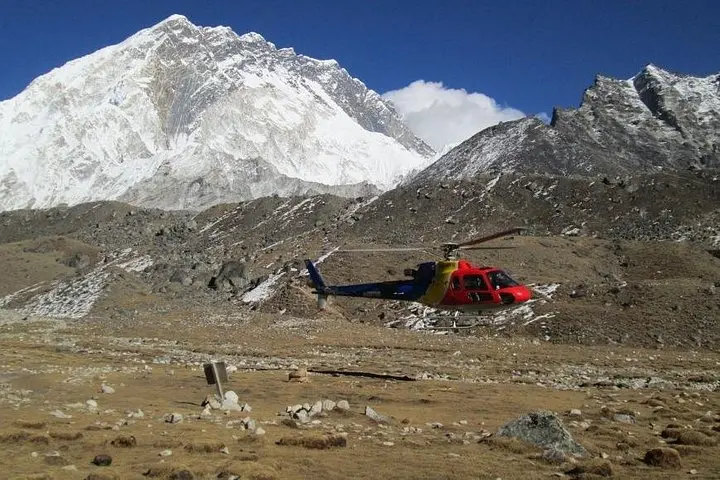
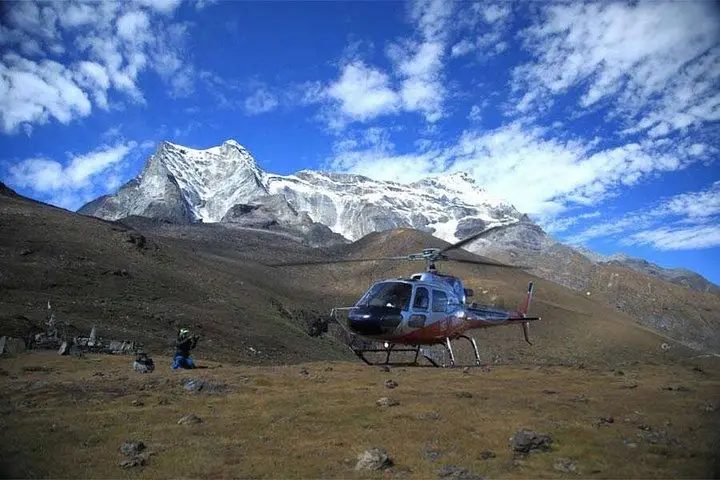
No—landings are brief and on prepared or compacted surfaces, intended for viewing and photography rather than trekking.
Himalayan Adventure Treks and Tours Pvt Ltd operates guided outdoor trips and adventures with an emphasis on safety, stewardship, and memorable experiences.
The helicopter lifts off over Pokhara like a camera sliding out of a pocket—city roofs shrink, Phewa Lake gleams, and the Himalaya push forward with sudden height and presence.
The helicopter lifts off over Pokhara like a camera sliding out of a pocket—city roofs shrink, Phewa Lake gleams, and the Himalaya push forward with sudden height and presence.
Within thirty minutes passengers are hovering at Annapurna Base Camp (around 4,200 m), where wind and light sculpt the faces of Annapurna I and Dhaulagiri. Geologically this is young, sharply uplifted terrain of the Greater Himalaya—granite and metamorphic rock carved by glaciers that still sculpt cirques and moraines below the ridgelines. Culturally the approach crosses Gurung and Magar villages; from the air you can trace livestock terraces and paths that years of trekking made famous.
The experience is primarily visual: panoramic windows frame jagged summits, seracs, and the amphitheater of the Annapurna Sanctuary. Pilots brief guests on timing and safe movement; photos and short walks on stable ground are typical during the stop. Weather, visibility, and payload limits determine routing—operators regularly screen for cardiovascular or weight restrictions.
Practical guidance: book early for morning slots when thermals are minimal and visibility is clearest. Dress in warm layers—temperatures at 4,200 m can be several degrees below Pokhara—and bring a windproof shell and gloves for the brief on-ground time. Keep liquids and camera batteries accessible; the stop is short, often 20–40 minutes total on site including ascent and descent.
For travelers short on time or unable to trek, the heli tour delivers high-mountain perspective with minimal exertion—an intense, reliable way to see the Annapurna massif without days on the trail.