THE ADVENTURE COLLECTIVE® · Independent discovery and booking for outdoor travel

A classic 10-day trek from Nayapul to Annapurna Base Camp via Ghorepani and Poon Hill, this guided route delivers sunrise panoramas, rhododendron forests, and high alpine bowls. Expect long ascents, teahouse stays, and progressively thinner air as you approach ABC.
A classic 10-day trek from Nayapul to Annapurna Base Camp via Ghorepani and Poon Hill, this guided route delivers sunrise panoramas, rhododendron forests, and high alpine bowls. Expect long ascents, teahouse stays, and progressively thinner air as you approach ABC.
The trail opens with river-roofed valleys and the steady rhythm of walking sticks—the group leaves Pokhara at dawn, drives to Nayapul, then climbs through terraced farms and rhododendron forests toward Ulleri and Ghorepani. At Poon Hill, the sun slices the Annapurna range into silver edges; later the path narrows and the air thins as it rises to Machapuchare Base Camp and the bowl of Annapurna Base Camp itself.
Verified experiences and guided adventures in the surrounding area.
Operated by Touch The Himalaya Treks & Expedition · Pokhara, Gandaki Province
The trail opens with river-roofed valleys and the steady rhythm of walking sticks—the group leaves Pokhara at dawn, drives to Nayapul, then climbs through terraced farms and rhododendron forests toward Ulleri and Ghorepani. At Poon Hill, the sun slices the Annapurna range into silver edges; later the path narrows and the air thins as it rises to Machapuchare Base Camp and the bowl of Annapurna Base Camp itself.
This route follows centuries-old mule tracks carved through the Annapurna Massif, an area shaped by tectonic uplift and glacial sculpting. Cultural waypoints—Newari and Gurung villages, prayer flags, and stone-built teahouses—remind trekkers they traverse a living landscape of mountain farming and Himalayan pilgrimage. Geologically, expect steep moraines, layered metamorphic rock and occasional scree near the high camps.
Practically, the itinerary covers roughly 70–80 km round-trip with cumulative elevation gain of about 2,800–3,000 m from Nayapul (≈1,070 m) to Annapurna Base Camp (≈4,130 m). Expect 4–7 hour walking days, stone steps, muddy stretches in monsoon, and alpine meadows above 3,000 m. Guides handle permits, porters, and teahouse logistics; travelers should pace for acclimatization, drink often, and use layered clothing for sharp temperature swings. Carry cash for tea houses, have a basic first-aid kit, and plan for early starts to catch clear mountain light. The trek rewards steady effort with dramatic circling peaks, night skies unhindered by light pollution, and the tactile intimacy of high-mountain hospitality.
Yes—trekkers require an Annapurna Conservation Area Permit (ACAP) and a TIMS card; licensed guides usually arrange these before departure.
ABC sits around 4,130 m; altitude is a concern—follow acclimatization days, hydrate, and consult your guide on symptoms.
Teahouses offer basic rooms and hot meals (dal, rice, noodles); food variety and charging facilities improve in larger villages but are limited at higher camps.
Possible with good fitness and willingness to acclimatize, but prior multi-day hiking experience is recommended for comfort and safety.
Touch The Himalaya Treks & Expedition operates guided outdoor trips and adventures with an emphasis on safety, stewardship, and memorable experiences.
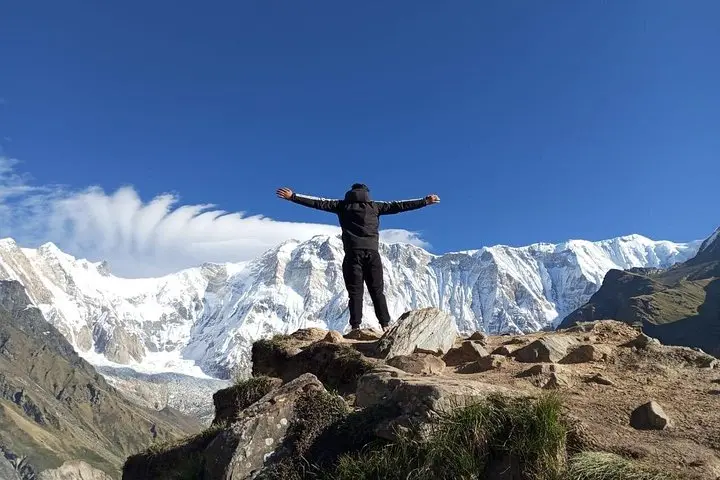
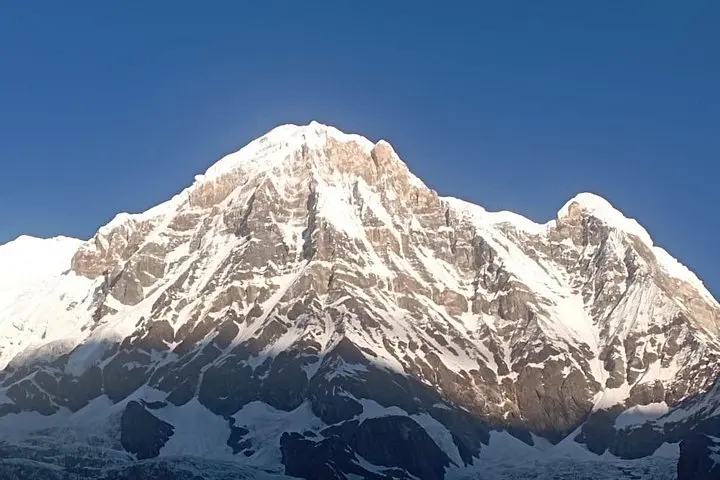
The trail opens with river-roofed valleys and the steady rhythm of walking sticks—the group leaves Pokhara at dawn, drives to Nayapul, then climbs through terraced farms and rhododendron forests toward Ulleri and Ghorepani. At Poon Hill, the sun slices the Annapurna range into silver edges; later the path narrows and the air thins as it rises to Machapuchare Base Camp and the bowl of Annapurna Base Camp itself.
The trail opens with river-roofed valleys and the steady rhythm of walking sticks—the group leaves Pokhara at dawn, drives to Nayapul, then climbs through terraced farms and rhododendron forests toward Ulleri and Ghorepani. At Poon Hill, the sun slices the Annapurna range into silver edges; later the path narrows and the air thins as it rises to Machapuchare Base Camp and the bowl of Annapurna Base Camp itself.
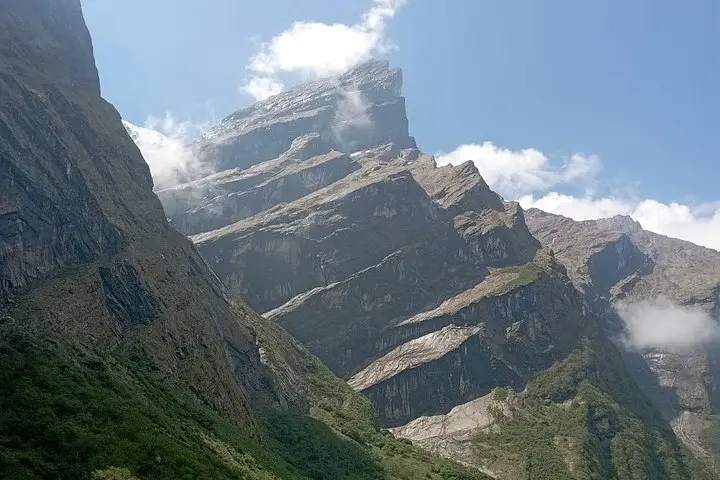
This route follows centuries-old mule tracks carved through the Annapurna Massif, an area shaped by tectonic uplift and glacial sculpting. Cultural waypoints—Newari and Gurung villages, prayer flags, and stone-built teahouses—remind trekkers they traverse a living landscape of mountain farming and Himalayan pilgrimage. Geologically, expect steep moraines, layered metamorphic rock and occasional scree near the high camps.
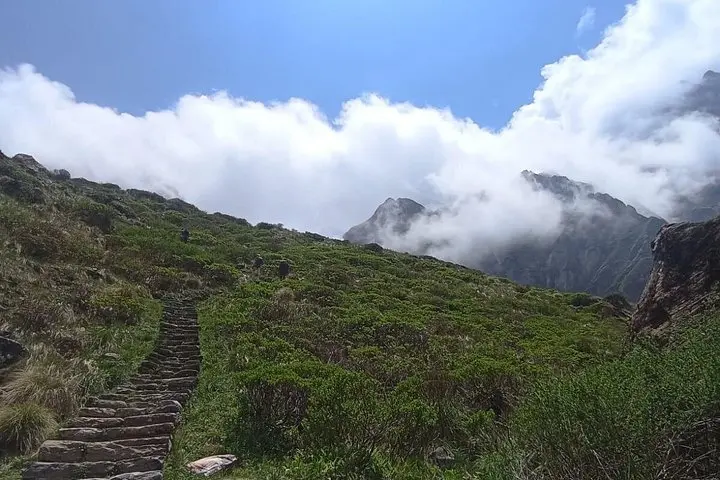
Practically, the itinerary covers roughly 70–80 km round-trip with cumulative elevation gain of about 2,800–3,000 m from Nayapul (≈1,070 m) to Annapurna Base Camp (≈4,130 m). Expect 4–7 hour walking days, stone steps, muddy stretches in monsoon, and alpine meadows above 3,000 m. Guides handle permits, porters, and teahouse logistics; travelers should pace for acclimatization, drink often, and use layered clothing for sharp temperature swings. Carry cash for tea houses, have a basic first-aid kit, and plan for early starts to catch clear mountain light. The trek rewards steady effort with dramatic circling peaks, night skies unhindered by light pollution, and the tactile intimacy of high-mountain hospitality.