THE ADVENTURE COLLECTIVE® · Independent discovery and booking for outdoor travel

An 11-day route through villages, rhododendron forests and alpine meadows that culminates at Annapurna Base Camp (4,170 m). This classic trek combines cultural encounters with big Himalayan views—plan for altitude, lodge-style nights, and variable trail conditions.
An 11-day route through villages, rhododendron forests and alpine meadows that culminates at Annapurna Base Camp (4,170 m). This classic trek combines cultural encounters with big Himalayan views—plan for altitude, lodge-style nights, and variable trail conditions.
Dawn breaks over a narrow valley and the trail ahead threads through rhododendron and bamboo, each step rising a little higher until the jagged skyline of Annapurna crowns the horizon. You move from rice terraces and village life into shadowy oak forests, then into the thin, bright air of alpine meadows where prayer flags announce the approach to the sanctuary.
Verified experiences and guided adventures in the surrounding area.
Operated by Outfitter Nepal · Pokhara, Gandaki Province
Dawn breaks over a narrow valley and the trail ahead threads through rhododendron and bamboo, each step rising a little higher until the jagged skyline of Annapurna crowns the horizon. You move from rice terraces and village life into shadowy oak forests, then into the thin, bright air of alpine meadows where prayer flags announce the approach to the sanctuary.
The route passes settlements of Gurung and Magar communities whose terraces and stone teahouses reflect centuries of mountain agriculture and trade. Geologically this is a young, uplifted range—steep river-cut valleys and glaciated cirques reveal how Himalayan tectonics and glaciation shaped the sanctuary. Poon Hill offers a compact primer in the massif’s peaks: Dhaulagiri to the west, the stepped faces of Annapurna I and its southern flanks, and the cleft profile of Machhapuchhare.
Expect a mix of stone stairways, forested singletrack and open scree slopes; daily walking ranges 4–8 hours with a summit approach to roughly 4,170 m (Annapurna Base Camp). Lodges (teahouses) provide simple meals and a place to sleep—this is communal, low-impact travel through a conservation area run under ACAP (Annapurna Conservation Area Project).
Practically: acclimatize deliberately, carry layers for strong sun by day and freezing nights, and use trekking poles for long descents. Hydrate, pace your ascent, and budget extra time for weather or slower group pace. For those with good fitness and basic trekking experience, the Annapurna Base Camp trek is a demanding but richly rewarding Himalayan classic.
Yes—trekkers must carry an ACAP permit and a TIMS card; guides and operators typically arrange these before departure.
Annapurna Base Camp sits around 4,170 m; gradual ascent and at least one acclimatization day (e.g., Poon Hill) reduce risk of altitude illness.
The route uses teahouses/guesthouses for accommodation—sleeping bags are usually required; camping gear is not necessary for the standard itinerary.
You should be comfortable with 5–8 hours of hiking per day, on steep climbs and stone steps; consistent cardio training and hill practice are recommended.
Outfitter Nepal operates guided outdoor trips and adventures with an emphasis on safety, stewardship, and memorable experiences.
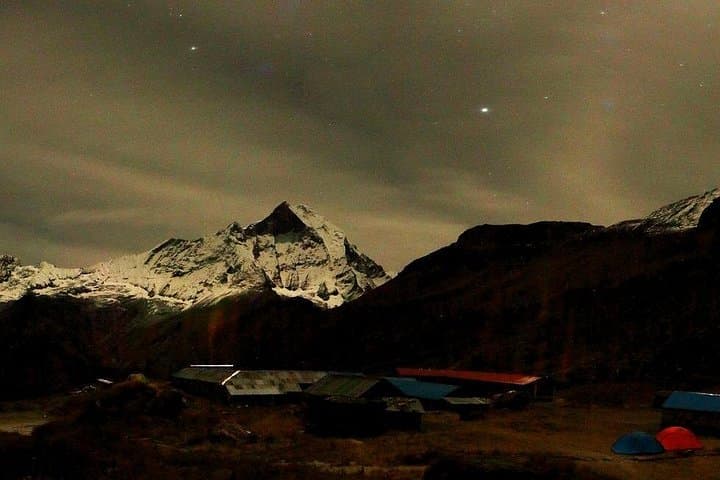
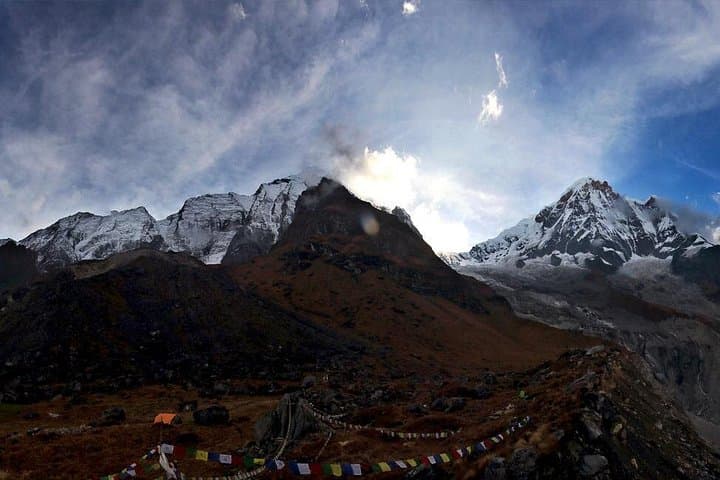
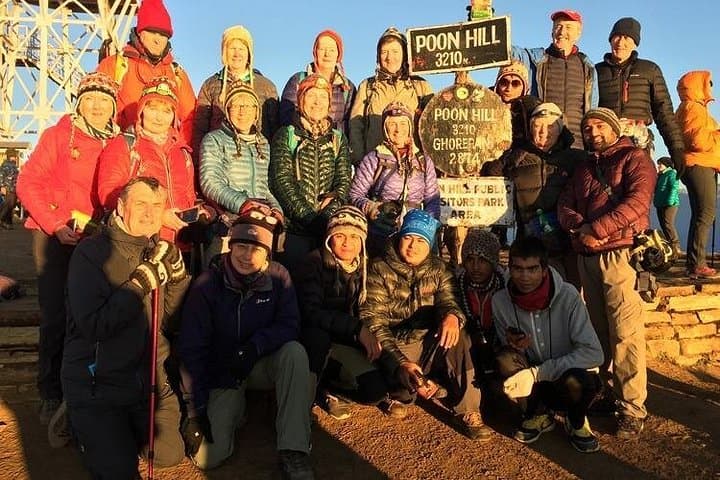
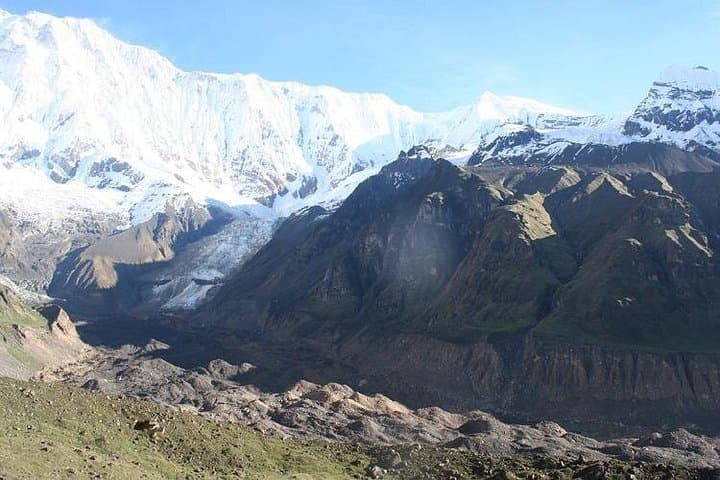
Dawn breaks over a narrow valley and the trail ahead threads through rhododendron and bamboo, each step rising a little higher until the jagged skyline of Annapurna crowns the horizon. You move from rice terraces and village life into shadowy oak forests, then into the thin, bright air of alpine meadows where prayer flags announce the approach to the sanctuary.
Dawn breaks over a narrow valley and the trail ahead threads through rhododendron and bamboo, each step rising a little higher until the jagged skyline of Annapurna crowns the horizon. You move from rice terraces and village life into shadowy oak forests, then into the thin, bright air of alpine meadows where prayer flags announce the approach to the sanctuary.
The route passes settlements of Gurung and Magar communities whose terraces and stone teahouses reflect centuries of mountain agriculture and trade. Geologically this is a young, uplifted range—steep river-cut valleys and glaciated cirques reveal how Himalayan tectonics and glaciation shaped the sanctuary. Poon Hill offers a compact primer in the massif’s peaks: Dhaulagiri to the west, the stepped faces of Annapurna I and its southern flanks, and the cleft profile of Machhapuchhare.
Expect a mix of stone stairways, forested singletrack and open scree slopes; daily walking ranges 4–8 hours with a summit approach to roughly 4,170 m (Annapurna Base Camp). Lodges (teahouses) provide simple meals and a place to sleep—this is communal, low-impact travel through a conservation area run under ACAP (Annapurna Conservation Area Project).
Practically: acclimatize deliberately, carry layers for strong sun by day and freezing nights, and use trekking poles for long descents. Hydrate, pace your ascent, and budget extra time for weather or slower group pace. For those with good fitness and basic trekking experience, the Annapurna Base Camp trek is a demanding but richly rewarding Himalayan classic.