THE ADVENTURE COLLECTIVE® · Independent discovery and booking for outdoor travel

Combine the Poon Hill sunrise with a full push into the Annapurna Sanctuary on this 12-day trek. Expect steep stone steps, rhododendron forests, teahouse stays and a summitless reward at ABC (4,130 m).
Combine the Poon Hill sunrise with a full push into the Annapurna Sanctuary on this 12-day trek. Expect steep stone steps, rhododendron forests, teahouse stays and a summitless reward at ABC (4,130 m).
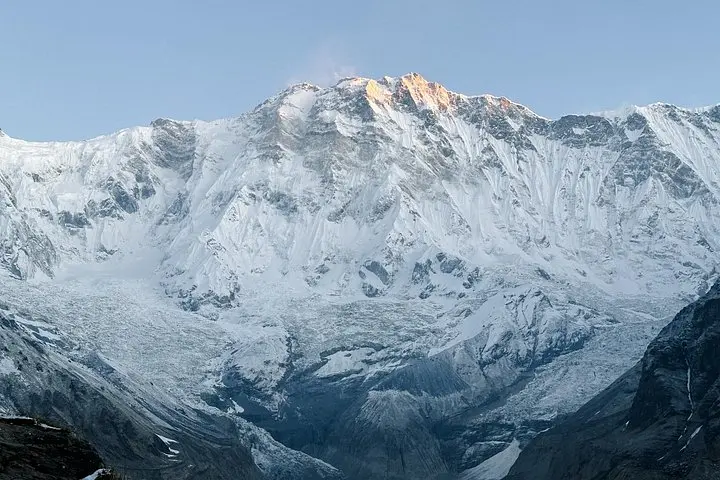
Morning mist parts over terraced fields as your legs find rhythm on a stone stair—this is the cadence of the Annapurna Base Camp trek. From the lowland bustle of Pokhara you move into chest-high rhododendron and oak, then into the thin, sharp air above Deurali as massive faces of Annapurna I and Machhapuchhre loom closer.
Verified experiences and guided adventures in the surrounding area.
Operated by Shikhar Adventure · Pokhara, Gandaki Province
Morning mist parts over terraced fields as your legs find rhythm on a stone stair—this is the cadence of the Annapurna Base Camp trek. From the lowland bustle of Pokhara you move into chest-high rhododendron and oak, then into the thin, sharp air above Deurali as massive faces of Annapurna I and Machhapuchhre loom closer.
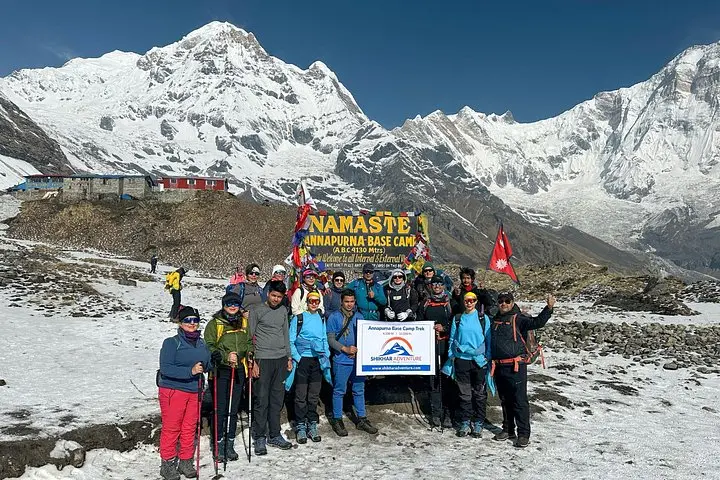
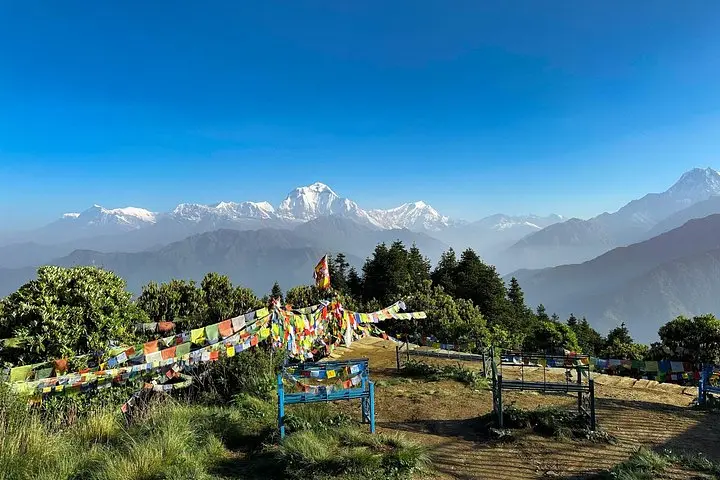
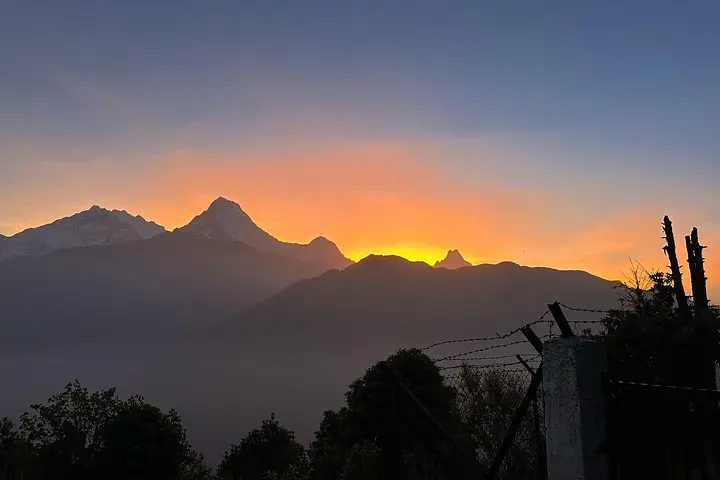
The route stitches together classic trails: Birethanti to Ulleri’s endless steps, Ghorepani and the sunrise at Poon Hill (3,210 m), a forested descent to Tadapani, and a final push into the amphitheater of the Annapurna Sanctuary at ABC (4,130 m). Geologically, you walk through uplifted Himalayan gneiss and granite shaped by ancient glaciers; moraine fields and cirques frame the base camp.
Culturally the trail threads through Gurung and Magar villages—tea houses hum with local stories, dal bhat refuels the day, and porters and guides keep traditions alive. The Annapurna Conservation Area oversees permits and sustainable tourism here, a reminder to pack out waste and favor local services.
Practical edge: expect 4–8 hours of walking most days, often steep stone steps and exposed ridgelines; altitude gain is gradual but real—ABC sits at about 4,130 m. Hydrate, pace your ascent, and carry layers for strong sun and freezing nights. Footwear with ankle support, a warm down layer, and a basic first-aid kit will make the difference between a tough day and a memorable one.
This 12-day combination of Ghorepani and ABC gives a compact, panoramic Himalayan experience that rewards steady effort with close-range alpine drama.
Yes. Trekking in the Annapurna region requires an Annapurna Conservation Area Permit (ACAP) and a TIMS card; the tour usually handles permits before departure.
ABC is at about 4,130 m; if you ascend gradually, monitor symptoms and acclimatize—most trekkers manage with proper pacing, hydration, and rest days.
Yes, the itinerary uses local teahouses and guesthouses offering basic rooms and meals; services vary with remoteness but provide clean food and a bed.
Spring (March–May) and fall (September–November) offer the clearest views and stable weather; monsoon months bring heavy rain and landslide risk.
Shikhar Adventure operates guided outdoor trips and adventures with an emphasis on safety, stewardship, and memorable experiences.
Morning mist parts over terraced fields as your legs find rhythm on a stone stair—this is the cadence of the Annapurna Base Camp trek. From the lowland bustle of Pokhara you move into chest-high rhododendron and oak, then into the thin, sharp air above Deurali as massive faces of Annapurna I and Machhapuchhre loom closer.
Morning mist parts over terraced fields as your legs find rhythm on a stone stair—this is the cadence of the Annapurna Base Camp trek. From the lowland bustle of Pokhara you move into chest-high rhododendron and oak, then into the thin, sharp air above Deurali as massive faces of Annapurna I and Machhapuchhre loom closer.
The route stitches together classic trails: Birethanti to Ulleri’s endless steps, Ghorepani and the sunrise at Poon Hill (3,210 m), a forested descent to Tadapani, and a final push into the amphitheater of the Annapurna Sanctuary at ABC (4,130 m). Geologically, you walk through uplifted Himalayan gneiss and granite shaped by ancient glaciers; moraine fields and cirques frame the base camp.
Culturally the trail threads through Gurung and Magar villages—tea houses hum with local stories, dal bhat refuels the day, and porters and guides keep traditions alive. The Annapurna Conservation Area oversees permits and sustainable tourism here, a reminder to pack out waste and favor local services.
Practical edge: expect 4–8 hours of walking most days, often steep stone steps and exposed ridgelines; altitude gain is gradual but real—ABC sits at about 4,130 m. Hydrate, pace your ascent, and carry layers for strong sun and freezing nights. Footwear with ankle support, a warm down layer, and a basic first-aid kit will make the difference between a tough day and a memorable one.
This 12-day combination of Ghorepani and ABC gives a compact, panoramic Himalayan experience that rewards steady effort with close-range alpine drama.