THE ADVENTURE COLLECTIVE® · Independent discovery and booking for outdoor travel

A classic Himalaya trek that combines cultural villages, Poon Hill sunrise views and the high alpine bowl of Annapurna Base Camp. This 12-day route is compact but demands respect for altitude and variable terrain.
A classic Himalaya trek that combines cultural villages, Poon Hill sunrise views and the high alpine bowl of Annapurna Base Camp. This 12-day route is compact but demands respect for altitude and variable terrain.
At first light the trail out of Pokhara slides between rice terraces and rhododendron, each step climbing toward thinner air and sharper light.
Verified experiences and guided adventures in the surrounding area.
Operated by Scenic Nepal Treks Expedition Pvt. Ltd · Pokhara, Gandaki Province
At first light the trail out of Pokhara slides between rice terraces and rhododendron, each step climbing toward thinner air and sharper light.
The route threads traditional Gurung and Magar villages, passes teahouses dense with drying laundry and stew steam, and finally opens on Annapurna Base Camp where the mountain’s fluted faces dominate the sky. Annapurna has long been a cultural mountain—revered locally as a mountain goddess—and the route reflects that human history in stone terraces, mani walls and simple shrines.
Geologically the Annapurna massif is young and steep: dramatic elevation gain over short horizontal distance means rocky moraines, scree slopes and a mixture of forested lower sections and alpine meadows near high camps. Poon Hill, often included en route, rewards a pre-dawn climb with a 360° sweep of Annapurna, Dhaulagiri and Machhapuchhre.
Practical planning matters: expect 10–12 days on trail, daily gains of 300–1,000 m, and lodges with basic facilities (twin-sharing tea houses are standard). Altitude is the key hazard—build rest days, carry a pulse oximeter if desired and know symptoms of AMS. Footwear should handle wet stone steps and muddy switchbacks; rain is common in monsoon months.
Best times are spring and fall for clear views; winter brings colder nights and shorter days. Hydrate constantly, layer for rapid temperature swings, and budget for a guide and porter if you want smoother logistics. On arrival at ABC, let the summit faces feel purposeful: the mountain doesn’t ask much of you beyond respect and steady steps.
Yes; trekkers typically need the TIMS card and Annapurna Conservation Area Permit (ACAP), which are arranged in Pokhara or via your operator.
Spring (March–May) and fall (September–November) are best for stable weather and clear mountain views.
Altitude can be significant—ABC reaches about 4,130 m—so acclimatization, gradual ascent and monitoring for AMS symptoms are essential.
Physically fit beginners can succeed with a guide and porter, but prior multi-day hiking experience and good preparation are highly recommended.
Scenic Nepal Treks Expedition Pvt. Ltd operates guided outdoor trips and adventures with an emphasis on safety, stewardship, and memorable experiences.
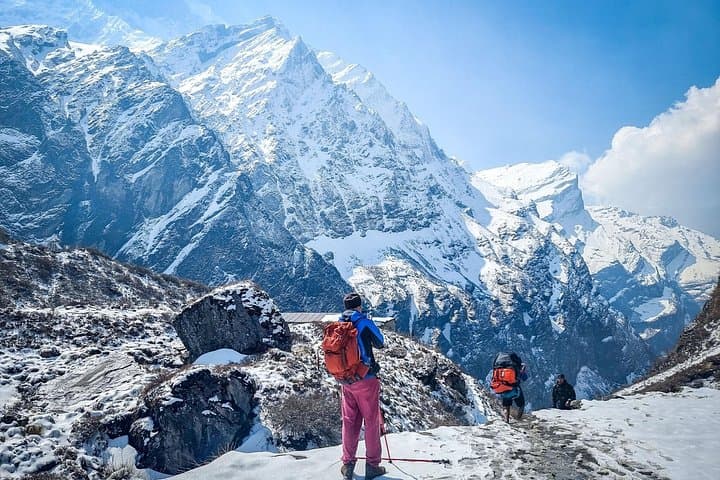


At first light the trail out of Pokhara slides between rice terraces and rhododendron, each step climbing toward thinner air and sharper light.
At first light the trail out of Pokhara slides between rice terraces and rhododendron, each step climbing toward thinner air and sharper light.
The route threads traditional Gurung and Magar villages, passes teahouses dense with drying laundry and stew steam, and finally opens on Annapurna Base Camp where the mountain’s fluted faces dominate the sky. Annapurna has long been a cultural mountain—revered locally as a mountain goddess—and the route reflects that human history in stone terraces, mani walls and simple shrines.
Geologically the Annapurna massif is young and steep: dramatic elevation gain over short horizontal distance means rocky moraines, scree slopes and a mixture of forested lower sections and alpine meadows near high camps. Poon Hill, often included en route, rewards a pre-dawn climb with a 360° sweep of Annapurna, Dhaulagiri and Machhapuchhre.
Practical planning matters: expect 10–12 days on trail, daily gains of 300–1,000 m, and lodges with basic facilities (twin-sharing tea houses are standard). Altitude is the key hazard—build rest days, carry a pulse oximeter if desired and know symptoms of AMS. Footwear should handle wet stone steps and muddy switchbacks; rain is common in monsoon months.
Best times are spring and fall for clear views; winter brings colder nights and shorter days. Hydrate constantly, layer for rapid temperature swings, and budget for a guide and porter if you want smoother logistics. On arrival at ABC, let the summit faces feel purposeful: the mountain doesn’t ask much of you beyond respect and steady steps.