THE ADVENTURE COLLECTIVE® · Independent discovery and booking for outdoor travel
A 14-day guided route that moves from Pokhara’s warm valleys into the glacial bowl of Annapurna Base Camp (4,131 m). Expect village lodges, steep stone steps, Poon Hill sunrises and high-altitude terrain requiring acclimatization.
A 14-day guided route that moves from Pokhara’s warm valleys into the glacial bowl of Annapurna Base Camp (4,131 m). Expect village lodges, steep stone steps, Poon Hill sunrises and high-altitude terrain requiring acclimatization.
Morning light cracks across a bowl of peaks as you walk into the Annapurna Sanctuary — a high, glacial amphitheater ringed by jagged summits. The trail climbs from subtropical banks near Pokhara through rhododendron forests and stone villages, then opens to moraine and shale on the approach to Annapurna Base Camp (4,131 m). Each day has a rhythm: steady ascent, tea-house camaraderie, and wide mountain views at the next ridge.
Verified experiences and guided adventures in the surrounding area.
Operated by Green Valley Nepal Treks & Research Hub Pvt Ltd · Pokhara, Gandaki Province
Morning light cracks across a bowl of peaks as you walk into the Annapurna Sanctuary — a high, glacial amphitheater ringed by jagged summits. The trail climbs from subtropical banks near Pokhara through rhododendron forests and stone villages, then opens to moraine and shale on the approach to Annapurna Base Camp (4,131 m). Each day has a rhythm: steady ascent, tea-house camaraderie, and wide mountain views at the next ridge.
The route threads through Gurung and Magar villages whose agricultural terraces and stone guesthouses reflect centuries of Himalayan life. Geologically, you’ll move from river-cut valleys into the sedimentary and metamorphic folds of the Greater Himalaya, encountering glacial streams and avalanche-prone slopes near ABC. Poon Hill (3,210 m) offers a classic sunrise panorama of Dhaulagiri and Annapurna’s flanks; Machhapuchhre (Fishtail) looms with a sheer profile that has long been sacred to local communities.
Practically, this is a multi-day, lodge-to-lodge trek that requires acclimatization and steady fitness. Expect daily stages of 4–7 hours on mixed terrain: stone steps, forest singletrack, river crossings, and scree near high camp. Carry layered clothing for diurnal swings, plan for short, simple meals in teahouses, and factor in permits (Annapurna Conservation Area Permit and TIMS). Start early for clear light at viewpoints, hydrate frequently to reduce altitude effects, and travel with an experienced guide if you’re not comfortable pacing altitude yourself.
The reward is immediate: a close, personal view of the Annapurna massif that reads like a map of Himalayan geology and human endurance.
A certified guide is strongly recommended for logistics, acclimatization advice and local navigation — many groups trek with guides and porters.
You must carry an Annapurna Conservation Area Permit (ACAP) and a TIMS (Trekker Information Management System) card; these are issued in Pokhara or Kathmandu.
Spring (March–May) and autumn (September–November) offer the most stable weather, clearer mountain views, and comfortable daytime temperatures.
Tea houses provide basic private rooms, shared bathrooms in many places, and set meals; expect simple hot water and limited electricity at higher elevations.
Green Valley Nepal Treks & Research Hub Pvt Ltd operates guided outdoor trips and adventures with an emphasis on safety, stewardship, and memorable experiences.
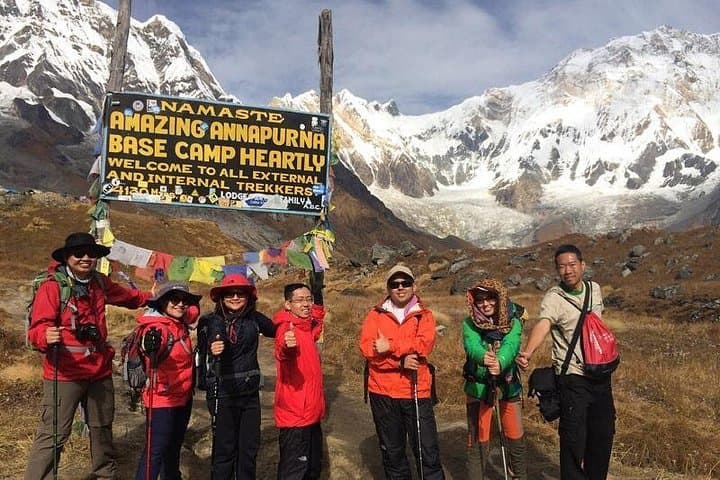
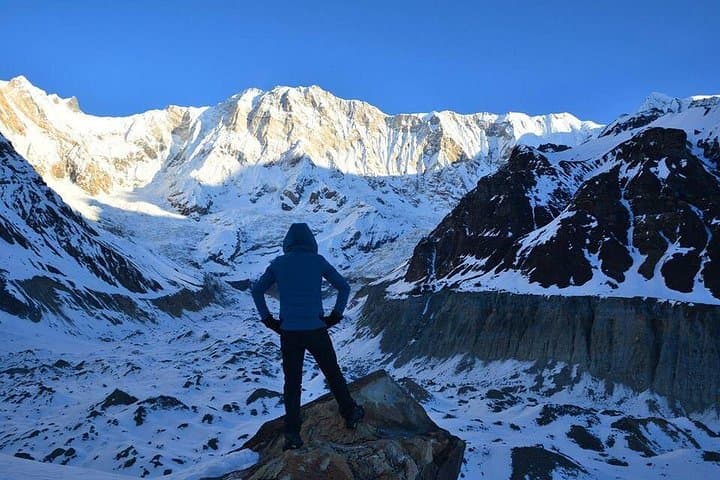
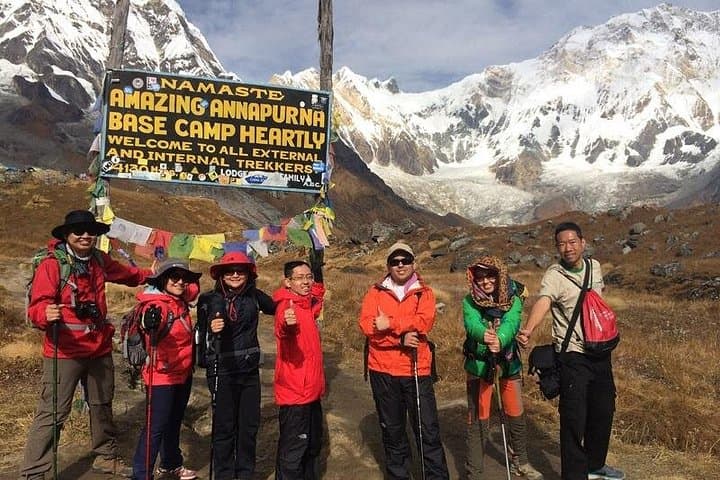
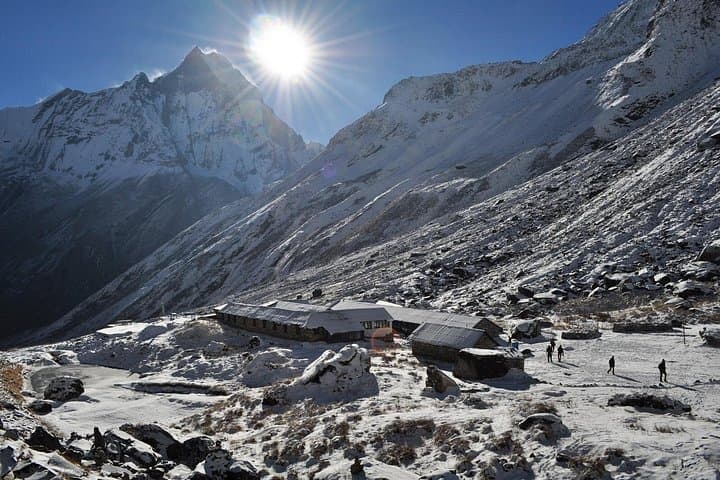
Morning light cracks across a bowl of peaks as you walk into the Annapurna Sanctuary — a high, glacial amphitheater ringed by jagged summits. The trail climbs from subtropical banks near Pokhara through rhododendron forests and stone villages, then opens to moraine and shale on the approach to Annapurna Base Camp (4,131 m). Each day has a rhythm: steady ascent, tea-house camaraderie, and wide mountain views at the next ridge.
Morning light cracks across a bowl of peaks as you walk into the Annapurna Sanctuary — a high, glacial amphitheater ringed by jagged summits. The trail climbs from subtropical banks near Pokhara through rhododendron forests and stone villages, then opens to moraine and shale on the approach to Annapurna Base Camp (4,131 m). Each day has a rhythm: steady ascent, tea-house camaraderie, and wide mountain views at the next ridge.
The route threads through Gurung and Magar villages whose agricultural terraces and stone guesthouses reflect centuries of Himalayan life. Geologically, you’ll move from river-cut valleys into the sedimentary and metamorphic folds of the Greater Himalaya, encountering glacial streams and avalanche-prone slopes near ABC. Poon Hill (3,210 m) offers a classic sunrise panorama of Dhaulagiri and Annapurna’s flanks; Machhapuchhre (Fishtail) looms with a sheer profile that has long been sacred to local communities.
Practically, this is a multi-day, lodge-to-lodge trek that requires acclimatization and steady fitness. Expect daily stages of 4–7 hours on mixed terrain: stone steps, forest singletrack, river crossings, and scree near high camp. Carry layered clothing for diurnal swings, plan for short, simple meals in teahouses, and factor in permits (Annapurna Conservation Area Permit and TIMS). Start early for clear light at viewpoints, hydrate frequently to reduce altitude effects, and travel with an experienced guide if you’re not comfortable pacing altitude yourself.
The reward is immediate: a close, personal view of the Annapurna massif that reads like a map of Himalayan geology and human endurance.
