THE ADVENTURE COLLECTIVE® · Independent discovery and booking for outdoor travel

A 14-night guided trek from Pokhara into the Annapurna Sanctuary that climbs to 4,120 m at Base Camp via Ghorepani, Poon Hill and Jhinu Danda. Expect steep stone steps, tea-house nights, and dramatic Himalayan panoramas—best in spring or autumn.
A 14-night guided trek from Pokhara into the Annapurna Sanctuary that climbs to 4,120 m at Base Camp via Ghorepani, Poon Hill and Jhinu Danda. Expect steep stone steps, tea-house nights, and dramatic Himalayan panoramas—best in spring or autumn.
You step out of Pokhara’s morning haze into a road that narrows, and the terraced hills close in like pages turning. The first days follow stone staircases through rhododendron forest, occasional bursts of prayer flags, and settled villages where tea houses keep steady fires and steaming dal bhat.
Verified experiences and guided adventures in the surrounding area.
Operated by Nepal Tour Guide Team Trek & Expedition P. Ltd. · Pokhara, Gandaki Province
You step out of Pokhara’s morning haze into a road that narrows, and the terraced hills close in like pages turning. The first days follow stone staircases through rhododendron forest, occasional bursts of prayer flags, and settled villages where tea houses keep steady fires and steaming dal bhat.
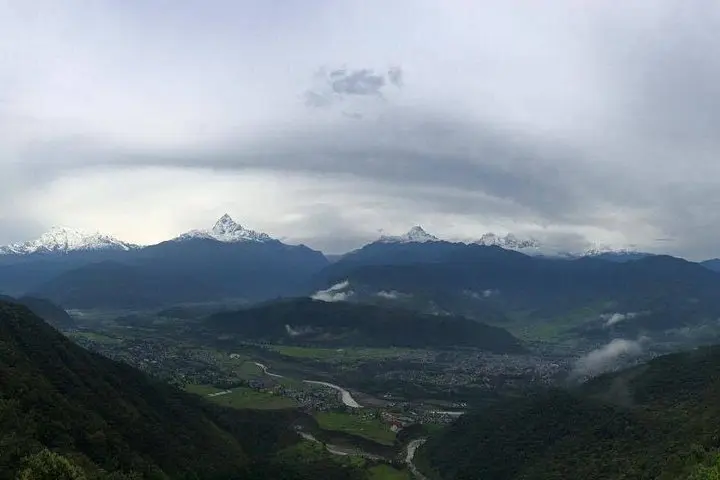
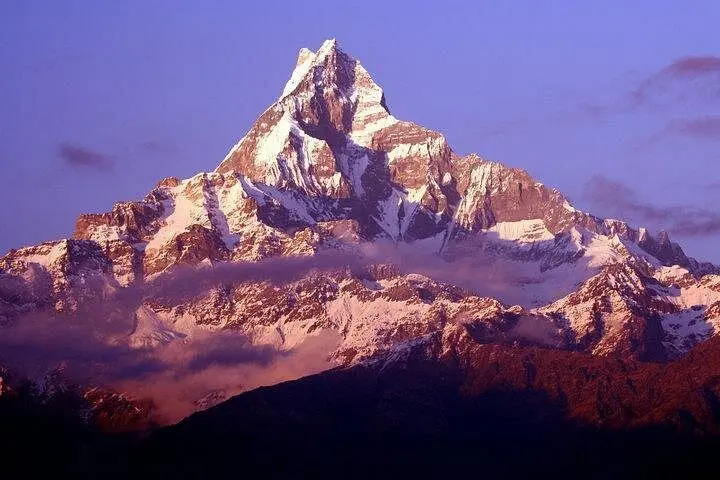
The route threads centuries-old Gurung and Magar villages into the high amphitheatre of the Annapurna Sanctuary. Geologically, the Sanctuary is a bowl carved by glaciers and uplifted by tectonic collision; jagged granite and snow faces—Annapurna I (8,091 m), Machhapuchhre, and Gangapurna—dominate the skyline. Culturally, villages like Ghandruk and Ghorepani offer living examples of highland hospitality and local song.
Practicalities matter: the program reaches roughly 4,120 m at Annapurna Base Camp with routine daily stages of 4–6 hours, tea-house accommodations, and a natural hot spring at Jhinu Danda mid-route. Permits (ACAP and TIMS) are standard; experienced guides and porters are included on private itineraries. Expect steep stone steps, narrow ridgelines, and rapidly changing weather—sun can burn low-oxygen muscles as quickly as snow can arrive.
Plan for acclimatization days, layered clothing, reliable boots, and cash for remote lodges. Spring and autumn give the clearest summit views, while the shoulder seasons offer quieter trails. Hydrate deliberately, watch for altitude symptoms, and treat the Sanctuary as both a fragile ecosystem and a working landscape—you’re passing through homes, not a theme park.
Yes—Annapurna Conservation Area Permit (ACAP) and a TIMS card are required; operators usually obtain them for you before departure.
Autumn (Sept–Nov) and spring (Mar–May) offer the clearest views and most stable weather; monsoon and winter present rain and snow respectively.
Tea houses are basic: twin rooms, shared or private bathrooms vary, hot showers cost extra, and meals are hearty but simple—perfect for multi-day trekking.
Base Camp sits around 4,120 m; altitude is a factor—follow acclimatization guidelines and report symptoms early to your guide.
Nepal Tour Guide Team Trek & Expedition P. Ltd. operates guided outdoor trips and adventures with an emphasis on safety, stewardship, and memorable experiences.
You step out of Pokhara’s morning haze into a road that narrows, and the terraced hills close in like pages turning. The first days follow stone staircases through rhododendron forest, occasional bursts of prayer flags, and settled villages where tea houses keep steady fires and steaming dal bhat.
You step out of Pokhara’s morning haze into a road that narrows, and the terraced hills close in like pages turning. The first days follow stone staircases through rhododendron forest, occasional bursts of prayer flags, and settled villages where tea houses keep steady fires and steaming dal bhat.
The route threads centuries-old Gurung and Magar villages into the high amphitheatre of the Annapurna Sanctuary. Geologically, the Sanctuary is a bowl carved by glaciers and uplifted by tectonic collision; jagged granite and snow faces—Annapurna I (8,091 m), Machhapuchhre, and Gangapurna—dominate the skyline. Culturally, villages like Ghandruk and Ghorepani offer living examples of highland hospitality and local song.
Practicalities matter: the program reaches roughly 4,120 m at Annapurna Base Camp with routine daily stages of 4–6 hours, tea-house accommodations, and a natural hot spring at Jhinu Danda mid-route. Permits (ACAP and TIMS) are standard; experienced guides and porters are included on private itineraries. Expect steep stone steps, narrow ridgelines, and rapidly changing weather—sun can burn low-oxygen muscles as quickly as snow can arrive.
Plan for acclimatization days, layered clothing, reliable boots, and cash for remote lodges. Spring and autumn give the clearest summit views, while the shoulder seasons offer quieter trails. Hydrate deliberately, watch for altitude symptoms, and treat the Sanctuary as both a fragile ecosystem and a working landscape—you’re passing through homes, not a theme park.