THE ADVENTURE COLLECTIVE® · Independent discovery and booking for outdoor travel

A compact 6–8 day route into the Annapurna Sanctuary, this trek climbs from subtropical forests to a 4,130 m base camp beneath Machhapuchhre and Annapurna I. Expect guesthouses, high-mountain views and straightforward but altitude-demanding hiking.
A compact 6–8 day route into the Annapurna Sanctuary, this trek climbs from subtropical forests to a 4,130 m base camp beneath Machhapuchhre and Annapurna I. Expect guesthouses, high-mountain views and straightforward but altitude-demanding hiking.
Dawn breaks over terraced fields as your jeep peels away from Pokhara and the trail swallows you into rhododendron and oak forest. Switchbacks climb, creek crossings splash, and villages—Ghandruk among them—appear like chapters in a traveler's journal: stone houses, prayer flags, and tea houses steaming with dal bhat.
Verified experiences and guided adventures in the surrounding area.
Operated by Shepherd Holidays · Pokhara, Gandaki Province
Dawn breaks over terraced fields as your jeep peels away from Pokhara and the trail swallows you into rhododendron and oak forest. Switchbacks climb, creek crossings splash, and villages—Ghandruk among them—appear like chapters in a traveler's journal: stone houses, prayer flags, and tea houses steaming with dal bhat.
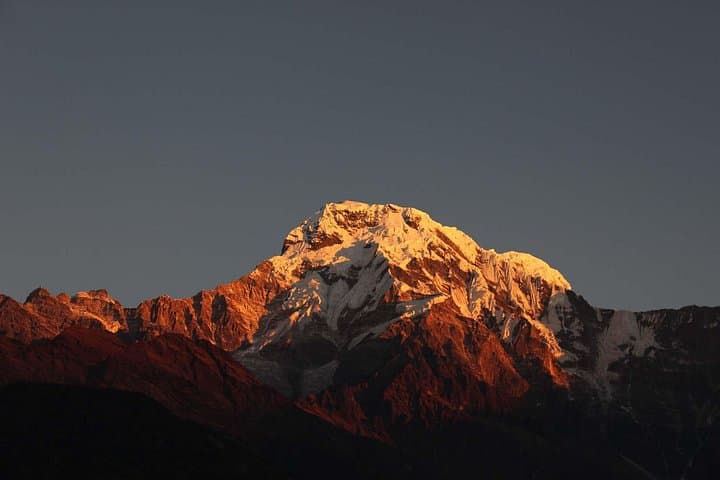
The route threads into the Annapurna Sanctuary, a natural amphitheater ringed by jagged limestone and granite faces. Geologically young and still rising, the Himalaya here show steep glacial cirques and moraine-battered valleys. The massif’s most famous faces—Machhapuchhre (Fishtail) and Annapurna South—push the skyline into crisp ridgelines, and at 4,130 m the base camp offers a 360° arena of serrated peaks and blue air.
Culturally, the trail moves through Gurung villages where mountain life is pragmatic: guesthouses, yak caravans, and local guides who read weather in the same way they read the land. The Annapurna Conservation Area protects this corridor; permits help fund trails and village programs.
Practically, expect 6–8 days on trail with long uphill days to reach ABC. Trail surfaces vary—stone steps, muddy switchbacks and exposed scree near the high camp. Altitude is the main variable: ascend conservatively, hydrate, and watch for acute mountain illness. Pack layers for cold nights, a reliable sleeping bag, good boots, and a water-treatment method. Plan mornings for summit views and afternoons for rest; Jhinu’s hot springs make for an earned soak on the descent. With basic trail fitness and respect for altitude, the Annapurna Base Camp trek delivers a compact Himalayan experience—wild, high, and immediately memorable.
Yes—Annapurna Conservation Area Permit (ACAP) and a TIMS card are required and typically arranged before or at the trailhead; guides often handle permits for groups.
Annapurna Base Camp sits around 4,130 m (13,550 ft); the route is non-technical but challenging due to altitude and long uphill days, so acclimatization is important.
Yes—this is a teahouse trek with guesthouses offering simple rooms and cooked meals (dal bhat, soups, noodles); standards vary and cash is preferred.
Spring (Mar–May) and fall (Sep–Nov) have the most stable weather and clearer mountain views; winter is cold with occasional heavy snow and summer sees monsoon rains.
Shepherd Holidays operates guided outdoor trips and adventures with an emphasis on safety, stewardship, and memorable experiences.



Dawn breaks over terraced fields as your jeep peels away from Pokhara and the trail swallows you into rhododendron and oak forest. Switchbacks climb, creek crossings splash, and villages—Ghandruk among them—appear like chapters in a traveler's journal: stone houses, prayer flags, and tea houses steaming with dal bhat.
Dawn breaks over terraced fields as your jeep peels away from Pokhara and the trail swallows you into rhododendron and oak forest. Switchbacks climb, creek crossings splash, and villages—Ghandruk among them—appear like chapters in a traveler's journal: stone houses, prayer flags, and tea houses steaming with dal bhat.
The route threads into the Annapurna Sanctuary, a natural amphitheater ringed by jagged limestone and granite faces. Geologically young and still rising, the Himalaya here show steep glacial cirques and moraine-battered valleys. The massif’s most famous faces—Machhapuchhre (Fishtail) and Annapurna South—push the skyline into crisp ridgelines, and at 4,130 m the base camp offers a 360° arena of serrated peaks and blue air.
Culturally, the trail moves through Gurung villages where mountain life is pragmatic: guesthouses, yak caravans, and local guides who read weather in the same way they read the land. The Annapurna Conservation Area protects this corridor; permits help fund trails and village programs.
Practically, expect 6–8 days on trail with long uphill days to reach ABC. Trail surfaces vary—stone steps, muddy switchbacks and exposed scree near the high camp. Altitude is the main variable: ascend conservatively, hydrate, and watch for acute mountain illness. Pack layers for cold nights, a reliable sleeping bag, good boots, and a water-treatment method. Plan mornings for summit views and afternoons for rest; Jhinu’s hot springs make for an earned soak on the descent. With basic trail fitness and respect for altitude, the Annapurna Base Camp trek delivers a compact Himalayan experience—wild, high, and immediately memorable.