THE ADVENTURE COLLECTIVE® · Independent discovery and booking for outdoor travel

An 8-day teahouse trek that climbs from Pokhara’s foothills to the amphitheater of Annapurna Base Camp via Poon Hill and Ghorepani. Expect long stone stair sections, high alpine terrain to ~4,130 m, cultural teahouse stays and a restorative hot spring finish in Jhinu.
An 8-day teahouse trek that climbs from Pokhara’s foothills to the amphitheater of Annapurna Base Camp via Poon Hill and Ghorepani. Expect long stone stair sections, high alpine terrain to ~4,130 m, cultural teahouse stays and a restorative hot spring finish in Jhinu.
Morning light slices across jagged ridgelines as you climb from terraced rice fields into the thin, pine-scented air—each step a small negotiation with altitude and gravity. The route threads classic Annapurna valley villages: Ulleri’s stone stairways, Ghorepani’s rhododendron slopes and the switchbacks up to Deurali before the final push into the amphitheater of Annapurna Base Camp (ABC).
Verified experiences and guided adventures in the surrounding area.
Operated by Mosaic Adventure · Pokhara, Gandaki Province
Morning light slices across jagged ridgelines as you climb from terraced rice fields into the thin, pine-scented air—each step a small negotiation with altitude and gravity. The route threads classic Annapurna valley villages: Ulleri’s stone stairways, Ghorepani’s rhododendron slopes and the switchbacks up to Deurali before the final push into the amphitheater of Annapurna Base Camp (ABC).
This corridor sits inside the Annapurna Conservation Area, where Gurung and Magar communities have guided travelers for generations. The geology is dramatic: metamorphic and sedimentary beds uplifted by the collision of the Indian and Eurasian plates, with glaciers and moraine shaping the high bowl that frames Annapurna I and Machapuchare. Cultural notes are practical—tea houses run by families, simple dal-bhat meals and shared dorms—but they’re also a window into mountain life.
Expect mixed terrain: packed dirt trails, long stone stair sections (Ulleri’s 3,000+ steps), forested descents and rocky alpine paths near ABC. Altitude reaches roughly 4,100 m; mornings are cold and visibility shifts fast. The schedule balances summit-style effort with teahouse recovery, finishing with a soak in Jhinu’s natural hot springs and a drive back to Pokhara.
Practical guidance: pace conservatively, hydrate, and carry layers for freeze–thaw swings. Footwear should be broken-in and ankle-supporting; trekking poles reduce knee strain on descents. Permit and conservation fees apply—book through a licensed operator and budget time for acclimatization to enjoy the views safely.
Yes—trekkers need an Annapurna Conservation Area Permit (ACAP) and a TIMS card; licensed operators usually arrange these before departure.
Night temperatures at ABC can drop well below freezing, especially outside spring and autumn; bring insulated layers and a good sleeping bag rated for sub-zero conditions.
Teahouses offer a mix of shared and private rooms; private rooms exist but are limited—expect basic amenities and bring a lightweight sleeping liner for hygiene and warmth.
No technical mountaineering experience is required, but prior multi-day trekking experience and good cardiovascular fitness improve comfort and safety.
Mosaic Adventure operates guided outdoor trips and adventures with an emphasis on safety, stewardship, and memorable experiences.
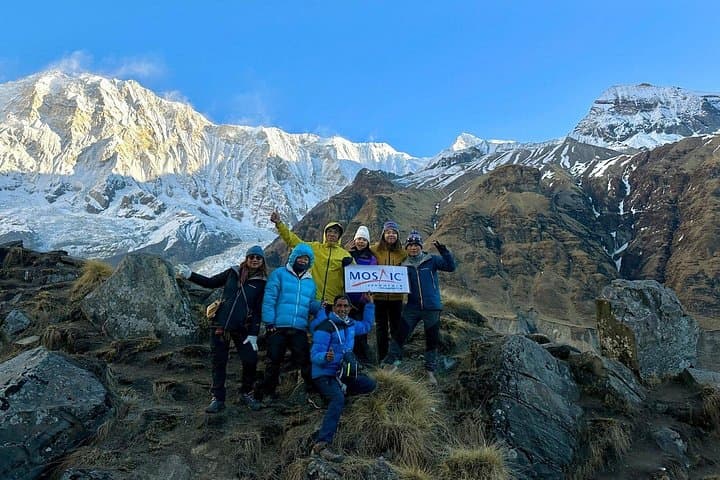
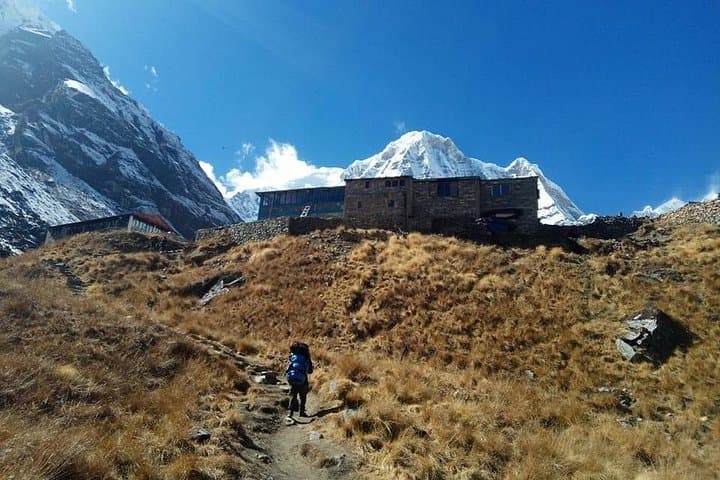
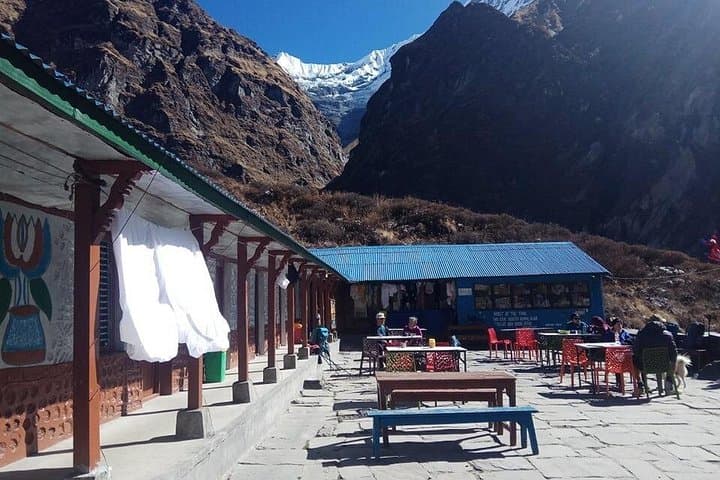
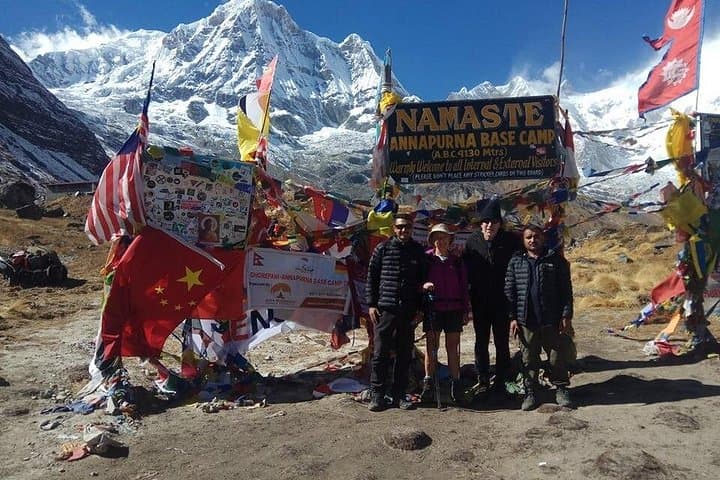
Morning light slices across jagged ridgelines as you climb from terraced rice fields into the thin, pine-scented air—each step a small negotiation with altitude and gravity. The route threads classic Annapurna valley villages: Ulleri’s stone stairways, Ghorepani’s rhododendron slopes and the switchbacks up to Deurali before the final push into the amphitheater of Annapurna Base Camp (ABC).
Morning light slices across jagged ridgelines as you climb from terraced rice fields into the thin, pine-scented air—each step a small negotiation with altitude and gravity. The route threads classic Annapurna valley villages: Ulleri’s stone stairways, Ghorepani’s rhododendron slopes and the switchbacks up to Deurali before the final push into the amphitheater of Annapurna Base Camp (ABC).
This corridor sits inside the Annapurna Conservation Area, where Gurung and Magar communities have guided travelers for generations. The geology is dramatic: metamorphic and sedimentary beds uplifted by the collision of the Indian and Eurasian plates, with glaciers and moraine shaping the high bowl that frames Annapurna I and Machapuchare. Cultural notes are practical—tea houses run by families, simple dal-bhat meals and shared dorms—but they’re also a window into mountain life.
Expect mixed terrain: packed dirt trails, long stone stair sections (Ulleri’s 3,000+ steps), forested descents and rocky alpine paths near ABC. Altitude reaches roughly 4,100 m; mornings are cold and visibility shifts fast. The schedule balances summit-style effort with teahouse recovery, finishing with a soak in Jhinu’s natural hot springs and a drive back to Pokhara.
Practical guidance: pace conservatively, hydrate, and carry layers for freeze–thaw swings. Footwear should be broken-in and ankle-supporting; trekking poles reduce knee strain on descents. Permit and conservation fees apply—book through a licensed operator and budget time for acclimatization to enjoy the views safely.