THE ADVENTURE COLLECTIVE® · Independent discovery and booking for outdoor travel

A classic high-altitude trek that climbs through rhododendron forests and Gurung villages to a glacier-ringed bowl at 4,100+ meters. This 9–10 day guided route from Pokhara balances steady daily climbs with lodge-to-lodge comforts and strong local guiding.
A classic high-altitude trek that climbs through rhododendron forests and Gurung villages to a glacier-ringed bowl at 4,100+ meters. This 9–10 day guided route from Pokhara balances steady daily climbs with lodge-to-lodge comforts and strong local guiding.
You step out of the dawn-light in Pokhara and the air already tastes like stone and pine—rivers call from the valleys below, daring you down the trail. Over the next week the path climbs through rice terraces and rhododendron forests, through villages where smoke curls from tea shops and porters’ laughter punctuates the steady footfall.
Verified experiences and guided adventures in the surrounding area.
Operated by Travel Pinto · Pokhara, Gandaki Province
You step out of the dawn-light in Pokhara and the air already tastes like stone and pine—rivers call from the valleys below, daring you down the trail. Over the next week the path climbs through rice terraces and rhododendron forests, through villages where smoke curls from tea shops and porters’ laughter punctuates the steady footfall.
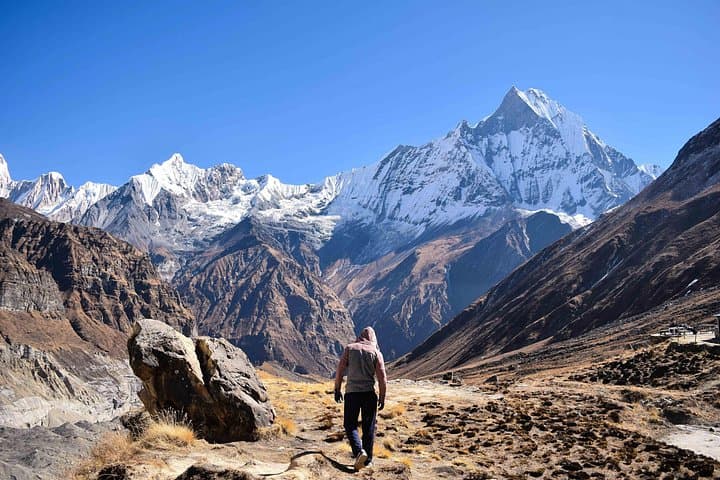
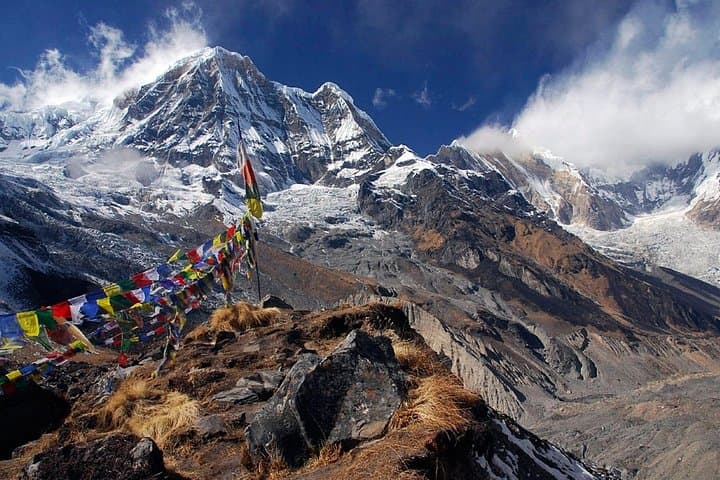
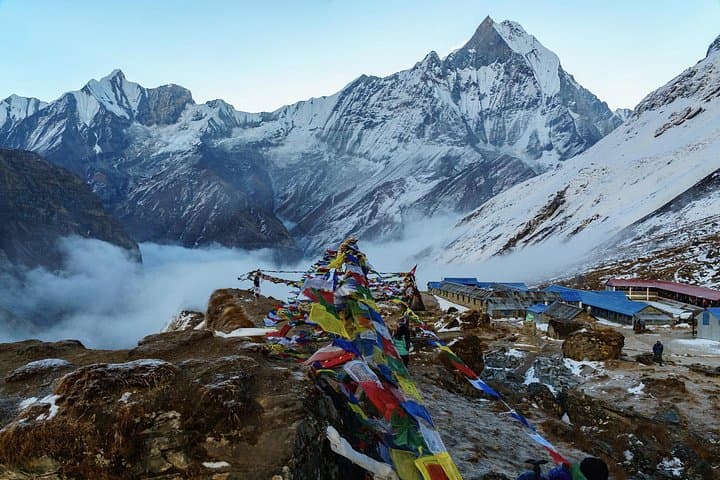
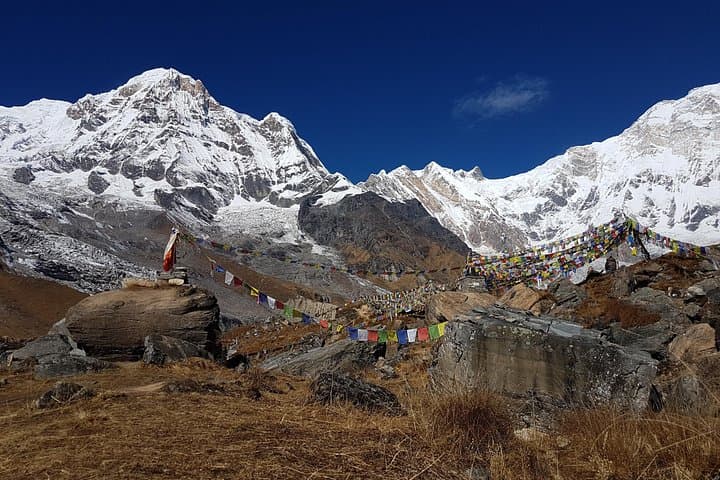
The Annapurna region has long been a crossroads: Gurung villages carved into steep hillsides, trade routes that once linked Kathmandu to Tibetan plateaus, and a geology of thrust-fault peaks—Annapurna I towering above a bowl of glaciers and moraines. The trek finishes at base camp (approx. 4,130–4,210 m), a natural amphitheater of rock and ice that exposes the raw geology of the High Himalaya.
Expect 4–7 hours of hiking most days, roughly 60–70 km round-trip from Nayapul via Ghandruk, with daily elevation changes rather than a single massive push. Terrain alternates packed dirt steps, rocky switchbacks and occasional scree. Accommodation is lodge-to-lodge (twin sharing), and the rhythm of the trek is communal—shared meals, simple rooms, and the steady care of experienced local guides.
Practical guidance: prioritize acclimatization and steady pacing, carry layered clothing for wide temperature swings, and bring a reliable water-treatment method; lodges supply basic meals but carry cash for snacks and charging. Best seasons are spring and autumn for stable weather and clear mountain views; winter brings deep cold, monsoon makes trails slippery. With moderate fitness and respect for altitude, this trek rewards with close-up mountain presence and local mountain culture.
Yes—Annapurna Conservation Area Permit (ACAP) and a Trekkers’ Information Management System (TIMS) card are required and are typically handled by your operator.
Annapurna Base Camp sits around 4,130–4,210 m; the trek involves steady ascending days rather than a single summit push.
No technical mountaineering experience is required, but prior multi-day hiking and good cardiovascular fitness are recommended.
Spring (March–May) and fall (September–November) offer the most reliable weather and best mountain visibility.
Travel Pinto operates guided outdoor trips and adventures with an emphasis on safety, stewardship, and memorable experiences.
You step out of the dawn-light in Pokhara and the air already tastes like stone and pine—rivers call from the valleys below, daring you down the trail. Over the next week the path climbs through rice terraces and rhododendron forests, through villages where smoke curls from tea shops and porters’ laughter punctuates the steady footfall.
You step out of the dawn-light in Pokhara and the air already tastes like stone and pine—rivers call from the valleys below, daring you down the trail. Over the next week the path climbs through rice terraces and rhododendron forests, through villages where smoke curls from tea shops and porters’ laughter punctuates the steady footfall.
The Annapurna region has long been a crossroads: Gurung villages carved into steep hillsides, trade routes that once linked Kathmandu to Tibetan plateaus, and a geology of thrust-fault peaks—Annapurna I towering above a bowl of glaciers and moraines. The trek finishes at base camp (approx. 4,130–4,210 m), a natural amphitheater of rock and ice that exposes the raw geology of the High Himalaya.
Expect 4–7 hours of hiking most days, roughly 60–70 km round-trip from Nayapul via Ghandruk, with daily elevation changes rather than a single massive push. Terrain alternates packed dirt steps, rocky switchbacks and occasional scree. Accommodation is lodge-to-lodge (twin sharing), and the rhythm of the trek is communal—shared meals, simple rooms, and the steady care of experienced local guides.
Practical guidance: prioritize acclimatization and steady pacing, carry layered clothing for wide temperature swings, and bring a reliable water-treatment method; lodges supply basic meals but carry cash for snacks and charging. Best seasons are spring and autumn for stable weather and clear mountain views; winter brings deep cold, monsoon makes trails slippery. With moderate fitness and respect for altitude, this trek rewards with close-up mountain presence and local mountain culture.