THE ADVENTURE COLLECTIVE® · Independent discovery and booking for outdoor travel

A classic multi-day trek from Pokhara into the Annapurna Sanctuary, this 12–13 day route climbs through Gurung villages, rhododendron forests and glacier moraine to the panoramic high camp at Annapurna Base Camp (≈4,130 m). Expect 4–7 hour walking days, basic tea-house stays and dramatic peak views.
A classic multi-day trek from Pokhara into the Annapurna Sanctuary, this 12–13 day route climbs through Gurung villages, rhododendron forests and glacier moraine to the panoramic high camp at Annapurna Base Camp (≈4,130 m). Expect 4–7 hour walking days, basic tea-house stays and dramatic peak views.
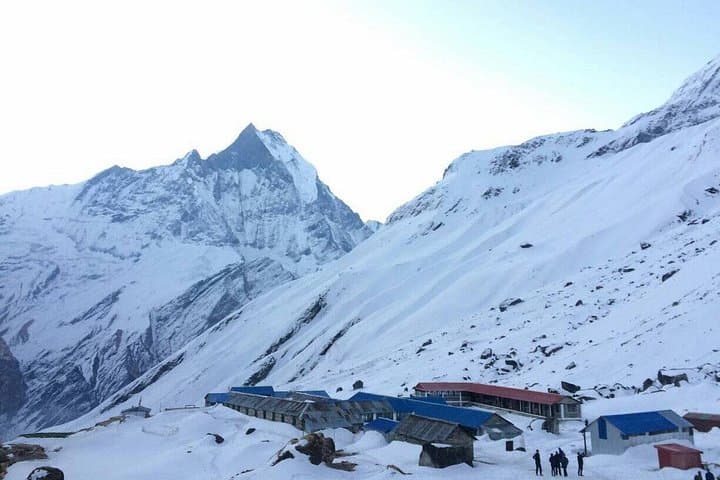
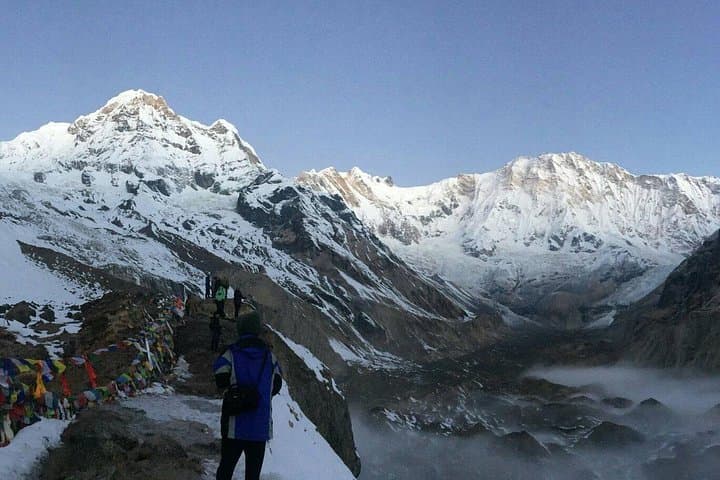
Dawn pours light over terraced fields as your minivan slips out of Pokhara and the foothills close around you. The trail begins gentle — rice paddies and village paths — then tightens into rhododendron and oak forests where the Modi River keeps time, daring you forward with its rush. By late days the path climbs stone staircases and moraine slopes, and the mountains reveal themselves: Machhapuchhre’s sharp profile and the bulk of Annapurna I rising above 8,000 meters.
Verified experiences and guided adventures in the surrounding area.
Operated by Nepal Kailash Trekking · Pokhara, Gandaki Province
Dawn pours light over terraced fields as your minivan slips out of Pokhara and the foothills close around you. The trail begins gentle — rice paddies and village paths — then tightens into rhododendron and oak forests where the Modi River keeps time, daring you forward with its rush. By late days the path climbs stone staircases and moraine slopes, and the mountains reveal themselves: Machhapuchhre’s sharp profile and the bulk of Annapurna I rising above 8,000 meters.
This route follows a long tradition of Himalayan travel and Gurung hospitality. Villages like Ghandruk and Chhomrong are living culture stops where local tea houses offer dal bhat and a place to rest. Geologically the sanctuary sits in a bowl carved by glaciers; expect loose moraine, rocky slabs, and sudden open amphitheaters that frame 360-degree peak views at ABC (≈4,130 m).
Plan for progressive altitude gain with at least one acclimatization-aware day; typical walking stages are 4–7 hours on mixed terrain. Spring and autumn give the best visibility; monsoon months bring lush forests but heavy rain and leeches. Footwear with good grip, layered insulation, and a reliable rain shell matter more than luxury. Carry water treatment and a headlamp — tea houses are basic above 2,500 m and weather can shift quickly.
On the descent, take time for Jhinu’s hot springs to ease tired muscles. The trek balances cultural warmth and glacial geology; come prepared, respect local trails and permits, and the Annapurna sanctuary will repay the effort with close-up Himalayan grandeur.
Yes — both the Annapurna Conservation Area Permit (ACAP) and a TIMS (Trekkers’ Information Management System) card are required; guides or agencies often arrange these.
Annapurna Base Camp sits around 4,130 meters (13,550 ft); Machhapuchhre Base Camp is slightly lower at ~3,700 m.
Yes — the route has basic tea houses at most overnight stops, though facilities become more rustic and heating is limited above ~3,000 m.
Spring (March–May) and autumn (September–November) offer the clearest views and stable weather; monsoon months are wetter and winter can bring snow at high camps.
Nepal Kailash Trekking operates guided outdoor trips and adventures with an emphasis on safety, stewardship, and memorable experiences.


Dawn pours light over terraced fields as your minivan slips out of Pokhara and the foothills close around you. The trail begins gentle — rice paddies and village paths — then tightens into rhododendron and oak forests where the Modi River keeps time, daring you forward with its rush. By late days the path climbs stone staircases and moraine slopes, and the mountains reveal themselves: Machhapuchhre’s sharp profile and the bulk of Annapurna I rising above 8,000 meters.
Dawn pours light over terraced fields as your minivan slips out of Pokhara and the foothills close around you. The trail begins gentle — rice paddies and village paths — then tightens into rhododendron and oak forests where the Modi River keeps time, daring you forward with its rush. By late days the path climbs stone staircases and moraine slopes, and the mountains reveal themselves: Machhapuchhre’s sharp profile and the bulk of Annapurna I rising above 8,000 meters.
This route follows a long tradition of Himalayan travel and Gurung hospitality. Villages like Ghandruk and Chhomrong are living culture stops where local tea houses offer dal bhat and a place to rest. Geologically the sanctuary sits in a bowl carved by glaciers; expect loose moraine, rocky slabs, and sudden open amphitheaters that frame 360-degree peak views at ABC (≈4,130 m).
Plan for progressive altitude gain with at least one acclimatization-aware day; typical walking stages are 4–7 hours on mixed terrain. Spring and autumn give the best visibility; monsoon months bring lush forests but heavy rain and leeches. Footwear with good grip, layered insulation, and a reliable rain shell matter more than luxury. Carry water treatment and a headlamp — tea houses are basic above 2,500 m and weather can shift quickly.
On the descent, take time for Jhinu’s hot springs to ease tired muscles. The trek balances cultural warmth and glacial geology; come prepared, respect local trails and permits, and the Annapurna sanctuary will repay the effort with close-up Himalayan grandeur.