THE ADVENTURE COLLECTIVE® · Independent discovery and booking for outdoor travel

A compact Himalayan trek that climbs from Pokhara’s lake-valley into the cirque of Annapurna Base Camp (4,130 m). Expect steep stone staircases, rhododendron forests, and raw mountain panoramas—ideal for trekkers ready for high-altitude challenge with teahouse support.
A compact Himalayan trek that climbs from Pokhara’s lake-valley into the cirque of Annapurna Base Camp (4,130 m). Expect steep stone staircases, rhododendron forests, and raw mountain panoramas—ideal for trekkers ready for high-altitude challenge with teahouse support.
Dawn breaks over terraced fields as you leave Pokhara; the first day’s drive hums with river valleys and the promise of high mountains. On the trail, the Modi River dares you to move faster, while rhododendron and bamboo push cool shade across stone staircases. By the time you crest the moraine near Annapurna Base Camp, the massif fills the sky—raw, jagged, and uncompromising.
Verified experiences and guided adventures in the surrounding area.
Operated by Nepal Mountain Trekkers - Day Tours · Pokhara, Gandaki Province
Dawn breaks over terraced fields as you leave Pokhara; the first day’s drive hums with river valleys and the promise of high mountains. On the trail, the Modi River dares you to move faster, while rhododendron and bamboo push cool shade across stone staircases. By the time you crest the moraine near Annapurna Base Camp, the massif fills the sky—raw, jagged, and uncompromising.
The route traces long-used trade paths and Gurung villages where stone houses and prayer flags mark a living Himalayan culture. Geologically, you step from fertile valley soils into glacially carved cirques and scree slopes—the uplifted Annapurna range presents sedimentary and metamorphic bands that fracture into the cliffs you walk beneath. Local teahouses serve dal bhat and stories; Gurung guides keep oral navigation knowledge alive.
Expect varied terrain: 60–75 km round-trip, roughly 3,300 m net elevation gain from Pokhara (823 m) to ABC (4,130 m), with daily approaches of 3–8 hours. Trails alternate steep stone steps, forested switchbacks, river crossings, and exposed rocky slabs approaching base camp. Weather shifts quickly—sun, wind and snow can arrive within an hour.
Practical tips: prioritize acclimatization (slow ascents, one shorter day before big gains), break in waterproof boots, carry layers and sun protection, and use a water filter or purification tablets. Guides and porters are standard; permits (TIMS and ACAP) are required and commonly arranged through operators. Travel in clear weather windows (spring, autumn) for the best summit views and safer conditions.
Trekkers need a TIMS card and Annapurna Conservation Area Permit (ACAP); most operators arrange these before the trek.
You gain about 3,300 m from Pokhara to ABC; proper acclimatization and a gradual pace reduce risk of altitude illness.
Spring (Mar–May) and autumn (Sep–Nov) offer the most stable weather and clearest views; monsoon and deep winter are more challenging.
Yes—teahouse lodges provide meals and basic overnight shelter, though services thin out above Deurali and at the highest camps.
Nepal Mountain Trekkers - Day Tours operates guided outdoor trips and adventures with an emphasis on safety, stewardship, and memorable experiences.
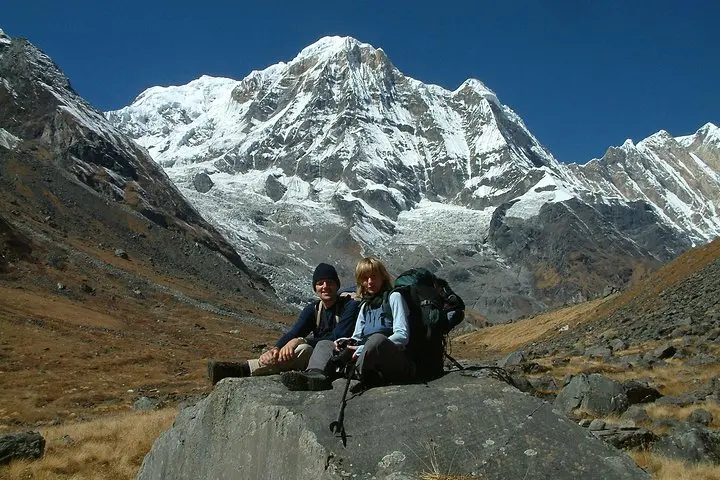
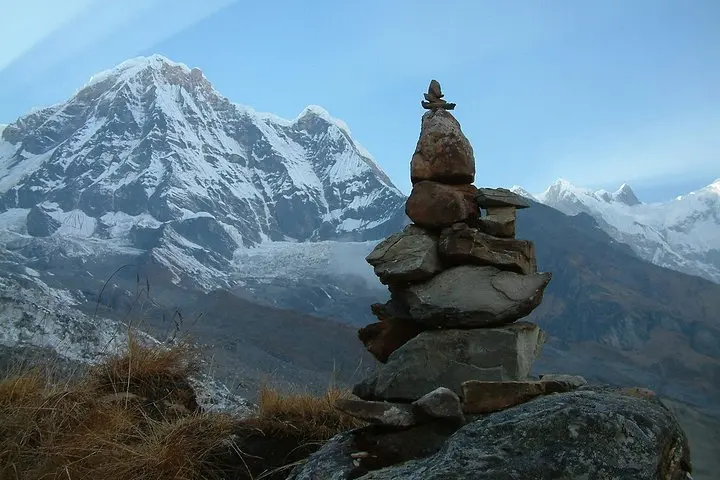
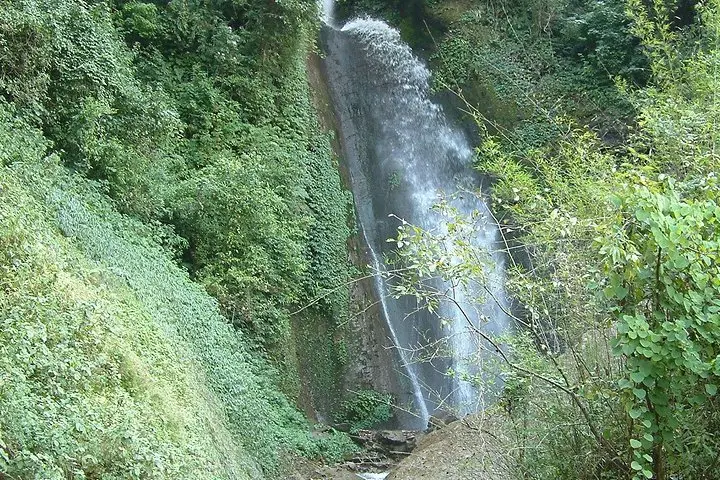
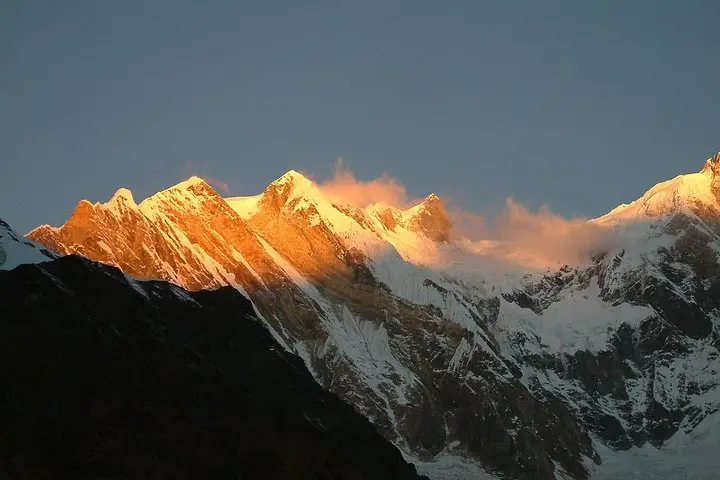
Dawn breaks over terraced fields as you leave Pokhara; the first day’s drive hums with river valleys and the promise of high mountains. On the trail, the Modi River dares you to move faster, while rhododendron and bamboo push cool shade across stone staircases. By the time you crest the moraine near Annapurna Base Camp, the massif fills the sky—raw, jagged, and uncompromising.
Dawn breaks over terraced fields as you leave Pokhara; the first day’s drive hums with river valleys and the promise of high mountains. On the trail, the Modi River dares you to move faster, while rhododendron and bamboo push cool shade across stone staircases. By the time you crest the moraine near Annapurna Base Camp, the massif fills the sky—raw, jagged, and uncompromising.
The route traces long-used trade paths and Gurung villages where stone houses and prayer flags mark a living Himalayan culture. Geologically, you step from fertile valley soils into glacially carved cirques and scree slopes—the uplifted Annapurna range presents sedimentary and metamorphic bands that fracture into the cliffs you walk beneath. Local teahouses serve dal bhat and stories; Gurung guides keep oral navigation knowledge alive.
Expect varied terrain: 60–75 km round-trip, roughly 3,300 m net elevation gain from Pokhara (823 m) to ABC (4,130 m), with daily approaches of 3–8 hours. Trails alternate steep stone steps, forested switchbacks, river crossings, and exposed rocky slabs approaching base camp. Weather shifts quickly—sun, wind and snow can arrive within an hour.
Practical tips: prioritize acclimatization (slow ascents, one shorter day before big gains), break in waterproof boots, carry layers and sun protection, and use a water filter or purification tablets. Guides and porters are standard; permits (TIMS and ACAP) are required and commonly arranged through operators. Travel in clear weather windows (spring, autumn) for the best summit views and safer conditions.