THE ADVENTURE COLLECTIVE® · Independent discovery and booking for outdoor travel

A classic 15-day loop that pairs the Annapurna Circuit’s high passes with Poon Hill’s legendary sunrise. Expect forested valleys, Tibetan-style villages, and a 5,416 m pass — all on teahouse-style accommodations.
A classic 15-day loop that pairs the Annapurna Circuit’s high passes with Poon Hill’s legendary sunrise. Expect forested valleys, Tibetan-style villages, and a 5,416 m pass — all on teahouse-style accommodations.
Dawn in Pokhara smells of hot tea and diesel as jeeps shove off toward the Marsyangdi Valley, and the first glimpses of the Annapurna massif appear like a promise at the rim of the world. The trail threads through river gorges, rhododendron forests, and terraced farms before opening to high, wind-swept plateaus where prayer flags snap like small explosions.
Verified experiences and guided adventures in the surrounding area.
Operated by CAN Travels · Pokhara, Gandaki Province
Dawn in Pokhara smells of hot tea and diesel as jeeps shove off toward the Marsyangdi Valley, and the first glimpses of the Annapurna massif appear like a promise at the rim of the world. The trail threads through river gorges, rhododendron forests, and terraced farms before opening to high, wind-swept plateaus where prayer flags snap like small explosions.
This 15-day loop combines two Himalayan stories: the Annapurna Circuit’s geological drama — towering peaks born of the Indian plate colliding with Eurasia — and Poon Hill’s compact theatre of sunrise views over Annapurna and Dhaulagiri. Along the way you’ll pass traditional Gurung and Manangi villages, stone houses, and spiritual sites such as Braga Monastery and the pilgrimage complex at Muktinath.
Expect varied terrain: river-side trails and suspension bridges, steady climbs through pine and rhododendron, then arid alpine scrub above 3,500 m. Key elevations include Manang (~3,500 m), Yak Kharka (~4,050 m), Thorong La pass (5,416 m) and Poon Hill (~3,210 m). Acclimatization days and an early pre-dawn start for Thorong La are part of the plan.
Practical notes: travel on established teahouse routes with guesthouse lodging, carry permits (ACAP/TIMS), and budget for slow, steady hiking — 4–7 hours on typical days, longer on the pass day. Hydrate (3–4 L), use a layered clothing system, and bring sturdy ankle-support boots and poles to ease descents. Weather turns fast; plan spring or fall for the clearest mountain light and be prepared for wind, cold and altitude-related delays.
Yes—Annapurna Conservation Area Project (ACAP) entry and a TIMS card are required; guides often handle permits but carry copies.
Thorong La at 5,416 m is the trip’s toughest day: expect a very early start, cold and wind, and a long, steep descent; proper acclimatization is critical.
Yes—the route is serviced by teahouses and guesthouses offering simple meals and dorm/private rooms, though choices narrow at higher altitudes.
Spring (March–May) and autumn (September–November) offer the most stable weather, clearer views, and comfortable daytime temperatures.
CAN Travels operates guided outdoor trips and adventures with an emphasis on safety, stewardship, and memorable experiences.
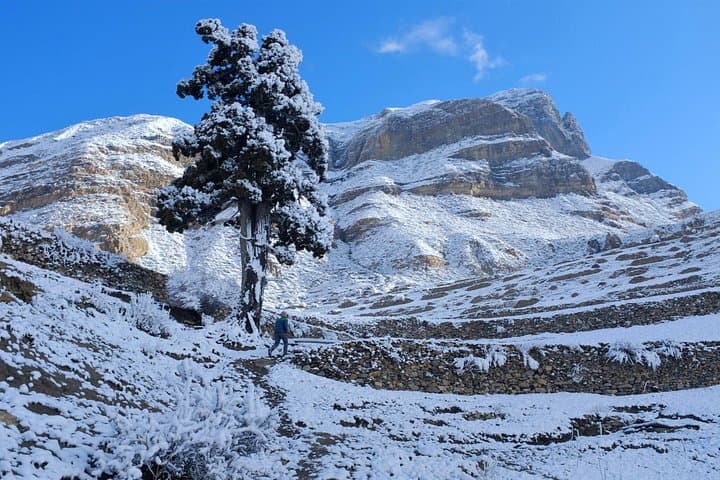


Dawn in Pokhara smells of hot tea and diesel as jeeps shove off toward the Marsyangdi Valley, and the first glimpses of the Annapurna massif appear like a promise at the rim of the world. The trail threads through river gorges, rhododendron forests, and terraced farms before opening to high, wind-swept plateaus where prayer flags snap like small explosions.
Dawn in Pokhara smells of hot tea and diesel as jeeps shove off toward the Marsyangdi Valley, and the first glimpses of the Annapurna massif appear like a promise at the rim of the world. The trail threads through river gorges, rhododendron forests, and terraced farms before opening to high, wind-swept plateaus where prayer flags snap like small explosions.
This 15-day loop combines two Himalayan stories: the Annapurna Circuit’s geological drama — towering peaks born of the Indian plate colliding with Eurasia — and Poon Hill’s compact theatre of sunrise views over Annapurna and Dhaulagiri. Along the way you’ll pass traditional Gurung and Manangi villages, stone houses, and spiritual sites such as Braga Monastery and the pilgrimage complex at Muktinath.
Expect varied terrain: river-side trails and suspension bridges, steady climbs through pine and rhododendron, then arid alpine scrub above 3,500 m. Key elevations include Manang (~3,500 m), Yak Kharka (~4,050 m), Thorong La pass (5,416 m) and Poon Hill (~3,210 m). Acclimatization days and an early pre-dawn start for Thorong La are part of the plan.
Practical notes: travel on established teahouse routes with guesthouse lodging, carry permits (ACAP/TIMS), and budget for slow, steady hiking — 4–7 hours on typical days, longer on the pass day. Hydrate (3–4 L), use a layered clothing system, and bring sturdy ankle-support boots and poles to ease descents. Weather turns fast; plan spring or fall for the clearest mountain light and be prepared for wind, cold and altitude-related delays.