THE ADVENTURE COLLECTIVE® · Independent discovery and booking for outdoor travel

A 12-day loop around the Annapurna Massif that climbs to Thorong La (5,416 m), this trek mixes high-altitude exposure with teahouse culture and sweeping Himalayan panoramas. Built-in acclimatization and simple lodges make it accessible for committed trekkers.
A 12-day loop around the Annapurna Massif that climbs to Thorong La (5,416 m), this trek mixes high-altitude exposure with teahouse culture and sweeping Himalayan panoramas. Built-in acclimatization and simple lodges make it accessible for committed trekkers.
A cold dawn on the trail: prayer flags stitch color across a pale sky as yak bells punctuate the silence. You climb out of Manang’s terraced green into rock and wind, the Annapurna massif filling the skyline like a moving wall. By late morning the valley opens; by next day the air thins and the world reduces to breath and step.
Verified experiences and guided adventures in the surrounding area.
Operated by Adventure Great Himalaya Trek and Expedition · Kathmandu, Gandaki Province
A cold dawn on the trail: prayer flags stitch color across a pale sky as yak bells punctuate the silence. You climb out of Manang’s terraced green into rock and wind, the Annapurna massif filling the skyline like a moving wall. By late morning the valley opens; by next day the air thins and the world reduces to breath and step.
The Annapurna Circuit traces ancient trade and pilgrimage routes that linked Tibetan plateaus to Nepal’s lowlands. Geologically, the route threads glacial valleys and steep river gorges carved by the Marsyangdi and Kaligandaki, with Thorong La (≈5,416 m) formed where uplifted Himalayan crust meets relentless winter erosion. Cultural layers are visible in mani walls, tea houses, and the Tibetan-influenced villages of Manang and Marpha — places where Buddhism and Hindu pilgrimage intersect, especially at Muktinath.
Expect varied terrain: river trails and pine forest in lower sections, rocky moraines and scree higher up. Altitude is the ride’s constant companion — acclimatization days in Manang are built in for a reason. Teahouse lodging and simple meals supply warmth and company, not luxury. Practicalities: permits (Annapurna Conservation Area, TIMS), layered clothing for wild temperature swings, and a slow, deliberate pace on the Thorong-La approach. Hydrate, watch for headache/ nausea, and use walking poles to protect knees on steep descents.
This 12-day loop rewards persistent hikers with expansive mountain panoramas, high-altitude cultural encounters, and the tangible satisfaction of crossing one of the Himalaya’s classic passes.
Yes — you need an Annapurna Conservation Area Permit (ACAP) and a TIMS card; guides or operators usually arrange these prior to trekking.
Thorong La is the highest and most demanding day: steep, cold, and exposed; good acclimatization and an early start are essential.
Teahouses provide basic private rooms with shared toilets and simple hot meals; comforts vary by village and elevation.
Spring (March–May) and autumn (September–November) offer the most stable weather and clear mountain views; winter is cold and monsoon brings trail closures.
Adventure Great Himalaya Trek and Expedition operates guided outdoor trips and adventures with an emphasis on safety, stewardship, and memorable experiences.
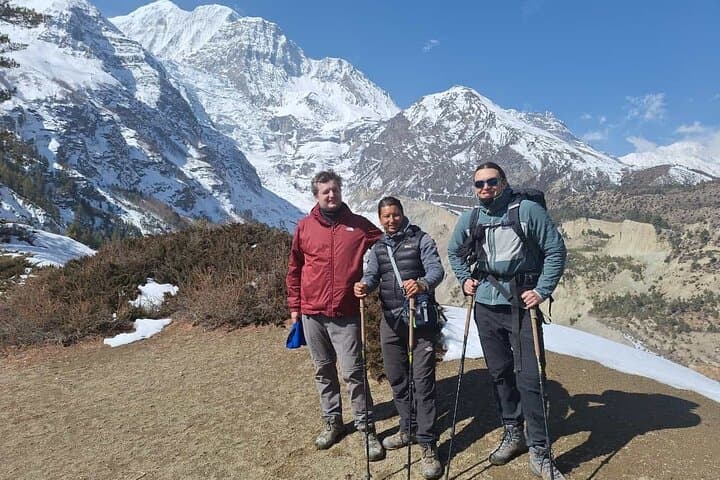
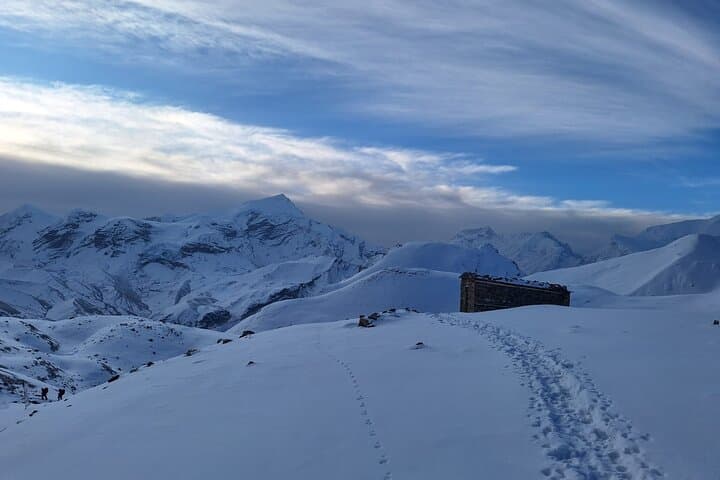
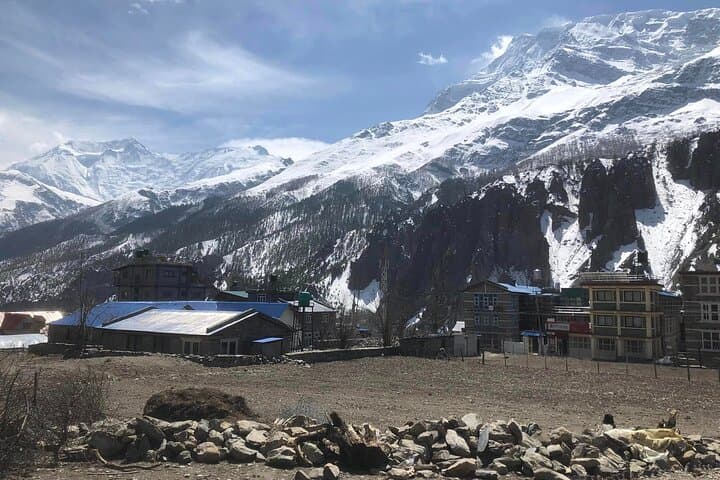
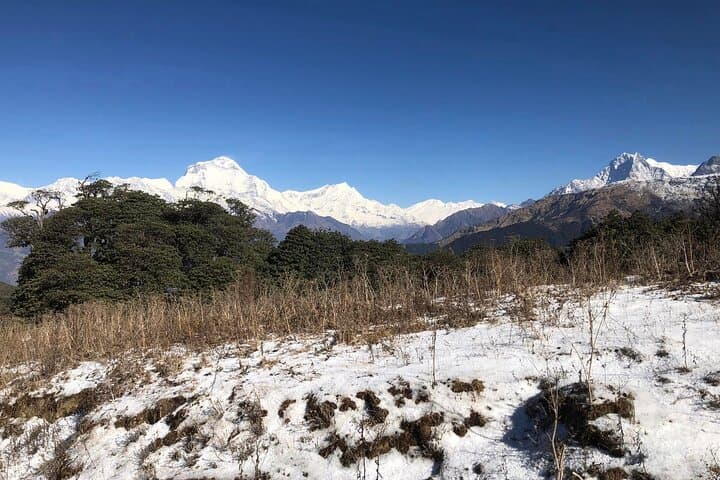
A cold dawn on the trail: prayer flags stitch color across a pale sky as yak bells punctuate the silence. You climb out of Manang’s terraced green into rock and wind, the Annapurna massif filling the skyline like a moving wall. By late morning the valley opens; by next day the air thins and the world reduces to breath and step.
A cold dawn on the trail: prayer flags stitch color across a pale sky as yak bells punctuate the silence. You climb out of Manang’s terraced green into rock and wind, the Annapurna massif filling the skyline like a moving wall. By late morning the valley opens; by next day the air thins and the world reduces to breath and step.
The Annapurna Circuit traces ancient trade and pilgrimage routes that linked Tibetan plateaus to Nepal’s lowlands. Geologically, the route threads glacial valleys and steep river gorges carved by the Marsyangdi and Kaligandaki, with Thorong La (≈5,416 m) formed where uplifted Himalayan crust meets relentless winter erosion. Cultural layers are visible in mani walls, tea houses, and the Tibetan-influenced villages of Manang and Marpha — places where Buddhism and Hindu pilgrimage intersect, especially at Muktinath.
Expect varied terrain: river trails and pine forest in lower sections, rocky moraines and scree higher up. Altitude is the ride’s constant companion — acclimatization days in Manang are built in for a reason. Teahouse lodging and simple meals supply warmth and company, not luxury. Practicalities: permits (Annapurna Conservation Area, TIMS), layered clothing for wild temperature swings, and a slow, deliberate pace on the Thorong-La approach. Hydrate, watch for headache/ nausea, and use walking poles to protect knees on steep descents.
This 12-day loop rewards persistent hikers with expansive mountain panoramas, high-altitude cultural encounters, and the tangible satisfaction of crossing one of the Himalaya’s classic passes.